
Nursing practice questions with comprehensive rationales
NurseDive Free Nursing Practice Question
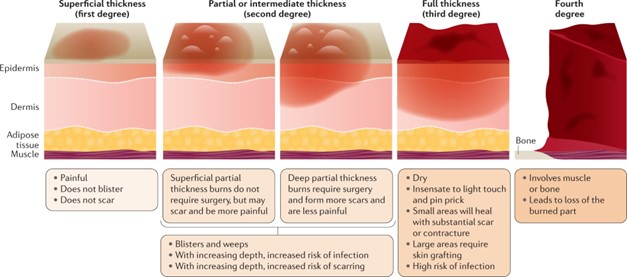
When caring for a client with full-thickness burns to both lower extremities, which assessment finding(s) warrant immediate intervention by the nurse? (Select all that apply.)
A. Sloughing tissue around wound edges.
While sloughing tissue around wound edges and weeping serosanguineous fluid from wounds are important assessment findings in the context of burn care, they do not require immediate intervention compared to the findings mentioned above. These findings should still be addressed and managed appropriately, but they are not considered immediate emergencies.
B. Change in the quality of the peripheral pulses.
Changes in the quality of peripheral pulses indicate alterations in blood flow and may suggest vascular compromise or decreased perfusion to the affected areas. This finding requires immediate intervention to prevent further damage and ensure adequate blood supply to the extremities.
C. Weeping serosanguineous fluid from wounds.
While sloughing tissue around wound edges and weeping serosanguineous fluid from wounds are important assessment findings in the context of burn care, they do not require immediate intervention compared to the findings mentioned above. These findings should still be addressed and managed appropriately, but they are not considered immediate emergencies.
D. Loss of sensation to the left lower extremity.
Loss of sensation to the left lower extremity can be indicative of nerve injury or impaired peripheral nerve function. It is important to assess for nerve damage and address it promptly to prevent complications and maximize the client's recovery.
E. Complaint of increased pain and pressure.
Complaints of increased pain and pressure are concerning because they may indicate the development of compartment syndrome, a serious complication in which pressure within the muscles and tissues builds up to dangerous levels. Prompt intervention is necessary to relieve the pressure and prevent tissue damage.
This question is an excerpt from Nurse Dive's nursing test bank - RN Hesi Exit Proctored Exam. Take the full exam now
Full Explanation
These findings suggest potential complications and compromise to the client's circulation and nerve function, which require immediate attention.
Changes in the quality of peripheral pulses indicate alterations in blood flow and may suggest vascular compromise or decreased perfusion to the affected areas. This finding requires immediate intervention to prevent further damage and ensure adequate blood supply to the extremities.
Loss of sensation to the left lower extremity can be indicative of nerve injury or impaired peripheral nerve function. It is important to assess for nerve damage and address it promptly to prevent complications and maximize the client's recovery.
Complaints of increased pain and pressure are concerning because they may indicate the development of compartment syndrome, a serious complication in which pressure within the muscles and tissues builds up to dangerous levels. Prompt intervention is necessary to relieve the pressure and prevent tissue damage.
While sloughing tissue around wound edges and weeping serosanguineous fluid from wounds are important assessment findings in the context of burn care, they do not require immediate intervention compared to the findings mentioned above. These findings should still be addressed and managed appropriately, but they are not considered immediate emergencies.
Similar Questions
The nurse is assessing an older client who is having difficulty remembering events from earlier in the day and concentrating on the questions being asked. A family member shares that the client's home was recently sold and the client has just moved in with them.
Which nursing response best promotes effective communication with the family?
A. If the dementia is a result of Alzheimer's disease, it is often reversible even in the late stages.
Stating that dementia resulting from Alzheimer's disease is often reversible even in the late stages is incorrect. Alzheimer's disease is a progressive neurodegenerative disorder that currently has no cure, and the symptoms tend to worsen over time. Reversibility is not typically associated with Alzheimer's disease.
B. The client is exhibiting symptoms of dementia and because of age, it may be permanent.
Indicating that the client's symptoms of dementia are permanent due to age is a generalization and may not be accurate. While age is a risk factor for certain types of dementia, such as Alzheimer's disease, it does not mean that all memory and cognitive difficulties in older adults are irreversible.
C. The client's delirium may be due to depression and is possibly reversible.
Given the client's difficulty with memory, concentration, and recent life changes, it is important for the nurse to acknowledge the possibility of delirium as a potential cause of the client's symptoms. Delirium is an acute state of confusion that can be caused by various factors, including physical illness, medication side effects, and emotional stressors. It is often reversible when the underlying cause is identified and treated. By mentioning the possibility of delirium and its potential reversibility, the nurse opens up the conversation to exploring other factors that may be contributing to the client's symptoms. This response also provides hope to the family by suggesting that the client's condition may improve with appropriate interventions and management.
D. Delirium is often a sign of underlying mental illness and institutionalization is often necessary.
Suggesting that delirium is often a sign of underlying mental illness and institutionalization is necessary is not appropriate. Delirium is a medical condition that requires thorough assessment and appropriate management, including addressing any underlying causes. Institutionalization may be considered in certain situations, but it is not the primary focus of communication in this context.
Full Explanation
Given the client's difficulty with memory, concentration, and recent life changes, it is
important for the nurse to acknowledge the possibility of delirium as a potential cause of the client's symptoms. Delirium is an acute state of confusion that can be caused by various factors, including physical illness, medication side effects, and emotional stressors. It is often reversible when the underlying cause is identified and treated.
By mentioning the possibility of delirium and its potential reversibility, the nurse opens up the conversation to exploring other factors that may be contributing to the client's symptoms. This response also provides hope to the family by suggesting that the client's condition may improve with appropriate interventions and management.
Stating that dementia resulting from Alzheimer's disease is often reversible even in the late stages is incorrect. Alzheimer's disease is a progressive neurodegenerative disorder that currently has no cure, and the symptoms tend to worsen over time.
Reversibility is not typically associated with Alzheimer's disease.
Indicating that the client's symptoms of dementia are permanent due to age is a generalization and may not be accurate. While age is a risk factor for certain types of dementia, such as Alzheimer's disease, it does not mean that all memory and cognitive difficulties in older adults are irreversible.
Suggesting that delirium is often a sign of underlying mental illness and institutionalization is necessary is not appropriate. Delirium is a medical condition that requires thorough assessment and appropriate management, including addressing any underlying causes. Institutionalization may be considered in certain situations, but it is not the primary focus of communication in this context.
A client who has been taking allopurinol prophylactically comes into the clinic with reoccurring gout attack episodes in left ankle. The healthcare provider changes the prescription to febuxostat. Which instruction should the nurse include in the discharge teaching?
A. Eat high protein foods to achieve ideal body weight.
While maintaining a healthy weight and dietary modifications may be beneficial for managing gout, specific instructions regarding protein intake should be individualized and provided by a healthcare provider or a registered dietitian.
B. Report experiencing right upper quadrant discomfort.
Febuxostat is a medication used to manage hyperuricemia and prevent gout attacks. However, it has been associated with hepatotoxicity, including liver enzyme elevations and liver failure. Therefore, it is important for the nurse to instruct the client to report any signs or symptoms of liver dysfunction, such as right upper quadrant discomfort. This will allow for prompt evaluation and appropriate management if hepatotoxicity occurs. While maintaining a healthy weight and dietary modifications may be beneficial for managing gout, specific instructions regarding protein intake should be individualized and provided by a healthcare provider or a registered dietitian.
C. Use electric heating pad when pain is at its worse.
Using an electric heating pad when pain is at its worst may provide temporary symptomatic relief for gout attacks, but it is not specific to the use of febuxostat. The focus of discharge teaching should be on medication adherence, monitoring for adverse effects, and lifestyle modifications to prevent gout attacks.
D. Replace dietary table salt with salt substitutes.
Replacing dietary table salt with salt substitutes is not a specific instruction for a client taking febuxostat. While reducing sodium intake may be recommended as part of an overall healthy diet, it is not directly related to the use of febuxostat or management of gout attacks. Dietary modifications for gout management should be individualized and based on the client's specific needs and preferences.
Full Explanation
Febuxostat is a medication used to manage hyperuricemia and prevent gout attacks. However, it has been associated with hepatotoxicity, including liver enzyme elevations and liver failure. Therefore, it is important for the nurse to instruct the client to report any signs or symptoms of liver dysfunction, such as right upper quadrant discomfort. This will allow for prompt evaluation and appropriate management if hepatotoxicity occurs.
While maintaining a healthy weight and dietary modifications may be beneficial for managing gout, specific instructions regarding protein intake should be individualized and provided by a healthcare provider or a registered dietitian.
Using an electric heating pad when pain is at its worst may provide temporary symptomatic relief for gout attacks, but it is not specific to the use of febuxostat. The focus of discharge teaching should be on medication adherence, monitoring for adverse effects, and lifestyle modifications to prevent gout attacks.
Replacing dietary table salt with salt substitutes is not a specific instruction for a client taking febuxostat. While reducing sodium intake may be recommended as part of an overall healthy diet, it is not directly related to the use of febuxostat or management of gout attacks. Dietary modifications for gout management should be individualized and based on the client's specific needs and preferences.
A female client is taking alendronate, a bisphosphonate, for postmenopausal osteoporosis. The client tells the nurse that she is experiencing jaw pain. How should the nurse respond?
A. Determine how the client is administering the medication.
Determining how the client is administering the medication is not the immediate concern in this situation. While it is important to ensure that the client is following proper administration instructions for alendronate, addressing the jaw pain takes precedence.
B. Advise the client to gargle with warm salt water twice daily.
Advising the client to gargle with warm salt water twice daily may not be sufficient or appropriate for managing jaw pain related to alendronate use. The client needs a comprehensive assessment by the healthcare provider to determine the cause of the jaw pain and provide appropriate interventions.
C. Report the client's jaw pain to the healthcare provider.
Jaw pain in a client taking alendronate, a bisphosphonate, for postmenopausal osteoporosis may be a sign of a rare but serious side effect called osteonecrosis of the jaw (ONJ). Therefore, the nurse should respond by: Report the client's jaw pain to the healthcare provider. Jaw pain can be an indication of ONJ, a condition characterized by the death of jawbone tissue. It is important to notify the healthcare provider so that further evaluation and appropriate management can be initiated. The healthcare provider will determine the best course of action, which may include referral to a specialist for further assessment and treatment.
D. Confirm that this is a common symptom of osteoporosis.
Confirming that jaw pain is a common symptom of osteoporosis is not accurate. While osteoporosis can lead to bone pain, jaw pain specifically associated with bisphosphonate use is more likely to be related to ONJ and requires further evaluation and management
Full Explanation
Jaw pain in a client taking alendronate, a bisphosphonate, for postmenopausal osteoporosis may be a sign of a rare but serious side effect called osteonecrosis of the jaw (ONJ). Therefore, the nurse should respond by: Report the client's jaw pain to the healthcare provider.
Jaw pain can be an indication of ONJ, a condition characterized by the death of jawbone tissue. It is important to notify the healthcare provider so that further evaluation and appropriate management can be initiated. The healthcare provider will determine the best course of action, which may include referral to a specialist for further assessment and treatment.
Determining how the client is administering the medication is not the immediate concern in this situation. While it is important to ensure that the client is following proper administration instructions for alendronate, addressing the jaw pain takes precedence.
Advising the client to gargle with warm salt water twice daily may not be sufficient or appropriate for managing jaw pain related to alendronate use. The client needs a comprehensive assessment by the healthcare provider to determine the cause of the jaw pain and provide appropriate interventions.
Confirming that jaw pain is a common symptom of osteoporosis is not accurate. While osteoporosis can lead to bone pain, jaw pain specifically associated with bisphosphonate use is more likely to be related to ONJ and requires further evaluation and management