Nursing practice questions with comprehensive rationales
NurseDive Free Nursing Practice Question
Which hormone remains elevated in the immediate postpartum period of the breastfeeding women?
A. Prolactin
Prolactin remains elevated in the immediate postpartum period of breastfeeding women to stimulate milk production.
B. Progestrone
Progesterone levels decrease rapidly after childbirth.
C. Estrogen
Estrogen levels decrease in the postpartum period, particularly during breastfeeding.
D. Human Placental Lactogen
Human Placental Lactogen (HPL) levels decrease after childbirth.
This question is an excerpt from Nurse Dive's nursing test bank - Ati Maternal Newborn Proctored Exam 3 Reno 2 2020. Take the full exam now
Full Explanation
A. Prolactin remains elevated in the immediate postpartum period of breastfeeding women to stimulate milk production.
B. Progesterone levels decrease rapidly after childbirth.
C. Estrogen levels decrease in the postpartum period, particularly during breastfeeding.
D. Human Placental Lactogen (HPL) levels decrease after childbirth.
Similar Questions
A nurse is caring for a client who is 1 hr postpartum and observes a large amount of lochia rubra and several small clots on the client’s perineal pad. The fundus is midline and firm at the umbilicus. Which of the following actions should the nurse take?
A. Document the findings and continue to monitor the client.
The presence of lochia rubra with small clots in the immediate postpartum period is expected. The firm and midline fundus indicates appropriate uterine contraction. Continued monitoring is appropriate.
B. Encourage the client to empty her bladder.
Encouraging the client to empty her bladder is a valid intervention, but it is not the priority in this situation.
C. Increase the frequency of fundal massage.
Increasing the frequency of fundal massage is unnecessary, as the fundus is already firm.
D. Notify the client’s provider.
Notifying the provider is not necessary based on the described findings, as they are within the expected range.
Full Explanation
A. The presence of lochia rubra with small clots in the immediate postpartum period is expected. The firm and midline fundus indicates appropriate uterine contraction. Continued monitoring is appropriate.
B. Encouraging the client to empty her bladder is a valid intervention, but it is not the priority in this situation.
C. Increasing the frequency of fundal massage is unnecessary, as the fundus is already firm.
D. Notifying the provider is not necessary based on the described findings, as they are within the expected range.
A nurse is caring for a client who is 6 hours postpartum and asks the nurse to feed her newborn. Which of the following responses should the nurse provide?
A. “You can learn to feed him; I wasn’t comfortable the first time I fed a baby either.”
Dismissing the client's request without offering assistance or guidance is not supportive.
B. “I’ll feed him today. Maybe tomorrow you can try it.”
Delaying the client's request to tomorrow does not address her immediate needs.
C. “Oh, this isn’t difficult. You’ll be fine doing this.’
Minimizing the client's concerns may make her feel unsupported and anxious.
D. “Feeding an infant can feel a little intimidating at first, but I’ll stay and help you.”
Acknowledging the client's feelings and offering assistance conveys empathy and support.
Full Explanation
A. Dismissing the client's request without offering assistance or guidance is not supportive.
B. Delaying the client's request to tomorrow does not address her immediate needs.
C. Minimizing the client's concerns may make her feel unsupported and anxious.
D. Acknowledging the client's feelings and offering assistance conveys empathy and support.
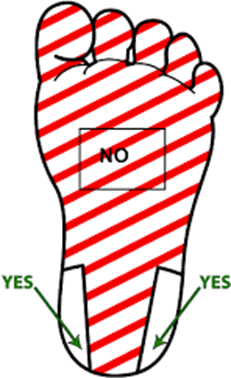
The most serious complication of an infant heelstick is necrotizing osteochondritis resulting from lancet penetration of the bone. What approach should the nurse take when performing the test to prevent this complication?
A. Lancet should penetrate the ball of the foot.
The ball of the foot is not recommended for heelstick procedures.
B. Lancet should penetrate at the outer aspect of the heel.
The outer aspect of the heel is the preferred site. This area has fewer nerve endings and less risk of damaging the bone or cartilage.
C. Lancet should penetrate the area just below the fifth toe.
The area below the fifth toe is not a standard site for a heelstick.
D. Lancet should penetrate the walking surface of the heel.
The walking surface of the heel should be avoided since it is prone to infection, more sensitive, and may interfere with walking.
Full Explanation
A. The ball of the foot is not recommended for heelstick procedures.
B. The outer aspect of the heel is the preferred site. This area has fewer nerve endings and less risk of damaging the bone or cartilage.
C. The area below the fifth toe is not a standard site for a heelstick.
D. The walking surface of the heel should be avoided since it is prone to infection, more sensitive, and may interfere with walking.