
Nursing practice questions with comprehensive rationales
NurseDive Free Nursing Practice Question
Which of the following is caused by excessive shaking of a tube?
A. Hemophilia
Hemophilia is a genetic disorder that impairs the body's ability to make blood clots, a process needed to stop bleeding. This condition is not caused by shaking a blood collection tube; it is an inherited disorder typically caused by a mutation in one of the clotting factor genes.
B. Hemoconcentration
Hemoconcentration refers to an increase in the concentration of cells and solids in the blood, usually resulting from a loss of plasma. While this can occur due to various reasons, such as dehydration, it is not caused by shaking a blood collection tube. Shaking a tube does not change the ratio of cells to plasma in the blood.
C. Hemolysis
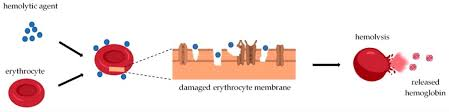
Hemolysis is the rupture of red blood cells, which can occur when a blood sample is handled roughly, such as by excessive shaking. This can cause the cells to break open and release their contents into the plasma, which can interfere with laboratory tests and lead to inaccurate results.
D. Hemostasis
Hemostasis is the process by which the body stops bleeding, which involves the clotting of blood. This process is not caused by shaking a blood collection tube. Hemostasis is a complex process that involves blood vessels, platelets, and clotting factors.
This question is an excerpt from Nurse Dive's nursing test bank - Phlebotomy Certification Proctored Exam 130. Take the full exam now
Full Explanation
Choice A Reason:
Hemophilia is a genetic disorder that impairs the body's ability to make blood clots, a process needed to stop bleeding. This condition is not caused by shaking a blood collection tube; it is an inherited disorder typically caused by a mutation in one of the clotting factor genes.
Choice B Reason:
Hemoconcentration refers to an increase in the concentration of cells and solids in the blood, usually resulting from a loss of plasma. While this can occur due to various reasons, such as dehydration, it is not caused by shaking a blood collection tube. Shaking a tube does not change the ratio of cells to plasma in the blood.
Choice C Reason:
Hemolysis is the rupture of red blood cells, which can occur when a blood sample is handled roughly, such as by excessive shaking. This can cause the cells to break open and release their contents into the plasma, which can interfere with laboratory tests and lead to inaccurate results.
Choice D Reason:
Hemostasis is the process by which the body stops bleeding, which involves the clotting of blood. This process is not caused by shaking a blood collection tube. Hemostasis is a complex process that involves blood vessels, platelets, and clotting factors.
Similar Questions
A phlebotomist is performing a venipuncture on a patient who is allergic to alcohol. Which of the following is an appropriate antiseptic to use in place of alcohol?
A. Sterile water
Sterile water is not an antiseptic; it does not contain antimicrobial agents. While it can be used to rinse a site, it will not disinfect the area before a venipuncture procedure. Therefore, it is not an appropriate substitute for alcohol in this context.
B. Antiseptic foam
Antiseptic foam may contain alcohol or other disinfectants. If it is alcohol-free, it could be a suitable alternative. However, without specific information about the ingredients, it cannot be assumed to be an appropriate choice for a patient allergic to alcohol.
C. Chlorhexidine
Chlorhexidine is a commonly used antiseptic for skin preparation before medical procedures, including venipuncture. It is effective against a broad spectrum of bacteria and is an appropriate alternative for patients who have an allergy to alcohol-based antiseptics.
D. Saline
Saline solution is not an antiseptic. It is a sterile solution of sodium chloride in water and does not have antimicrobial properties. Like sterile water, it is not suitable for disinfecting the venipuncture site.
Full Explanation
Choice A Reason:
Sterile water is not an antiseptic; it does not contain antimicrobial agents. While it can be used to rinse a site, it will not disinfect the area before a venipuncture procedure. Therefore, it is not an appropriate substitute for alcohol in this context.
Choice B Reason:
Antiseptic foam may contain alcohol or other disinfectants. If it is alcohol-free, it could be a suitable alternative. However, without specific information about the ingredients, it cannot be assumed to be an appropriate choice for a patient allergic to alcohol.
Choice C Reason:
Chlorhexidine is a commonly used antiseptic for skin preparation before medical procedures, including venipuncture. It is effective against a broad spectrum of bacteria and is an appropriate alternative for patients who have an allergy to alcohol-based antiseptics.
Choice D Reason:
Saline solution is not an antiseptic. It is a sterile solution of sodium chloride in water and does not have antimicrobial properties. Like sterile water, it is not suitable for disinfecting the venipuncture site.
Which of the following specimens requires a chain of custody form?
A. Blood for HIV testing
Blood for HIV testing does not typically require a chain of custody form. HIV testing is a confidential medical test, but the results are not usually used for legal purposes, which is when a chain of custody would be necessary.
B. Sputum for tuberculosis testing
Sputum for tuberculosis testing also does not require a chain of custody form. While the test is critical for diagnosing tuberculosis, the results are used for medical diagnosis and treatment rather than legal proceedings.
C. Blood for paternity testing
Blood for paternity testing requires a chain of custody form because the results can have legal implications, such as establishing paternity for child support or custody cases. The chain of custody ensures that the sample is properly handled and tracked from collection to analysis, preventing tampering or misidentification.
D. Swab for chlamydia testing
A swab for chlamydia testing, like HIV testing, is a confidential medical test that does not usually require a chain of custody form. The results are used for medical purposes, such as diagnosis and treatment, rather than legal proceedings.
Full Explanation
Choice A Reason:
Blood for HIV testing does not typically require a chain of custody form. HIV testing is a confidential medical test, but the results are not usually used for legal purposes, which is when a chain of custody would be necessary.
Choice B Reason:
Sputum for tuberculosis testing also does not require a chain of custody form. While the test is critical for diagnosing tuberculosis, the results are used for medical diagnosis and treatment rather than legal proceedings.
Choice C Reason:
Blood for paternity testing requires a chain of custody form because the results can have legal implications, such as establishing paternity for child support or custody cases. The chain of custody ensures that the sample is properly handled and tracked from collection to analysis, preventing tampering or misidentification.
Choice D Reason:
A swab for chlamydia testing, like HIV testing, is a confidential medical test that does not usually require a chain of custody form. The results are used for medical purposes, such as diagnosis and treatment, rather than legal proceedings.
Which of the following is used to stabilize a patient's arm during a venipuncture?
A. Arm restraints
Arm restraints are typically used to prevent patients from moving, particularly in pediatric or psychiatric settings where the patient may not voluntarily keep still. However, they are not specifically designed for stabilizing the arm during venipuncture procedures.
B. A blood pressure cuff
A blood pressure cuff can be used as a substitute for a tourniquet to engorge the veins before venipuncture, but it is not designed to stabilize the arm during the procedure. Its primary function is to measure blood pressure, not to provide stability.
C. A phlebotomy wedge
A phlebotomy wedge is a device specifically designed to support and stabilize a patient's arm during venipuncture. It helps to maintain the arm in a comfortable and steady position, which can be particularly helpful for patients with tremors or for those who have difficulty holding their arm still.
D. A phlebotomy cart
A phlebotomy cart is used to transport and organize phlebotomy supplies. While it is an essential piece of equipment for a phlebotomist, it does not play a role in stabilizing a patient's arm during venipuncture.
Full Explanation
Choice A Reason:
Arm restraints are typically used to prevent patients from moving, particularly in pediatric or psychiatric settings where the patient may not voluntarily keep still. However, they are not specifically designed for stabilizing the arm during venipuncture procedures.
Choice B Reason:
A blood pressure cuff can be used as a substitute for a tourniquet to engorge the veins before venipuncture, but it is not designed to stabilize the arm during the procedure. Its primary function is to measure blood pressure, not to provide stability.
Choice C Reason:
A phlebotomy wedge is a device specifically designed to support and stabilize a patient's arm during venipuncture. It helps to maintain the arm in a comfortable and steady position, which can be particularly helpful for patients with tremors or for those who have difficulty holding their arm still.
Choice D Reason:
A phlebotomy cart is used to transport and organize phlebotomy supplies. While it is an essential piece of equipment for a phlebotomist, it does not play a role in stabilizing a patient's arm during venipuncture.