
Nursing practice questions with comprehensive rationales
NurseDive Free Nursing Practice Question
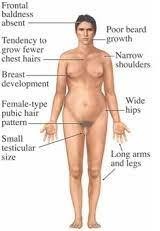
While assessing a male client, a nurse observes that the client has a small penis, long legs, short trunk, enlarged breast tissues, small testicles, and sexual dysfunction. What diagnosis does the nurse suspect from these findings?
A. Cri du chat "cry of the cat,"
Cri du chat syndrome involves a high-pitched cry in infants and other distinct physical and developmental features, but it doesn't present with the described symptoms.
B. Klinefelter syndrome
Klinefelter syndrome, characterized by an extra X chromosome (XXY) in males, typically presents with small testicles, gynecomastia (enlarged breast tissues), sexual dysfunction, and altered body proportions, such as long legs and a shorter trunk, aligning with the client's symptoms.
C. Patau syndrome
Patau syndrome (Trisomy 13) manifests with severe developmental issues, facial abnormalities, and other physical malformations, but the described symptoms are not typically associated with this syndrome.
D. Turner's syndrome
Turner syndrome involves females with a missing or partially missing X chromosome (45, X), resulting in specific physical features and medical problems not consistent with the described symptoms in a male client.
This question is an excerpt from Nurse Dive's nursing test bank - Interprofessional Care of the Client and Family Across the Lifespan II Proctored Exam. Take the full exam now
Full Explanation
Choice A rationale: Cri du chat syndrome involves a high-pitched cry in infants and other distinct physical and developmental features, but it doesn't present with the described symptoms.
Choice B rationale: Klinefelter syndrome, characterized by an extra X chromosome (XXY) in males, typically presents with small testicles, gynecomastia (enlarged breast tissues), sexual dysfunction, and altered body proportions, such as long legs and a shorter trunk, aligning with the client's symptoms.
Choice C rationale: Patau syndrome (Trisomy 13) manifests with severe developmental issues, facial abnormalities, and other physical malformations, but the described symptoms are not typically associated with this syndrome.
Choice D rationale: Turner syndrome involves females with a missing or partially missing X chromosome (45, X), resulting in specific physical features and medical problems not consistent with the described symptoms in a male client.
Similar Questions
The nurse is most likely to report which finding to the primary care provider for a client who has an established colostomy?
A. The skin under the appliance looks red briefly after removing the appliance.
Redness briefly after removing the appliance might be common due to increased blood flow but does not necessarily indicate an issue.
B. The stoma color is a deep red-purple.
A deep red-purple stoma color can suggest impaired blood supply to the stoma and requires immediate attention.
C. An ascending colostomy delivers liquid feces.
The consistency of output from the colostomy may vary based on the site and type of colostomy and might not necessarily be concerning.
D. The stoma extends 1/2 inch above the abdomen.
The length of the stoma can vary and usually depends on the type of colostomy, and 1/2 inch above the abdomen is within an acceptable range.
Full Explanation
Choice A rationale: Redness briefly after removing the appliance might be common due to increased blood flow but does not necessarily indicate an issue.
Choice B rationale: A deep red-purple stoma color can suggest impaired blood supply to the stoma and requires immediate attention.
Choice C rationale: The consistency of output from the colostomy may vary based on the site and type of colostomy and might not necessarily be concerning.
Choice D rationale: The length of the stoma can vary and usually depends on the type of colostomy, and 1/2 inch above the abdomen is within an acceptable range.
Which complication is suspected in a client whose blood sugar is less than 30 mg/dL?
A. Seizure
Hypoglycemia (blood sugar less than 30 mg/dL) can lead to seizures due to inadequate glucose supply to the brain.
B. Anorexia
Anorexia (loss of appetite) is not directly associated with low blood sugar but can be a symptom of other conditions.
C. Anhidrosis
Anhidrosis refers to the inability to sweat and is not typically associated with low blood sugar.
D. Bradycardia
Bradycardia (slow heart rate) can be a symptom of severe hypoglycemia but is not the primary complication expected at this blood sugar level.
Full Explanation
Choice A rationale: Hypoglycemia (blood sugar less than 30 mg/dL) can lead to seizures due to inadequate glucose supply to the brain.
Choice B rationale: Anorexia (loss of appetite) is not directly associated with low blood sugar but can be a symptom of other conditions.
Choice C rationale: Anhidrosis refers to the inability to sweat and is not typically associated with low blood sugar.
Choice D rationale: Bradycardia (slow heart rate) can be a symptom of severe hypoglycemia but is not the primary complication expected at this blood sugar level.
A client tells the nurse, "I have intense stomach pain for 3 hours after eating." On assessment the nurse finds abdominal pain and tenderness of the abdomen. The nurse suspects duodenal ulcers in the client. Which diagnostic procedure does the primary health-care provider least likely recommend?
A. Biopsy
Biopsy during an endoscopy can help confirm the presence of duodenal ulcers by analyzing tissue samples.
B. Urea breath test
Urea breath test is used to detect the presence of Helicobacter pylori, a bacterium associated with duodenal ulcers.
C. Endoscopy
Endoscopy is a standard procedure for diagnosing duodenal ulcers by directly visualizing the upper gastrointestinal tract.
D. Computed tomography (CT) scan
While a CT scan can be useful in some cases, it's less commonly used for diagnosing duodenal ulcers compared to other diagnostic methods like endoscopy, biopsy, or urea breath test.
Full Explanation
Choice A rationale: Biopsy during an endoscopy can help confirm the presence of duodenal ulcers by analyzing tissue samples.
Choice B rationale: Urea breath test is used to detect the presence of Helicobacter pylori, a bacterium associated with duodenal ulcers.
Choice C rationale: Endoscopy is a standard procedure for diagnosing duodenal ulcers by directly visualizing the upper gastrointestinal tract.
Choice D rationale: While a CT scan can be useful in some cases, it's less commonly used for diagnosing duodenal ulcers compared to other diagnostic methods like endoscopy,
biopsy, or urea breath test.