
Nursing practice questions with comprehensive rationales
NurseDive Free Nursing Practice Question
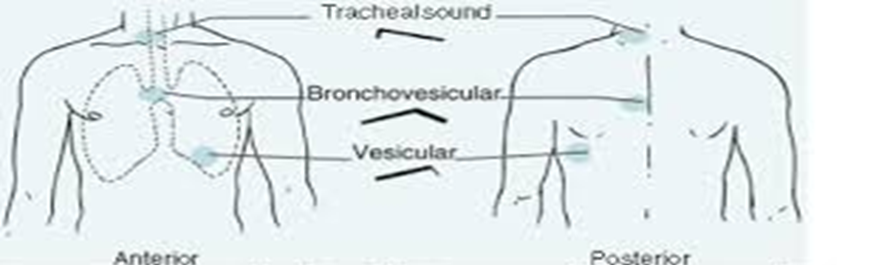
While auscultating a client's 1st and 2nd intercostal spaces, close to the sternal body, the nurse would document these normal breath sounds as which of the following?
A. Rhonchi
Rhonchi are coarse, rattling respiratory sounds somewhat like snoring, usually caused by obstruction or secretion in the larger airways. They are not considered normal breath sounds and are typically heard in conditions such as chronic bronchitis.
B. Crackles
Crackles are the sounds you will hear in a lung field that has fluid in the small airways. These sounds are commonly heard in patients with pneumonia, heart failure, and restrictive pulmonary diseases. They are not normal breath sounds.
C. Bronchovesicular
Bronchovesicular sounds are normal breath sounds heard over the main bronchus area and over the upper right posterior lung field. They have a medium pitch and intensity and are heard on both inspiration and expiration. In a healthy individual, these sounds are expected to be heard in the 1st and 2nd intercostal spaces near the sternal body.
D. Tracheal
Tracheal breath sounds are harsh, high-pitched sounds heard when auscultating over the trachea in the neck. They are not normally heard over the intercostal spaces of the chest wall.
This question is an excerpt from Nurse Dive's nursing test bank - Ati Fundamentals Assessment Proctored Exam Midterm. Take the full exam now
Full Explanation
Choice a reason:
Rhonchi are coarse, rattling respiratory sounds somewhat like snoring, usually caused by obstruction or secretion in the larger airways. They are not considered normal breath sounds and are typically heard in conditions such as chronic bronchitis.
Choice b reason:
Crackles are the sounds you will hear in a lung field that has fluid in the small airways. These sounds are commonly heard in patients with pneumonia, heart failure, and restrictive pulmonary diseases. They are not normal breath sounds.
Choice c reason:
Bronchovesicular sounds are normal breath sounds heard over the main bronchus area and over the upper right posterior lung field. They have a medium pitch and intensity and are heard on both inspiration and expiration. In a healthy individual, these sounds are expected to be heard in the 1st and 2nd intercostal spaces near the sternal body.
Choice d reason:
Tracheal breath sounds are harsh, high-pitched sounds heard when auscultating over the trachea in the neck. They are not normally heard over the intercostal spaces of the chest wall.
Similar Questions
A nurse is presenting a class about fall prevention to a group of assisted-living residents. Which of the following statements by a resident best indicates an understanding of the teaching?
A. "I should get a longer cord for my telephone."
Getting a longer cord for the telephone may reduce the risk of tripping over a short cord but could potentially introduce new tripping hazards if not managed properly. It's important to keep cords secured and out of walkways to prevent falls.
B. "I should place a throw rug over electrical cords."
Placing a throw rug over electrical cords is not advisable as it can create a tripping hazard. Rugs should be secured with non-slip backing and kept away from high-traffic areas to prevent falls.
C. "It is a good idea to use the handrails in the bathroom."
Using handrails in the bathroom is a recommended safety measure to prevent falls. Bathrooms can be slippery, and handrails provide support and stability for residents when moving around in this area.
D. "I should use chairs without armrests."
Using chairs without armrests is not a recommended practice for fall prevention. Chairs with armrests can aid residents in safely sitting down and standing up, providing support and reducing the risk of falls.
Full Explanation
Choice a reason:
Getting a longer cord for the telephone may reduce the risk of tripping over a short cord but could potentially introduce new tripping hazards if not managed properly. It's important to keep cords secured and out of walkways to prevent falls.
Choice b reason:
Placing a throw rug over electrical cords is not advisable as it can create a tripping hazard. Rugs should be secured with non-slip backing and kept away from high-traffic areas to prevent falls.
Choice c reason:
Using handrails in the bathroom is a recommended safety measure to prevent falls. Bathrooms can be slippery, and handrails provide support and stability for residents when moving around in this area.
Choice d reason:
Using chairs without armrests is not a recommended practice for fall prevention. Chairs with armrests can aid residents in safely sitting down and standing up, providing support and reducing the risk of falls.
Using the client's height of 72 inches and weight of 200 lbs, the nurse calculates the BMI. A BMI of 27 indicates which category for this patient?
A. Overweight
A BMI of 27 falls into the 'Overweight' category according to the standard BMI classification. The 'Overweight' range is defined as a BMI of 25 to 29.9. This indicates that the person's weight is higher than what is considered healthy for a given height.
B. Obesity Class I
'Obesity Class I' is characterized by a BMI of 30 to 34.9. Since the client's BMI is 27, it does not reach the threshold for this category.
C. Normal weight
The 'Normal weight' category ranges from a BMI of 18.5 to 24.9. With a BMI of 27, the client exceeds the upper limit of the normal weight range.
D. Obesity
The term 'Obesity' generally refers to a BMI of 30 or higher, which encompasses Obesity Class I, II, and III. Since the client's BMI is 27, it is below the obesity range.
Full Explanation
Choice a reason:
A BMI of 27 falls into the 'Overweight' category according to the standard BMI classification. The 'Overweight' range is defined as a BMI of 25 to 29.9. This indicates that the person's weight is higher than what is considered healthy for a given height.
Choice b reason:
'Obesity Class I' is characterized by a BMI of 30 to 34.9. Since the client's BMI is 27, it does not reach the threshold for this category.
Choice c reason:
The 'Normal weight' category ranges from a BMI of 18.5 to 24.9. With a BMI of 27, the client exceeds the upper limit of the normal weight range.
Choice d reason:
The term 'Obesity' generally refers to a BMI of 30 or higher, which encompasses Obesity Class I, II, and III. Since the client's BMI is 27, it is below the obesity range.
A nurse educator is presenting at a continuing education seminar for nurses. As part of his presentation, he is emphasizing the prevention of skin breakdown in immobile patients who have suffered from a stroke. The level of prevention being discussed by the nurse educator is:
A. Educational Prevention
Educational Prevention is not a recognized level of prevention in healthcare. While education is a key component in all levels of prevention, it is not a standalone category. Education is typically included in primary prevention as it involves informing the public about health practices to prevent the onset of disease.
B. Tertiary Prevention
Tertiary Prevention is the level of prevention that aims to manage and treat an existing disease to prevent further complications or deterioration. In the case of immobile stroke patients, tertiary prevention would involve measures to prevent skin breakdown and other complications associated with immobility and the stroke's long-term effects.
C. Secondary Prevention
Secondary Prevention involves early detection and prompt intervention to prevent the progression of a disease. For stroke patients, secondary prevention might include monitoring for signs of skin breakdown so that early treatment can be initiated. However, the scenario described focuses on managing an existing condition rather than early detection.
D. Primary Prevention
Primary Prevention aims to prevent the disease or injury before it occurs. This would involve strategies to prevent strokes in the first place, such as controlling high blood pressure or encouraging healthy lifestyle changes. It does not directly relate to the prevention of skin breakdown in patients who have already had a stroke.
Full Explanation
Choice a reason:
Educational Prevention is not a recognized level of prevention in healthcare. While education is a key component in all levels of prevention, it is not a standalone category. Education is typically included in primary prevention as it involves informing the public about health practices to prevent the onset of disease.
Choice b reason:
Tertiary Prevention is the level of prevention that aims to manage and treat an existing disease to prevent further complications or deterioration. In the case of immobile stroke patients, tertiary prevention would involve measures to prevent skin breakdown and other complications associated with immobility and the stroke's long-term effects.
Choice c reason:
Secondary Prevention involves early detection and prompt intervention to prevent the progression of a disease. For stroke patients, secondary prevention might include monitoring for signs of skin breakdown so that early treatment can be initiated. However, the scenario described focuses on managing an existing condition rather than early detection.
Choice d reason:
Primary Prevention aims to prevent the disease or injury before it occurs. This would involve strategies to prevent strokes in the first place, such as controlling high blood pressure or encouraging healthy lifestyle changes. It does not directly relate to the prevention of skin breakdown in patients who have already had a stroke.