
Nursing practice questions with comprehensive rationales
NurseDive Free Nursing Practice Question
A 35-year-old female client with a history of irregular periods is scheduled for her first Pap smear. After explaining the procedure and potential risks, the nurse wants to assess the client's understanding of post-procedure instructions. Which of the following statements made by the client reflect an understanding of the explanation?
A. "I should avoid douching or using tampons for 24 hours after the Pap smear."
The statement, "I should avoid douching or using tampons for 24 hours after the Pap smear," demonstrates an understanding of post-procedure instructions. It reflects awareness of the need to avoid introducing foreign substances into the vagina immediately after the procedure, which could interfere with the accuracy of the results or increase the risk of infection. By abstaining from douching or tampon use, the client follows recommended guidelines for post-Pap smear care, promoting optimal healing and accuracy of results.
B. . "I can resume sexual activity as soon as I leave the clinic."
The statement, "I can resume sexual activity as soon as I leave the clinic," is incorrect and does not reflect an understanding of post-Pap smear instructions. Resuming sexual activity immediately after the procedure is not recommended, as it may increase the risk of infection or discomfort. The client should be advised to abstain from sexual activity for a specified period, typically recommended by the healthcare provider, to allow for proper healing and to minimize the risk of complications.
C. "It's normal to experience some mild cramping or spotting after the procedure."
The statement, "It’s normal to experience some mild cramping or spotting after the procedure," demonstrates an understanding of common post-Pap smear symptoms. Mild cramping and spotting are normal reactions to the procedure and are not typically indicative of a problem. By acknowledging these potential side effects, the client shows awareness of what to expect after the Pap smear and is better prepared to manage any discomfort that may arise.
D. "I should call the clinic if I experience heavy bleeding or foul-smelling discharge."
The statement, "I should call the clinic if I experience heavy bleeding or foul-smelling discharge," reflects an understanding of the importance of monitoring for signs of complications post-procedure. Heavy bleeding or foul-smelling discharge may indicate an infection or other issues that require prompt medical attention. By instructing the client to contact the clinic in such situations, the nurse ensures that the client knows how to respond appropriately to potential complications, promoting their overall well-being and timely intervention if necessary.
E. "I can expect the results of my Pap smear in about 2-3 days."
The statement, "I can expect the results of my Pap smear in about 2-3 days," is incorrect and does not reflect an understanding of the typical timeline for receiving Pap smear results. Pap smear results usually take longer, often a week or more, to be processed and interpreted by the laboratory. Providing accurate information about result expectations is essential for managing the client's post-procedure anxiety and ensuring realistic expectations regarding follow-up.
This question is an excerpt from Nurse Dive's nursing test bank - ATI Comprehensive Predictor 2023 Proctored Exam. Take the full exam now
Full Explanation
The correct answer is Choices A, C, and D.
Choice A rationale:
The statement, "I should avoid douching or using tampons for 24 hours after the Pap smear," demonstrates an understanding of post-procedure instructions. It reflects awareness of the need to avoid introducing foreign substances into the vagina immediately after the procedure, which could interfere with the accuracy of the results or increase the risk of infection. By abstaining from douching or tampon use, the client follows recommended guidelines for post-Pap smear care, promoting optimal healing and accuracy of results.
Choice B rationale:
The statement, "I can resume sexual activity as soon as I leave the clinic," is incorrect and does not reflect an understanding of post-Pap smear instructions. Resuming sexual activity immediately after the procedure is not recommended, as it may increase the risk of infection or discomfort. The client should be advised to abstain from sexual activity for a specified period, typically recommended by the healthcare provider, to allow for proper healing and to minimize the risk of complications.
Choice C rationale:
The statement, "It’s normal to experience some mild cramping or spotting after the procedure," demonstrates an understanding of common post-Pap smear symptoms. Mild cramping and spotting are normal reactions to the procedure and are not typically indicative of a problem. By acknowledging these potential side effects, the client shows awareness of what to expect after the Pap smear and is better prepared to manage any discomfort that may arise.
Choice D rationale:
The statement, "I should call the clinic if I experience heavy bleeding or foul-smelling discharge," reflects an understanding of the importance of monitoring for signs of complications post-procedure. Heavy bleeding or foul-smelling discharge may indicate an infection or other issues that require prompt medical attention. By instructing the client to contact the clinic in such situations, the nurse ensures that the client knows how to respond appropriately to potential complications, promoting their overall well-being and timely intervention if necessary.
Choice E rationale:
The statement, "I can expect the results of my Pap smear in about 2-3 days," is incorrect and does not reflect an understanding of the typical timeline for receiving Pap smear results. Pap smear results usually take longer, often a week or more, to be processed and interpreted by the laboratory. Providing accurate information about result expectations is essential for managing the client's post-procedure anxiety and ensuring realistic expectations regarding follow-up.
Similar Questions
A community health nurse is assisting with the development of a pamphlet regarding choking hazards for toddlers. Which of the following foods should the nurse include?
A. Grapes
Grapes are a common choking hazard for toddlers because they are round, slippery, and can easily block the airway if swallowed whole or partially bitten. The nurse should include grapes as food to avoid or cut into small pieces before giving to toddlers.
B. Potatoes
C. Corn
D. Oranges
Full Explanation
The correct answer is A.
Grapes are a common choking hazard for toddlers because they are round, slippery, and can easily block the airway if swallowed whole or partially bitten. The nurse should include grapes as food to avoid or cut into small pieces before giving to toddlers.
A nurse is caring for a client who has a prescription for acetaminophen 300 mg with codeine 30 mg, 1 tablet every 3 to 4 hr PRN for pain. The nurse inadvertently administers 2 tablets to the client. In which of the following locations should the nurse document this client care incident?
A. Nursing care plan
B. Provider's progress notes
C. Controlled substance inventory record
D. Incident report
An incident report is a form that nurses fill out when an error, accident, or injury occurs involving a client, staff, or visitor. The purpose of an incident report is to document the facts, identify the causes, and prevent recurrence of similar incidents. The nurse should document the medication error in an incident report and notify the provider and supervisor as soon as possible.
Full Explanation
The correct answer is D.
Incident report. An incident report is a form that nurses fill out when an error, accident, or injury occurs involving a client, staff, or visitor. The purpose of an incident report is to document the facts, identify the causes, and prevent recurrence of similar incidents. The nurse should document the medication error in an incident report and notify the provider and supervisor as soon as possible.
A nurse is reinforcing teaching with a client who has GERD and a prescription for pantoprazole. Which of the following statements indicates an understanding of the teaching?
A. I have to take this medication on an empty stomach."
Pantoprazole can be taken with or without food, so it does not need to be taken on an empty stomach.
B. 1 will need to remain upright for 1 hour after taking the medication."
Remaining upright for at least 1 hour after taking pantoprazole helps prevent acid reflux and ensures the medication works effectively.
C. 1 should expect to have diarrhea while taking this medication."
Diarrhea is a possible side effect of pantoprazole, but it is not an expected outcome for all patients. If diarrhea occurs, it should be reported to a healthcare provider.
D. I can take antacids at the same time as this medication."
Antacids can be taken with pantoprazole, but it is generally recommended to take them at different times to avoid potential interactions.
Full Explanation
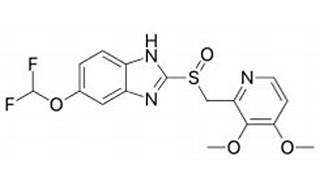
The correct answer is choice b. I will need to remain upright for 1 hour after taking the medication.
Choice A rationale:
Pantoprazole can be taken with or without food, so it does not need to be taken on an empty stomach.
Choice B rationale:
Remaining upright for at least 1 hour after taking pantoprazole helps prevent acid reflux and ensures the medication works effectively.
Choice C rationale:
Diarrhea is a possible side effect of pantoprazole, but it is not an expected outcome for all patients. If diarrhea occurs, it should be reported to a healthcare provider.
Choice D rationale:
Antacids can be taken with pantoprazole, but it is generally recommended to take them at different times to avoid potential interactions.