Nursing practice questions with comprehensive rationales
NurseDive Free Nursing Practice Question
A child with epilepsy has been seizure free for 2 years. A father asks the nurse how much longer the child will need to take the anti-seizure medications. The nurse includes which of the following in the response?
A. A step-wise approach will be used to reduce the dosage gradually.
After a certain period of seizure control, a healthcare provider may consider gradually tapering and discontinuing anti-seizure medications in consultation with the child's neurologist. This is often done in a step-wise manner to monitor the child's condition and minimize the risk of seizure recurrence. Stopping anti-seizure medications abruptly can increase the risk of seizures returning. Therefore, the response provided in option A is the most accurate and relevant to the situation. The other options are incorrect:
B. Your child will always suffer seizures
This statement is not accurate, as some children with epilepsy can achieve long-term seizure control with appropriate treatment. Epilepsy management varies from person to person, and many individuals can experience extended periods of seizure freedom.
C. This is always a hereditary disorder
Epilepsy can have both genetic and non-genetic causes. While there are genetic forms of epilepsy, not all cases are hereditary. Epilepsy can be caused by a variety of factors, including brain injuries, infections, and other medical conditions.
D. Only her male offspring will experience seizures
Epilepsy does not discriminate based on gender. Both males and females can be affected by epilepsy. This statement is not accurate and does not reflect the reality of epilepsy as a medical condition.
This question is an excerpt from Nurse Dive's nursing test bank - ATI PAEDIATRICS PROCTORED EXAM - SIMMONS U BSN. Take the full exam now
Full Explanation
A) A step-wise approach will be used to reduce the dosage gradually.
Explanation:
After a certain period of seizure control, a healthcare provider may consider gradually tapering and discontinuing anti-seizure medications in consultation with the child's neurologist. This is often done in a step-wise manner to monitor the child's condition and minimize the risk of seizure recurrence. Stopping anti-seizure medications abruptly can increase the risk of seizures returning. Therefore, the response provided in option A is the most accurate and relevant to the situation.
The other options are incorrect:
B) Your child will always suffer seizures:
This statement is not accurate, as some children with epilepsy can achieve long-term seizure control with appropriate treatment. Epilepsy management varies from person to person, and many individuals can experience extended periods of seizure freedom.
C) This is always a hereditary disorder:
Epilepsy can have both genetic and non-genetic causes. While there are genetic forms of epilepsy, not all cases are hereditary. Epilepsy can be caused by a variety of factors, including brain injuries, infections, and other medical conditions.
D) Only her male offspring will experience seizures:
Epilepsy does not discriminate based on gender. Both males and females can be affected by epilepsy. This statement is not accurate and does not reflect the reality of epilepsy as a medical condition.
Similar Questions
Which of the following statements by a mother of a toddler diagnosed with nephrotic syndrome indicates that the mother understands the teaching about the disease?
A. "We worry about surgery. Do you think we should investigate direct donation of blood?"
This statement doesn't show a clear understanding of nephrotic syndrome. Nephrotic syndrome is a kidney disorder that involves the kidneys' ability to filter blood, but it doesn't typically involve blood donation or surgery related to that. Direct donation of blood is not relevant to the treatment or management of nephrotic syndrome.
B. "We'll have to encourage lots of liquids. Did you say about Biters per day?"
This statement suggests a misunderstanding of nephrotic syndrome and its management. Encouraging lots of liquids is generally not a primary concern in nephrotic syndrome. In fact, excess fluid intake might be counterproductive, as it could worsen edema (swelling) that often occurs with this condition. Additionally, the term "Biters per day" doesn't seem relevant to nephrotic syndrome or its management.
C. "My child really likes chips and bologna. I guess we will have to find something else.
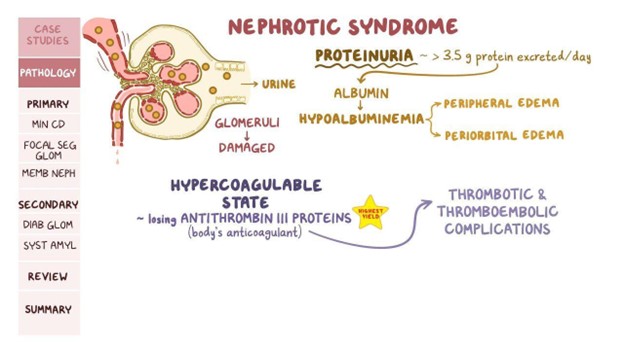
This statement indicates an understanding of dietary considerations related to nephrotic syndrome. Nephrotic syndrome involves protein loss through the urine, which can lead to low protein levels in the blood. To address this, dietary changes are often recommended to include foods rich in protein. Avoiding high-sodium foods like chips and bologna is also important, as excessive sodium intake can contribute to fluid retention and worsen edema.
D. We understand the need for antibiotics, hope they can be given orally
This statement doesn't relate to nephrotic syndrome or its management. Nephrotic syndrome primarily involves issues with kidney function and protein loss, and antibiotics are not a standard treatment for this condition. Antibiotics are used to treat infections, which can sometimes be a complication of nephrotic syndrome due to the immune system's vulnerability, but the statement doesn't focus on the understanding of the disease itself. Correct Answer: C. "My child really likes chips and bologna. I guess we will have to find something else."Explanation: This statement shows an understanding of the dietary changes needed for a child with nephrotic syndrome. It acknowledges the importance of adjusting the child's diet to include protein-rich foods and avoid high-sodium options, which aligns with the nutritional considerations for managing nephrotic syndrome.
Full Explanation
A. "We worry about surgery. Do you think we should investigate direct donation of blood?"
Explanation: This statement doesn't show a clear understanding of nephrotic syndrome. Nephrotic syndrome is a kidney disorder that involves the kidneys' ability to filter blood, but it doesn't typically involve blood donation or surgery related to that. Direct donation of blood is not relevant to the treatment or management of nephrotic syndrome.
B. "We'll have to encourage lots of liquids. Did you say about Biters per day?"
Explanation: This statement suggests a misunderstanding of nephrotic syndrome and its management. Encouraging lots of liquids is generally not a primary concern in nephrotic syndrome. In fact, excess fluid intake might be counterproductive, as it could worsen edema (swelling) that often occurs with this condition. Additionally, the term "Biters per day" doesn't seem relevant to nephrotic syndrome or its management.
C. "My child really likes chips and bologna. I guess we will have to find something else."
Explanation: This statement indicates an understanding of dietary considerations related to nephrotic syndrome. Nephrotic syndrome involves protein loss through the urine, which can lead to low protein levels in the blood. To address this, dietary changes are often recommended to include foods rich in protein. Avoiding high-sodium foods like chips and bologna is also important, as excessive sodium intake can contribute to fluid retention and worsen edema.
D. "We understand the need for antibiotics, hope they can be given orally."
Explanation: This statement doesn't relate to nephrotic syndrome or its management. Nephrotic syndrome primarily involves issues with kidney function and protein loss, and antibiotics are not a standard treatment for this condition. Antibiotics are used to treat infections, which can sometimes be a complication of nephrotic syndrome due to the immune system's vulnerability, but the statement doesn't focus on the understanding of the disease itself.
Correct Answer: C. "My child really likes chips and bologna. I guess we will have to find something else."
Explanation: This statement shows an understanding of the dietary changes needed for a child with nephrotic syndrome. It acknowledges the importance of adjusting the child's diet to include protein-rich foods and avoid high-sodium options, which aligns with the nutritional considerations for managing nephrotic syndrome.
An eight-year-old with nephrotic syndrome is pale, lethargic, and has ascites. To determine if the ascites is increasing, the nurse should (chose one best answer):
A. assess the bowel sounds
Bowel sounds are not directly related to the assessment of ascites. Bowel sounds are more relevant in assessing gastrointestinal function and peristalsis. While bowel changes could potentially be a sign of complications, monitoring abdominal girth is more specific to tracking ascites.
B. Frequently ambulate child
While ambulation is important for overall health, it's not a direct assessment method for monitoring ascites. Ambulating a child might have benefits, but it won't provide specific information about the presence or progression of ascites.
C. Weigh child weekly
Weekly weighing can provide some information about overall fluid balance, but it might not be as sensitive as measuring abdominal girth when it comes to detecting changes in ascites. Additionally, monitoring weight alone might not give insight into the distribution of fluid in the abdominal cavity.
D. monitor and measure the abdominal girth
The presence of ascites (accumulation of fluid in the abdominal cavity) in a child with nephrotic syndrome could indicate worsening kidney function and fluid balance. Monitoring and measuring the abdominal girth is a reliable way to assess changes in the amount of fluid accumulation over time. An increase in abdominal girth could suggest a worsening condition.
Full Explanation
A. Assess the bowel sounds:
Bowel sounds are not directly related to the assessment of ascites. Bowel sounds are more relevant in assessing gastrointestinal function and peristalsis. While bowel changes could potentially be a sign of complications, monitoring abdominal girth is more specific to tracking ascites.
B. Frequently ambulate child:
While ambulation is important for overall health, it's not a direct assessment method for monitoring ascites. Ambulating a child might have benefits, but it won't provide specific information about the presence or progression of ascites.
C. Weigh child weekly:
Weekly weighing can provide some information about overall fluid balance, but it might not be as sensitive as measuring abdominal girth when it comes to detecting changes in ascites. Additionally, monitoring weight alone might not give insight into the distribution of fluid in the abdominal cavity.
D. Monitor and measure the abdominal girth.
Explanation: The presence of ascites (accumulation of fluid in the abdominal cavity) in a child with nephrotic syndrome could indicate worsening kidney function and fluid balance. Monitoring and measuring the abdominal girth is a reliable way to assess changes in the amount of fluid accumulation over time. An increase in abdominal girth could suggest a worsening condition.
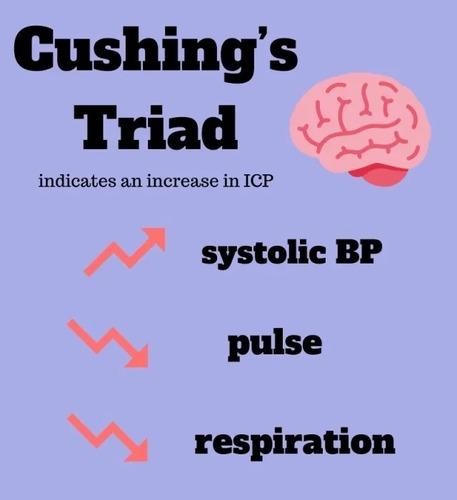
Cushings Triad is an ominous sign including the following:
A. Elevated blood glucose is remarkable with Cushings triad
Elevated blood glucose is not one of the components of Cushing's Triad. The triad focuses on cardiovascular and respiratory changes associated with increased intracranial pressure, not blood glucose levels.
B. Cushings Triad includes a positive Macawens sign
Macawen's sign is not part of Cushing's Triad. Cushing's Triad is specifically related to the physiological responses seen in response to increased intracranial pressure and is not associated with Macawen's sign.
C. Cushings triad includes tachycardia, seizures and rapid respirations
This option is not accurate. Cushing's Triad involves bradycardia (slow heart rate), irregular respirations, and a widening pulse pressure. Tachycardia (rapid heart rate) and seizures are not part of Cushing's Triad but might be indicative of other medical conditions or complications.
D. Bradycardia, irregular respirations and a widening pulse pressure.
Cushing's Triad is a set of three clinical signs that are indicative of increased intracranial pressure (ICP) and are considered ominous as they suggest serious brain injury or pathology. The triad consists of: Bradycardia: This refers to a slow heart rate. As intracranial pressure increases, it can lead to a decreased heart rate due to pressure on the brainstem, which is involved in regulating heart rate. Irregular Respirations: Increased ICP can affect the brainstem's control over breathing, leading to irregular patterns of breathing, often known as Cheyne-Stokes respiration. This is characterized by periods of rapid breathing followed by apnea (temporary cessation of breathing). Widening Pulse Pressure: Pulse pressure is the difference between systolic and diastolic blood pressure. An increase in ICP can cause an increase in systolic blood pressure and a decrease in diastolic blood pressure, leading to a widening pulse pressure.
Full Explanation
A. Elevated blood glucose is remarkable with Cushing's Triad:
Elevated blood glucose is not one of the components of Cushing's Triad. The triad focuses on cardiovascular and respiratory changes associated with increased intracranial pressure, not blood glucose levels.
B. Cushing's Triad includes a positive Macawen's sign:
Macawen's sign is not part of Cushing's Triad. Cushing's Triad is specifically related to the physiological responses seen in response to increased intracranial pressure and is not associated with Macawen's sign.
C. Cushing's Triad includes tachycardia, seizures and rapid respirations:
This option is not accurate. Cushing's Triad involves bradycardia (slow heart rate), irregular respirations, and a widening pulse pressure. Tachycardia (rapid heart rate) and seizures are not part of Cushing's Triad but might be indicative of other medical conditions or complications.
D. Bradycardia, irregular respirations and a widening pulse pressure.
Explanation: Cushing's Triad is a set of three clinical signs that are indicative of increased intracranial pressure (ICP) and are considered ominous as they suggest serious brain injury or pathology. The triad consists of:
Bradycardia: This refers to a slow heart rate. As intracranial pressure increases, it can lead to a decreased heart rate due to pressure on the brainstem, which is involved in regulating heart rate.
Irregular Respirations: Increased ICP can affect the brainstem's control over breathing, leading to irregular patterns of breathing, often known as Cheyne-Stokes respiration. This is characterized by periods of rapid breathing followed by apnea (temporary cessation of breathing).
Widening Pulse Pressure: Pulse pressure is the difference between systolic and diastolic blood pressure. An increase in ICP can cause an increase in systolic blood pressure and a decrease in diastolic blood pressure, leading to a widening pulse pressure.