
Nursing practice questions with comprehensive rationales
NurseDive Free Nursing Practice Question
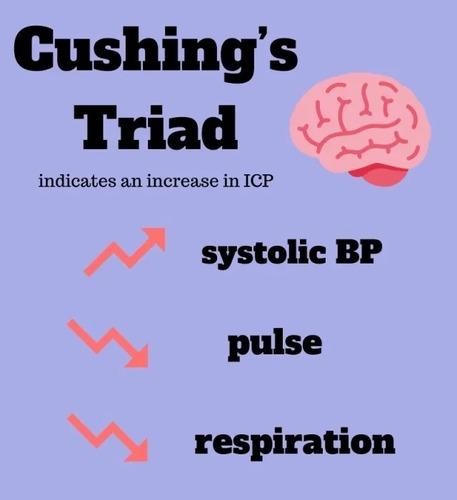
Cushings Triad is an ominous sign including the following:
A. Elevated blood glucose is remarkable with Cushings triad
Elevated blood glucose is not one of the components of Cushing's Triad. The triad focuses on cardiovascular and respiratory changes associated with increased intracranial pressure, not blood glucose levels.
B. Cushings Triad includes a positive Macawens sign
Macawen's sign is not part of Cushing's Triad. Cushing's Triad is specifically related to the physiological responses seen in response to increased intracranial pressure and is not associated with Macawen's sign.
C. Cushings triad includes tachycardia, seizures and rapid respirations
This option is not accurate. Cushing's Triad involves bradycardia (slow heart rate), irregular respirations, and a widening pulse pressure. Tachycardia (rapid heart rate) and seizures are not part of Cushing's Triad but might be indicative of other medical conditions or complications.
D. Bradycardia, irregular respirations and a widening pulse pressure.
Cushing's Triad is a set of three clinical signs that are indicative of increased intracranial pressure (ICP) and are considered ominous as they suggest serious brain injury or pathology. The triad consists of: Bradycardia: This refers to a slow heart rate. As intracranial pressure increases, it can lead to a decreased heart rate due to pressure on the brainstem, which is involved in regulating heart rate. Irregular Respirations: Increased ICP can affect the brainstem's control over breathing, leading to irregular patterns of breathing, often known as Cheyne-Stokes respiration. This is characterized by periods of rapid breathing followed by apnea (temporary cessation of breathing). Widening Pulse Pressure: Pulse pressure is the difference between systolic and diastolic blood pressure. An increase in ICP can cause an increase in systolic blood pressure and a decrease in diastolic blood pressure, leading to a widening pulse pressure.
This question is an excerpt from Nurse Dive's nursing test bank - ATI PAEDIATRICS PROCTORED EXAM - SIMMONS U BSN. Take the full exam now
Full Explanation
A. Elevated blood glucose is remarkable with Cushing's Triad:
Elevated blood glucose is not one of the components of Cushing's Triad. The triad focuses on cardiovascular and respiratory changes associated with increased intracranial pressure, not blood glucose levels.
B. Cushing's Triad includes a positive Macawen's sign:
Macawen's sign is not part of Cushing's Triad. Cushing's Triad is specifically related to the physiological responses seen in response to increased intracranial pressure and is not associated with Macawen's sign.
C. Cushing's Triad includes tachycardia, seizures and rapid respirations:
This option is not accurate. Cushing's Triad involves bradycardia (slow heart rate), irregular respirations, and a widening pulse pressure. Tachycardia (rapid heart rate) and seizures are not part of Cushing's Triad but might be indicative of other medical conditions or complications.
D. Bradycardia, irregular respirations and a widening pulse pressure.
Explanation: Cushing's Triad is a set of three clinical signs that are indicative of increased intracranial pressure (ICP) and are considered ominous as they suggest serious brain injury or pathology. The triad consists of:
Bradycardia: This refers to a slow heart rate. As intracranial pressure increases, it can lead to a decreased heart rate due to pressure on the brainstem, which is involved in regulating heart rate.
Irregular Respirations: Increased ICP can affect the brainstem's control over breathing, leading to irregular patterns of breathing, often known as Cheyne-Stokes respiration. This is characterized by periods of rapid breathing followed by apnea (temporary cessation of breathing).
Widening Pulse Pressure: Pulse pressure is the difference between systolic and diastolic blood pressure. An increase in ICP can cause an increase in systolic blood pressure and a decrease in diastolic blood pressure, leading to a widening pulse pressure.
Similar Questions
A child with growth hormone deficiency (hypopituitarism) is being started on growth hormone therapy. Nursing considerations should be based on knowledge of which of the following:
A. Replacement therapy may require daily subcutaneous injections
Growth hormone deficiency (hypopituitarism) often requires treatment with growth hormone therapy. One common method of administering growth hormone is through daily subcutaneous injections. Subcutaneous injections involve injecting the medication under the skin into the fatty tissue. This is a routine part of growth hormone therapy, and nursing considerations would include educating the child and their family about proper injection techniques, site rotation, and adherence to the treatment schedule. Explanation for the other choices:
B. Lifelong replacement therapy will be required
This statement is generally true. Growth hormone deficiency often requires long-term treatment, which may extend throughout childhood and adolescence. However, in some cases, the need for growth hormone therapy might change based on the individual's response to treatment and growth patterns.
C. Treatment is most successful if started during adolescence.
The optimal timing for starting growth hormone therapy can vary depending on the specific circumstances and the underlying cause of growth hormone deficiency. While treatment during adolescence can be effective, growth hormone therapy can also be successful if started earlier in childhood or later in adolescence. The key is identifying and treating the deficiency as soon as possible to promote healthy growth.
D. Treatment is considered successful if children attain full stature by adulthood
While growth hormone therapy aims to support growth, achieving "full stature" might not always be possible. The goal of treatment is to help the child reach a more typical height based on their genetic potential and individual response to therapy. The success of treatment is determined by improvements in growth velocity and height, rather than necessarily achieving "full stature," which can vary greatly among individuals.
Full Explanation
A. Replacement therapy may require daily subcutaneous injections.
Explanation: Growth hormone deficiency (hypopituitarism) often requires treatment with growth hormone therapy. One common method of administering growth hormone is through daily subcutaneous injections. Subcutaneous injections involve injecting the medication under the skin into the fatty tissue. This is a routine part of growth hormone therapy, and nursing considerations would include educating the child and their family about proper injection techniques, site rotation, and adherence to the treatment schedule.
Explanation for the other choices:
B. Lifelong replacement therapy will be required:
This statement is generally true. Growth hormone deficiency often requires long-term treatment, which may extend throughout childhood and adolescence. However, in some cases, the need for growth hormone therapy might change based on the individual's response to treatment and growth patterns.
C. Treatment is most successful if started during adolescence:
The optimal timing for starting growth hormone therapy can vary depending on the specific circumstances and the underlying cause of growth hormone deficiency. While treatment during adolescence can be effective, growth hormone therapy can also be successful if started earlier in childhood or later in adolescence. The key is identifying and treating the deficiency as soon as possible to promote healthy growth.
D. Treatment is considered successful if children attain full stature by adulthood:
While growth hormone therapy aims to support growth, achieving "full stature" might not always be possible. The goal of treatment is to help the child reach a more typical height based on their genetic potential and individual response to therapy. The success of treatment is determined by improvements in growth velocity and height, rather than necessarily achieving "full stature," which can vary greatly among individuals.
What is the daily fluid requirement (total in 24 hours) for a child who weighs 70.4lb? Do not use a label- it is ml. in the answer.(Answer in 24-hour clock system)
A. 1740
Fluid Requirement (mL/24 hours) = Weight (kg) × Fluid Requirement (mL/kg) Given that the child weighs 70.4 pounds, we first need to convert this weight to kilograms (1 lb = 0.453592 kg): Weight in kg = 70.4 lb × 0.453592 kg/lb ≈ 31.89 kg Now, let's calculate the fluid requirement using the given choices: Fluid Requirement = 31.89 kg × 55 mL/kg = 1753.95 mL
B. 134056
This number is significantly larger than any reasonable fluid requirement and is likely an error.
C. 2
This value is far too low to represent the fluid requirements of a child.
D. 12
This value is also too low to represent the fluid requirements of a child. So, the correct answer is A) 1740 mL. The child's estimated daily fluid requirement would be around 1740 mL in a 24-hour period, based on a weight of 70.4 pounds.
Full Explanation
Fluid Requirement (mL/24 hours) = Weight (kg) × Fluid Requirement (mL/kg)
Given that the child weighs 70.4 pounds, we first need to convert this weight to kilograms (1 lb = 0.453592 kg):
Weight in kg = 70.4 lb × 0.453592 kg/lb ≈ 31.89 kg
Now, let's calculate the fluid requirement using the given choices:
A) 1740:
Fluid Requirement = 31.89 kg × 55 mL/kg = 1753.95 mL
B) 134056:
This number is significantly larger than any reasonable fluid requirement and is likely an error.
C) 2:
This value is far too low to represent the fluid requirements of a child.
D) 12:
This value is also too low to represent the fluid requirements of a child.
So, the correct answer is A) 1740 mL. The child's estimated daily fluid requirement would be around 1740 mL in a 24-hour period, based on a weight of 70.4 pounds.
A nurse is providing teaching to an adolescent who has type 1 diabetes mellitus. Which of the following should the nurse include in the teaching?
A. Obtain an influenza vaccine annually
This is a crucial recommendation. People with diabetes, including type 1 diabetes, have a higher risk of complications from infections, including influenza (the flu). The flu can lead to elevated blood sugar levels and potentially worsen diabetes control. Getting an annual influenza vaccine helps reduce the risk of getting the flu and its associated complications.
B. Take glyburide with breakfast
Glyburide is a medication used to treat type 2 diabetes, not type 1 diabetes. It stimulates the pancreas to produce more insulin. Type 1 diabetes is characterized by a lack of insulin production, so taking glyburide would not be appropriate.
C. Administer glucagon for hyperglycemia
Glucagon is a hormone used to raise blood sugar levels, typically in cases of severe hypoglycemia (low blood sugar). It is not used to treat hyperglycemia (high blood sugar) in type 1 diabetes. Instead, insulin administration is the primary method for managing high blood sugar levels.
D. Inject insulin in the deltoid muscle
Insulin injections for individuals with type 1 diabetes are typically given in the subcutaneous fat, which is found just beneath the skin. The deltoid muscle is not a recommended site for insulin injections due to inconsistent absorption. The abdomen, thighs, and buttocks are commonly recommended injection sites.
Full Explanation
Type 1 diabetes mellitus is a condition where the body's immune system mistakenly attacks and destroys the insulin-producing cells in the pancreas. Individuals with type 1 diabetes require insulin therapy to manage their blood sugar levels. Since the question is about teaching an adolescent with type 1 diabetes, let's analyze each option:
A) Obtain an influenza vaccine annually:
This is a crucial recommendation. People with diabetes, including type 1 diabetes, have a higher risk of complications from infections, including influenza (the flu). The flu can lead to elevated blood sugar levels and potentially worsen diabetes control. Getting an annual influenza vaccine helps reduce the risk of getting the flu and its associated complications.
B) Take glyburide with breakfast:
Glyburide is a medication used to treat type 2 diabetes, not type 1 diabetes. It stimulates the pancreas to produce more insulin. Type 1 diabetes is characterized by a lack of insulin production, so taking glyburide would not be appropriate.
C) Administer glucagon for hyperglycemia:
Glucagon is a hormone used to raise blood sugar levels, typically in cases of severe hypoglycemia (low blood sugar). It is not used to treat hyperglycemia (high blood sugar) in type 1 diabetes. Instead, insulin administration is the primary method for managing high blood sugar levels.
D) Inject insulin in the deltoid muscle:
Insulin injections for individuals with type 1 diabetes are typically given in the subcutaneous fat, which is found just beneath the skin. The deltoid muscle is not a recommended site for insulin injections due to inconsistent absorption. The abdomen, thighs, and buttocks are commonly recommended injection sites.