
Nursing practice questions with comprehensive rationales
NurseDive Free Nursing Practice Question
A client with diffuse axonal injury is experiencing difficulty with respiration, heart rate, blood pressure. Which region of the brain does the nurse suspect to be affected?
A. Cerebral motor cortex
Cerebral motor cortex primarily controls voluntary movements, not autonomic functions like respiration, heart rate, and blood pressure.
B. Brain stem
The brain stem controls vital functions like respiration, heart rate, and blood pressure, so damage to this area can lead to difficulties in these functions.
C. Broca's area
Broca's area is responsible for speech production and is not directly involved in autonomic functions.
D. Occipital lobe
The occipital lobe is primarily associated with visual processing and perception, not autonomic functions like respiration or heart rate.
This question is an excerpt from Nurse Dive's nursing test bank - Interprofessional Care of the Client and Family Across the Lifespan II Proctored Exam. Take the full exam now
Full Explanation
Choice A rationale: Cerebral motor cortex primarily controls voluntary movements, not autonomic functions like respiration, heart rate, and blood pressure.
Choice B rationale: The brain stem controls vital functions like respiration, heart rate, and blood pressure, so damage to this area can lead to difficulties in these functions.
Choice C rationale: Broca's area is responsible for speech production and is not directly involved in autonomic functions.
Choice D rationale: The occipital lobe is primarily associated with visual processing and perception, not autonomic functions like respiration or heart rate.
Similar Questions
A client is receiving 10 mL/hr of a prescribed regular insulin infusion. The label on the bag reads 50 units of regular insulin in 100 mL of 0.9% saline. How many units of insulin is the client receiving every hour? Fill in the blank. Round your answer to the nearest whole number.
A. 5 units/hour
The correct answer is 5 units/hour. To calculate the units of insulin per hour, we need to use the following formula: units of insulin per hour = (units of insulin in the bag / volume of the bag) x infusion rate Plugging in the given values, we get: units of insulin per hour = (50 / 100) x 10 units of insulin per hour = 0.5 x 10 units of insulin per hour = 5 Therefore, the client is receiving 5 units of insulin every hour.
B. 10 units/hour
This is incorrect because it assumes that the infusion rate is equal to the units of insulin per hour, which is not true.
C. 20 units/hour
This is incorrect because it multiplies the units of insulin in the bag by the infusion rate, which is too high.
D. 15 units/hour
This is incorrect because it adds the units of insulin in the bag and the infusion rate, which is also too high.
Full Explanation
Choice A rationale: The correct answer is 5 units/hour. To calculate the units of insulin per hour, we need to use the following formula: units of insulin per hour = (units of insulin in the bag / volume of the bag) x infusion rate
Plugging in the given values, we get:
units of insulin per hour = (50 / 100) x 10 units of insulin per hour = 0.5 x 10
units of insulin per hour = 5
Therefore, the client is receiving 5 units of insulin every hour.
Choice B rationale: This is incorrect because it assumes that the infusion rate is equal to the units of insulin per hour, which is not true.
Choice C rationale: This is incorrect because it multiplies the units of insulin in the bag by the infusion rate, which is too high.
Choice D rationale: This is incorrect because it adds the units of insulin in the bag and the infusion rate, which is also too high.
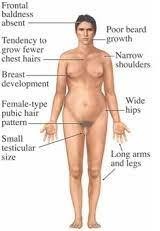
While assessing a male client, a nurse observes that the client has a small penis, long legs, short trunk, enlarged breast tissues, small testicles, and sexual dysfunction. What diagnosis does the nurse suspect from these findings?
A. Cri du chat "cry of the cat,"
Cri du chat syndrome involves a high-pitched cry in infants and other distinct physical and developmental features, but it doesn't present with the described symptoms.
B. Klinefelter syndrome
Klinefelter syndrome, characterized by an extra X chromosome (XXY) in males, typically presents with small testicles, gynecomastia (enlarged breast tissues), sexual dysfunction, and altered body proportions, such as long legs and a shorter trunk, aligning with the client's symptoms.
C. Patau syndrome
Patau syndrome (Trisomy 13) manifests with severe developmental issues, facial abnormalities, and other physical malformations, but the described symptoms are not typically associated with this syndrome.
D. Turner's syndrome
Turner syndrome involves females with a missing or partially missing X chromosome (45, X), resulting in specific physical features and medical problems not consistent with the described symptoms in a male client.
Full Explanation
Choice A rationale: Cri du chat syndrome involves a high-pitched cry in infants and other distinct physical and developmental features, but it doesn't present with the described symptoms.
Choice B rationale: Klinefelter syndrome, characterized by an extra X chromosome (XXY) in males, typically presents with small testicles, gynecomastia (enlarged breast tissues), sexual dysfunction, and altered body proportions, such as long legs and a shorter trunk, aligning with the client's symptoms.
Choice C rationale: Patau syndrome (Trisomy 13) manifests with severe developmental issues, facial abnormalities, and other physical malformations, but the described symptoms are not typically associated with this syndrome.
Choice D rationale: Turner syndrome involves females with a missing or partially missing X chromosome (45, X), resulting in specific physical features and medical problems not consistent with the described symptoms in a male client.
The nurse is most likely to report which finding to the primary care provider for a client who has an established colostomy?
A. The skin under the appliance looks red briefly after removing the appliance.
Redness briefly after removing the appliance might be common due to increased blood flow but does not necessarily indicate an issue.
B. The stoma color is a deep red-purple.
A deep red-purple stoma color can suggest impaired blood supply to the stoma and requires immediate attention.
C. An ascending colostomy delivers liquid feces.
The consistency of output from the colostomy may vary based on the site and type of colostomy and might not necessarily be concerning.
D. The stoma extends 1/2 inch above the abdomen.
The length of the stoma can vary and usually depends on the type of colostomy, and 1/2 inch above the abdomen is within an acceptable range.
Full Explanation
Choice A rationale: Redness briefly after removing the appliance might be common due to increased blood flow but does not necessarily indicate an issue.
Choice B rationale: A deep red-purple stoma color can suggest impaired blood supply to the stoma and requires immediate attention.
Choice C rationale: The consistency of output from the colostomy may vary based on the site and type of colostomy and might not necessarily be concerning.
Choice D rationale: The length of the stoma can vary and usually depends on the type of colostomy, and 1/2 inch above the abdomen is within an acceptable range.