Nursing practice questions with comprehensive rationales
NurseDive Free Nursing Practice Question
A client with diverticular disease has just returned from a colonoscopy. While conducting an abdominal assessment, the nurse monitors for which of the following as an initial sign of a possible complication of the procedure?
A. Guarding and rebound tenderness
Guarding and rebound tenderness are signs of peritonitis, which is a serious complication of colonoscopy. Peritonitis is an inflammation of the peritoneum, the membrane that lines the abdominal cavity. It can be caused by a perforation or puncture of the colon during the colonoscopy, which allows bacteria and fecal matter to enter the peritoneal space. The nurse should monitor the client for signs of peritonitis, such as abdominal pain, rigidity, fever, and leukocytosis.
B. Nausea and vomiting
Nausea and vomiting are not specific signs of a complication of colonoscopy. They may be caused by other factors, such as the sedation, the bowel preparation, or the ingestion of food or fluids after the procedure. Nausea and vomiting may also be symptoms of other conditions, such as gastroenteritis, food poisoning, or pregnancy.
C. Diarrhea
Diarrhea is not a sign of a complication of colonoscopy. Diarrhea may be a normal consequence of the bowel preparation, which involves taking laxatives or enemas to clear the colon before the procedure. Diarrhea may also be caused by other factors, such as the ingestion of food or fluids after the procedure, or the presence of an underlying bowel disorder, such as irritable bowel syndrome or inflammatory bowel disease.
D. Hyperactive bowel sounds
Hyperactive bowel sounds are not a sign of a complication of colonoscopy. Hyperactive bowel sounds may indicate increased peristalsis, which is the movement of the digestive tract. Hyperactive bowel sounds may be a normal response to the bowel preparation, the ingestion of food or fluids after the procedure, or the stimulation of the colon during the colonoscopy. Hyperactive bowel sounds may also be present in conditions such as diarrhea, gastroenteritis, or intestinal obstruction.
This question is an excerpt from Nurse Dive's nursing test bank - Ati Med Surg Nursing 102 Proctored Exam 4. Take the full exam now
Full Explanation
Choice A reason: Guarding and rebound tenderness are signs of peritonitis, which is a serious complication of colonoscopy. Peritonitis is an inflammation of the peritoneum, the membrane that lines the abdominal cavity. It can be caused by perforation or puncture of the colon during the colonoscopy, which allows bacteria and fecal matter to enter the peritoneal space. The nurse should monitor the client for signs of peritonitis, such as abdominal pain, rigidity, fever, and leukocytosis.
Choice B reason: Nausea and vomiting are not specific signs of a complication of colonoscopy. They may be caused by other factors, such as the sedation, the bowel preparation, or the ingestion of food or fluids after the procedure. Nausea and vomiting may also be symptoms of other conditions, such as gastroenteritis, food poisoning, or pregnancy.
Choice C reason: Diarrhea is not a sign of a complication of colonoscopy. Diarrhea may be a normal consequence of the bowel preparation, which involves taking laxatives or enemas to clear the colon before the procedure. Diarrhea may also be caused by other factors, such as the ingestion of food or fluids after the procedure, or the presence of an underlying bowel disorder, such as irritable bowel syndrome or inflammatory bowel disease.
Choice D reason: Hyperactive bowel sounds are not a sign of a complication of colonoscopy. Hyperactive bowel sounds may indicate increased peristalsis, which is the movement of the digestive tract. Hyperactive bowel sounds may be a normal response to the bowel preparation, the ingestion of food or fluids after the procedure, or the stimulation of the colon during the colonoscopy. Hyperactive bowel sounds may also be present in conditions such as diarrhea, gastroenteritis, or intestinal obstruction.
Similar Questions
A nurse is assisting with serving dinner trays on the unit. Upon receiving the dinner tray for a client admitted with acute gallbladder inflammation, the nurse will question which of the following foods on the tray?
A. Fried cheese
Fried cheese is a food that the nurse will question on the tray for a client with acute gallbladder inflammation. Fried cheese is high in fat, which can trigger or worsen the symptoms of gallbladder disease. Fat can stimulate the contraction of the gallbladder, which can cause pain and inflammation if there are gallstones blocking the bile ducts.
B. Green beans
Green beans are not a food that the nurse will question on the tray for a client with acute gallbladder inflammation. Green beans are low in fat and high in fiber, which can help prevent or reduce the symptoms of gallbladder disease. Fiber can help lower the cholesterol levels in the bile, which can reduce the risk of gallstone formation.
C. Grilled chicken breast
Grilled chicken breast is not a food that the nurse will question on the tray for a client with acute gallbladder inflammation. Grilled chicken breast is a lean protein source, which can provide essential amino acids for the client's health. Protein can also help maintain the muscle mass and strength of the client, who may have reduced appetite and weight loss due to gallbladder disease.
D. Whole grain dinner roll
Whole grain dinner roll is not a food that the nurse will question on the tray for a client with acute gallbladder inflammation. Whole grain dinner roll is a complex carbohydrate source, which can provide energy and fiber for the client. Carbohydrates can also help balance the acid-base status of the client, who may have metabolic acidosis due to impaired bile secretion and digestion.
Full Explanation
Choice A reason: Fried cheese is a food that the nurse will question on the tray for a client with acute gallbladder inflammation. Fried cheese is high in fat, which can trigger or worsen the symptoms of gallbladder disease. Fat can stimulate the contraction of the gallbladder, which can cause pain and inflammation if there are gallstones blocking the bile ducts.
Choice B reason: Green beans are not a food that the nurse will question on the tray for a client with acute gallbladder inflammation. Green beans are low in fat and high in fiber, which can help prevent or reduce the symptoms of gallbladder disease. Fiber can help lower the cholesterol levels in the bile, which can reduce the risk of gallstone formation.
Choice C reason: Grilled chicken breast is not a food that the nurse will question on the tray for a client with acute gallbladder inflammation. Grilled chicken breast is a lean protein source, which can provide essential amino acids for the client's health. Protein can also help maintain the muscle mass and strength of the client, who may have reduced appetite and weight loss due to gallbladder disease.
Choice D reason: Whole grain dinner roll is not a food that the nurse will question on the tray for a client with acute gallbladder inflammation. Whole grain dinner roll is a complex carbohydrate source, which can provide energy and fiber for the client. Carbohydrates can also help balance the acid-base status of the client, who may have metabolic acidosis due to impaired bile secretion and digestion.
A nurse is caring for a client who sustained blood loss. Which of the following is a manifestation of hypovolemia?
A. Decreased heart rate
Decreased heart rate is not a manifestation of hypovolemia. Hypovolemia is a condition where there is a decreased volume of blood in the body, which can result from blood loss, dehydration, or fluid shifts. Hypovolemia can cause the heart rate to increase, not decrease, as the body tries to compensate for the low blood pressure and maintain adequate perfusion.
B. Increased blood pressure
Increased blood pressure is not a manifestation of hypovolemia. Hypovolemia can cause the blood pressure to decrease, not increase, as the blood volume and cardiac output are reduced. The body may try to constrict the blood vessels to increase the blood pressure, but this is usually not enough to overcome the effects of hypovolemia.
C. Weak pulse
Weak pulse is a manifestation of hypovolemia. Hypovolemia can cause the pulse to become weak, thready, or difficult to palpate, as the blood flow and pressure are diminished. The pulse may also become irregular or rapid, as the heart tries to pump faster and harder to deliver oxygen to the tissues.
D. Dyspnea
Dyspnea is not a specific manifestation of hypovolemia. Dyspnea is a term for difficulty breathing, which can have many causes, such as asthma, pneumonia, or pulmonary edema. Hypovolemia can cause dyspnea if it leads to shock, which is a life-threatening condition where the organs and tissues are not receiving enough oxygen. However, dyspnea alone is not enough to indicate hypovolemia.
Full Explanation
Choice A reason: Decreased heart rate is not a manifestation of hypovolemia. Hypovolemia is a condition where there is a decreased volume of blood in the body, which can result from blood loss, dehydration, or fluid shifts. Hypovolemia can cause the heart rate to increase, not decrease, as the body tries to compensate for the low blood pressure and maintain adequate perfusion.
Choice B reason: Increased blood pressure is not a manifestation of hypovolemia. Hypovolemia can cause the blood pressure to decrease, not increase, as the blood volume and cardiac output are reduced. The body may try to constrict the blood vessels to increase the blood pressure, but this is usually not enough to overcome the effects of hypovolemia.
Choice C reason: Weak pulse is a manifestation of hypovolemia. Hypovolemia can cause the pulse to become weak, thready, or difficult to palpate, as the blood flow and pressure are diminished. The pulse may also become irregular or rapid, as the heart tries to pump faster and harder to deliver oxygen to the tissues.
Choice D reason: Dyspnea is not a specific manifestation of hypovolemia. Dyspnea is a term for difficulty breathing, which can have many causes, such as asthma, pneumonia, or pulmonary edema. Hypovolemia can cause dyspnea if it leads to shock, which is a life-threatening condition where the organs and tissues are not receiving enough oxygen. However, dyspnea alone is not enough to indicate hypovolemia.
Fluid and electrolyte balance is maintained through the process of fluid and solutes moving in and out of cells. What specific process allows fluid to pass through a membrane from a dilute to a more concentrated area?
A. Active transport
Active transport is not the process that allows fluid to pass through a membrane from a dilute to a more concentrated area. Active transport is the process that moves solutes across a membrane against their concentration gradient, using energy from ATP. Active transport can create or maintain a concentration difference between two sides of a membrane.
B. Osmosis
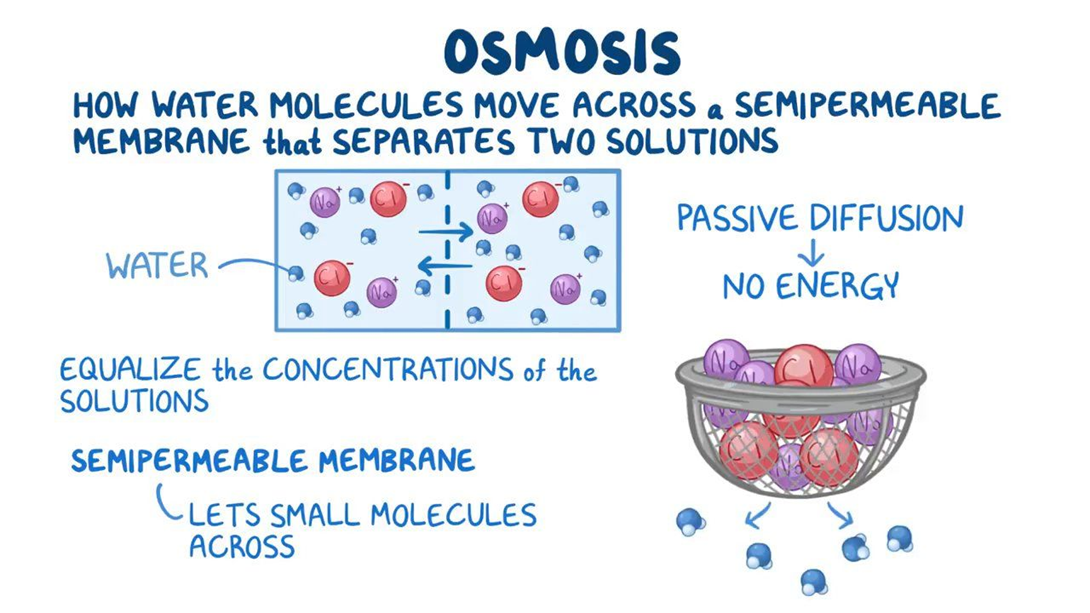
Osmosis is the process that allows fluid to pass through a membrane from a dilute to a more concentrated area. Osmosis is the movement of water across a selectively permeable membrane from an area of low solute concentration to an area of high solute concentration. Osmosis can equalize the concentration of solutes on both sides of a membrane.
C. Filtration
Filtration is not the process that allows fluid to pass through a membrane from a dilute to a more concentrated area. Filtration is the movement of fluid and solutes across a membrane due to a pressure difference between two sides of a membrane. Filtration can separate solutes from fluid based on their size and charge.
D. Diffusion
Diffusion is not the process that allows fluid to pass through a membrane from a dilute to a more concentrated area. Diffusion is the movement of solutes across a membrane from an area of high solute concentration to an area of low solute concentration. Diffusion can also equalize the concentration of solutes on both sides of a membrane.
Full Explanation
Choice A reason: Active transport is not the process that allows fluid to pass through a membrane from a dilute to a more concentrated area. Active transport is the process that moves solutes across a membrane against their concentration gradient, using energy from ATP. Active transport can create or maintain a concentration difference between two sides of a membrane.
Choice B reason: Osmosis is the process that allows fluid to pass through a membrane from a dilute to a more concentrated area. Osmosis is the movement of water across a selectively permeable membrane from an area of low solute concentration to an area of high solute concentration. Osmosis can equalize the concentration of solutes on both sides of a membrane.
Choice C reason: Filtration is not the process that allows fluid to pass through a membrane from a dilute to a more concentrated area. Filtration is the movement of fluid and solutes across a membrane due to a pressure difference between two sides of a membrane. Filtration can separate solutes from fluid based on their size and charge.
Choice D reason: Diffusion is not the process that allows fluid to pass through a membrane from a dilute to a more concentrated area. Diffusion is the movement of solutes across a membrane from an area of high solute concentration to an area of low solute concentration. Diffusion can also equalize the concentration of solutes on both sides of a membrane.