Nursing practice questions with comprehensive rationales
NurseDive Free Nursing Practice Question
A community health nurse is developing a brochure about hypertension.
Which of the following actions should the nurse take?
A. Write the information at an 8th-grade reading level
This is a good practice. Writing at an 8th-grade reading level ensures that the brochure is understandable for a wide audience, including those with varying levels of literacy. It helps make the information clear and accessible.
B. Present information from complex to simple
This approach is not ideal. It is generally more effective to present information from simple to complex to build understanding progressively. Starting with basic concepts helps the reader grasp foundational information before moving to more detailed content.
C. Explain medical terminology using basic, one-syllable words
While using simple language is important, basic, one-syllable words might not always be appropriate for explaining medical terminology accurately. It is better to use plain language that conveys the meaning clearly, rather than overly simplifying complex terms.
D. Use a 12-point font size
Using a 12-point font size is generally appropriate and readable for most brochures. However, depending on the audience, a slightly larger font size (e.g., 14-point) may be preferable to enhance readability.
This question is an excerpt from Nurse Dive's nursing test bank - ATI PN Comprehensive Predictor 2023 - Proctored Exam 1. Take the full exam now
Full Explanation
A. Write the information at an 8th-grade reading level: This is a good practice. Writing at an 8th-grade reading level ensures that the brochure is understandable for a wide audience, including those with varying levels of literacy. It helps make the information clear and accessible.
B. Present information from complex to simple: This approach is not ideal. It is generally more effective to present information from simple to complex to build understanding progressively. Starting with basic concepts helps the reader grasp foundational information before moving to more detailed content.
C. Explain medical terminology using basic, one-syllable words: While using simple language is important, basic, one-syllable words might not always be appropriate for explaining medical terminology accurately. It is better to use plain language that conveys the meaning clearly, rather than overly simplifying complex terms.
D. Use a 12-point font size: Using a 12-point font size is generally appropriate and readable for most brochures. However, depending on the audience, a slightly larger font size (e.g., 14-point) may be preferable to enhance readability.
Similar Questions
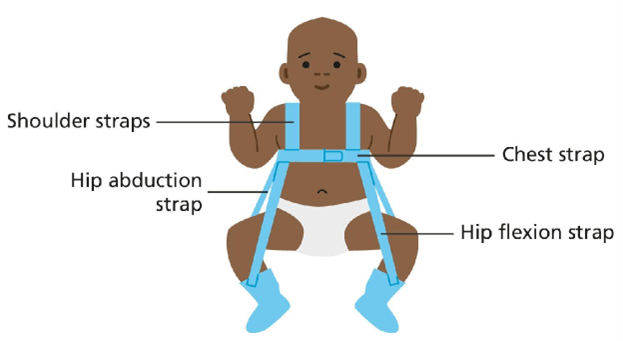
A nurse is reinforcing teaching with the parents of an infant who has a Pavlik harness.
Which of the following statements should the nurse include in the teaching?
A. You can apply lotion under the straps of the harness.
Applying lotion under the straps of the harness is not recommended as it can interfere with the harness's effectiveness and may cause skin irritation.
B. The harness can be removed for sleeping each night.
The harness should not be removed for sleeping unless specifically instructed by the healthcare provider. It is typically worn continuously to ensure consistent hip positioning and optimal treatment outcomes.
C. The harness can promote hip joint development.
The Pavlik harness is a device used to treat developmental dysplasia of the hip (DDH) in infants. It helps position the hips in a way that promotes proper hip joint development. By keeping the hips in a flexed and abducted position, the harness helps to align the hip joint properly, allowing for normal development.
D. You should place the diaper over the strap of the harness.
Placing the diaper over the strap of the harness is not recommended as it can cause discomfort for the infant and may interfere with the proper fit and function of the harness. The diaper should be placed under the harness straps to ensure a secure and comfortable fit.
Full Explanation
Explanation:
The Pavlik harness is a device used to treat developmental dysplasia of the hip (DDH) in infants. It helps position the hips in a way that promotes proper hip joint development. By keeping the hips in a flexed and abducted position, the harness helps to align the hip joint properly, allowing for normal development.
A- Applying lotion under the straps of the harness is not recommended as it can interfere with the harness's effectiveness and may cause skin irritation.
B- The harness should not be removed for sleeping unless specifically instructed by the healthcare provider. It is typically worn continuously to ensure consistent hip positioning and optimal treatment outcomes.
D- Placing the diaper over the strap of the harness is not recommended as it can cause discomfort for the infant and may interfere with the proper fit and function of the harness. The diaper should be placed under the harness straps to ensure a secure and comfortable fit.
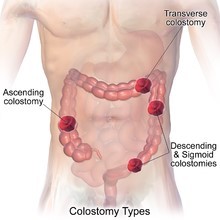
A nurse is reinforcing teaching with another nurse about how to change an ostomy appliance for a client who has a sigmoid colostomy.
Which of the following instructions should the nurse include in the teaching?
A. Create an opening on the skin barrier that is 1.27 cm (0.5 in) larger than the client's stoma
The opening on the skin barrier should be cut to fit closely around the stoma, approximately 0.3-0.6 cm (1/8 to 1/4 inch) larger than the stoma size. A larger opening (like 0.5 inches) could expose too much surrounding skin, increasing the risk of skin irritation from contact with the stoma's effluent.
B. Use a moisturizing soap to clean the skin around the client's stoma
Moisturizing soaps should be avoided because they can leave a residue on the skin, which may interfere with the adhesion of the ostomy appliance. The skin around the stoma should be cleaned with mild soap and water, or water alone, and then dried thoroughly before applying the new appliance.
C. Empty the client's ostomy pouch before removing the skin barrier
Emptying the ostomy pouch before removing the skin barrier is a practical step to reduce spillage of stool during the appliance change, making the process cleaner and easier to manage. It also minimizes the risk of contamination of the surrounding area or wound.
D. Change the client's ostomy appliance 1 hr after breakfast
Ostomy appliances are best changed when the bowel is least active, which is usually before a meal or several hours after eating. Changing the appliance shortly after a meal, such as 1 hour after breakfast, may result in more stoma output, making it harder to manage the appliance change.
Full Explanation
A. Create an opening on the skin barrier that is 1.27 cm (0.5 in) larger than the client's stoma. The opening on the skin barrier should be cut to fit closely around the stoma, approximately 0.3-0.6 cm (1/8 to 1/4 inch) larger than the stoma size. A larger opening (like 0.5 inches) could expose too much surrounding skin, increasing the risk of skin irritation from contact with the stoma's effluent.
B. Use a moisturizing soap to clean the skin around the client's stoma. Moisturizing soaps should be avoided because they can leave a residue on the skin, which may interfere with the adhesion of the ostomy appliance. The skin around the stoma should be cleaned with mild soap and water, or water alone, and then dried thoroughly before applying the new appliance.
C. Empty the client's ostomy pouch before removing the skin barrier. Emptying the ostomy pouch before removing the skin barrier is a practical step to reduce spillage of stool during the appliance change, making the process cleaner and easier to manage. It also minimizes the risk of contamination of the surrounding area or wound.
D. Change the client's ostomy appliance 1 hour after breakfast. Ostomy appliances are best changed when the bowel is least active, which is usually before a meal or several hours after eating. Changing the appliance shortly after a meal, such as 1 hour after breakfast, may result in more stoma output, making it harder to manage the appliance change.
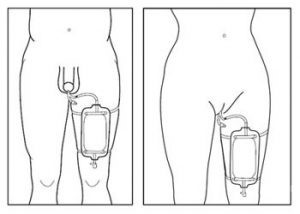
A nurse is caring for a client who has an indwelling catheter with a urinary drainage system.
Which of the following actions should the nurse take?
A. Coil the tubing on the bed above the collection bag
The tubing should not be coiled on the bed, especially not above the collection bag, as this can interfere with the drainage of urine and increase the risk of infection.
B. Instruct the client to hold the drainage bag at waist height when ambulating
The drainage bag should always be kept below the level of the bladder during ambulation to prevent backflow and reduce the risk of infection.
C. Secure the tubing with adhesive tape to the lower abdomen
Securing the catheter tubing to the lower abdomen (for male clients) or thigh (for female clients) helps to reduce the risk of catheter displacement and trauma. Proper securing also prevents unnecessary tension on the tubing, which can cause urethral irritation.
D. Collect a sterile specimen from the urinary drainage bag
A sterile specimen should be collected from the sampling port of the catheter tubing, not directly from the drainage bag, which could lead to contamination.
Full Explanation
A: The tubing should not be coiled on the bed, especially not above the collection bag, as this can interfere with the drainage of urine and increase the risk of infection.
B: The drainage bag should always be kept below the level of the bladder during ambulation to prevent backflow and reduce the risk of infection.
C: Securing the catheter tubing to the lower abdomen (for male clients) or thigh (for female clients) helps to reduce the risk of catheter displacement and trauma. Proper securing also prevents unnecessary tension on the tubing, which can cause urethral irritation.
D: A sterile specimen should be collected from the sampling port of the catheter tubing, not directly from the drainage bag, which could lead to contamination.