Nursing practice questions with comprehensive rationales
NurseDive Free Nursing Practice Question
A lumbar puncture is performed on a client with suspected bacterial meningitis, and cerebrospinal fluid (CSF) is obtained for analysis. The nurse determines that the diagnosis is confirmed if which findings are noted?
A. High glucose level
Reason: High glucose level is not a finding that confirms bacterial meningitis, but it may indicate other conditions such as diabetes mellitus or hyperglycemia.
B. Low protein concentration
Reason: Low protein concentration is not a finding that confirms bacterial meningitis, but it may indicate other conditions such as malnutrition or liver disease.
C. Decreased CSF pressure
Reason: Decreased CSF pressure is not a finding that confirms bacterial meningitis, but it may indicate other conditions such as dehydration or spinal cord injury.
D. Cloudy CSF
Reason: Cloudy CSF is a finding that confirms bacterial meningitis, as it indicates that there is an infection and inflammation in the meninges that surround the brain and spinal cord.
This question is an excerpt from Nurse Dive's nursing test bank - ATI Med Surg Proctored Exam 3. Take the full exam now
Full Explanation
Choice A Reason: High glucose level is not a finding that confirms bacterial meningitis, but it may indicate other conditions such as diabetes mellitus or hyperglycemia.
Choice B Reason: Low protein concentration is not a finding that confirms bacterial meningitis, but it may indicate other conditions such as malnutrition or liver disease.
Choice C Reason: Decreased CSF pressure is not a finding that confirms bacterial meningitis, but it may indicate other conditions such as dehydration or spinal cord injury.
Choice D Reason: Cloudy CSF is a finding that confirms bacterial meningitis, as it indicates that there is an infection and inflammation in the meninges that surround the brain and spinal cord.
Similar Questions
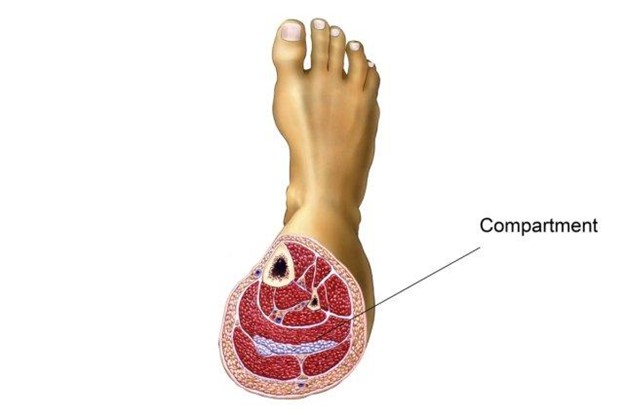
The nurse is caring for a client who has a fractured tibia and is in a cast. Which of the following findings is a manifestation of compartment syndrome?
A. Redness and warmth of affected extremity
Reason: Redness and warmth of affected extremity are not signs of compartment syndrome, but they may indicate other conditions such as infection or inflammation.
B. Slow capillary refill
Reason: Slow capillary refill is a sign of compartment syndrome, as it indicates that there is impaired blood flow to the tissues due to increased pressure within the fascial compartment.
C. Reduced level of consciousness
Reason: Reduced level of consciousness is not a sign of compartment syndrome, but it may indicate other serious conditions such as head injury, stroke, or hypoxia.
D. Pain and bleeding
Reason: Pain and bleeding are not specific signs of compartment syndrome, but they may occur due to the fracture or other causes.
Full Explanation
Choice A Reason: Redness and warmth of affected extremity are not signs of compartment syndrome, but they may indicate other conditions such as infection or inflammation.
Choice B Reason: Slow capillary refill is a sign of compartment syndrome, as it indicates that there is impaired blood flow to the tissues due to increased pressure within the fascial compartment.
Choice C Reason: Reduced level of consciousness is not a sign of compartment syndrome, but it may indicate other serious conditions such as head injury, stroke, or hypoxia.
Choice D Reason: Pain and bleeding are not specific signs of compartment syndrome, but they may occur due to the fracture or other causes.
A nurse is collecting data from a client who has a urinary tract infection. Which of the following findings should the nurse expect? Select all that apply.
A. Cloudy urine
Choice A Reason: Cloudy urine is a finding that indicates a urinary tract infection, as it shows that there are bacteria, pus, or blood in the urine.
B. Muscle tetany
Choice B Reason: Muscle tetany is not a finding that indicates a urinary tract infection, but it may indicate other conditions such as hypocalcemia or alkalosis.
C. Presence of calculi
Choice C Reason: Presence of calculi is not a finding that indicates a urinary tract infection, but it may cause or complicate a urinary tract infection by obstructing the urine flow and creating a nidus for bacterial growth.
D. Urinary frequency
Choice D Reason: Urinary frequency is a finding that indicates a urinary tract infection, as it shows that there is irritation and inflammation of the bladder and urethra.
E. Dysuria
Choice E Reason: Dysuria is a finding that indicates a urinary tract infection, as it shows that there is pain or burning sensation during urination.
Full Explanation
Choice A Reason: Cloudy urine is a finding that indicates a urinary tract infection, as it shows that there are bacteria, pus, or blood in the urine.
Choice B Reason: Muscle tetany is not a finding that indicates a urinary tract infection, but it may indicate other conditions such as hypocalcemia or alkalosis.
Choice C Reason: Presence of calculi is not a finding that indicates a urinary tract infection, but it may cause or complicate a urinary tract infection by obstructing the urine flow and creating a nidus for bacterial growth.
Choice D Reason: Urinary frequency is a finding that indicates a urinary tract infection, as it shows that there is irritation and inflammation of the bladder and urethra.
Choice E Reason: Dysuria is a finding that indicates a urinary tract infection, as it shows that there is pain or burning sensation during urination.
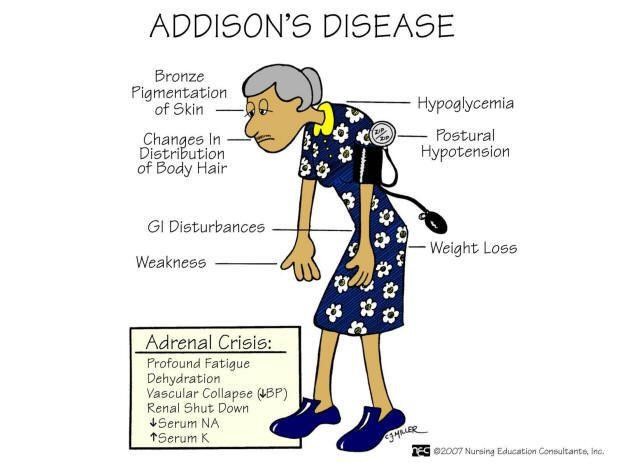
Which of the following would be the most appropriate nursing diagnosis for a client admitted with Addison's disease?
A. Impaired skin integrity
Reason: Impaired skin integrity is not the most appropriate nursing diagnosis for a client with Addison's disease, as it does not reflect the main problem of adrenal insufficiency and cortisol deficiency.
B. Fluid volume overload
Reason: Fluid volume overload is not the most appropriate nursing diagnosis for a client with Addison's disease, as it does not reflect the main problem of adrenal insufficiency and aldosterone deficiency.
C. Imbalanced nutrition: more than body requirements
Reason: Imbalanced nutrition: more than body requirements is not the most appropriate nursing diagnosis for a client with Addison's disease, as it does not reflect the main problem of adrenal insufficiency and weight loss.
D. Risk for injury
Reason: Risk for injury is the most appropriate nursing diagnosis for a client with Addison's disease, as it reflects the main problem of adrenal insufficiency and hypotension, which can cause falls, fainting, or shock.
Full Explanation
Choice A Reason: Impaired skin integrity is not the most appropriate nursing diagnosis for a client with Addison's disease, as it does not reflect the main problem of adrenal insufficiency and cortisol deficiency.
Choice B Reason: Fluid volume overload is not the most appropriate nursing diagnosis for a client with Addison's disease, as it does not reflect the main problem of adrenal insufficiency and aldosterone deficiency.
Choice C Reason: Imbalanced nutrition: more than body requirements is not the most appropriate nursing diagnosis for a client with Addison's disease, as it does not reflect the main problem of adrenal insufficiency and weight loss.
Choice D Reason: Risk for injury is the most appropriate nursing diagnosis for a client with Addison's disease, as it reflects the main problem of adrenal insufficiency and hypotension, which can cause falls, fainting, or shock.