Nursing practice questions with comprehensive rationales
NurseDive Free Nursing Practice Question
A new nurse has just admitted a patient to the Step-down Unit. She has recognized several education and implementation pieces that need to be set in place before the patient is discharged.
Which of the following nursing statements indicates the nurse understands when discharge planning should be implemented?
A. “I will begin upon the client’s admission to the facility.”
“I will begin upon the client’s admission to the facility.”Effective discharge planning should start upon the client's admission to the facility. It is an ongoing process that involves assessing the patient's needs, planning for post-discharge care, and ensuring a smooth transition from the hospital to the next level of care. Early initiation of discharge planning allows the healthcare team to address any potential barriers, educate the patient and their family, and coordinate necessary resources for a successful transition.
B. “I will begin once the client’s insurance company approves discharge coverage.”
“I will begin once the client’s insurance company approves discharge coverage.”Waiting for insurance approval may delay the discharge planning process and hinder the timely coordination of resources needed for post-discharge care.
C. “I will begin 48 hr before the client’s discharge.”
“I will begin 48 hr before the client’s discharge.” Waiting until 48 hours before discharge may not allow sufficient time to address all aspects of the discharge plan, potentially leading to rushed or incomplete preparations.
D. “I will begin once the client’s discharge order is written.”
“I will begin once the client’s discharge order is written.”Waiting for the discharge order may delay the start of the planning process, and effective discharge planning should be initiated earlier to ensure comprehensive and patient-centered care.
This question is an excerpt from Nurse Dive's nursing test bank - Ivytech Fundamental Proctored Exam 2. Take the full exam now
Full Explanation
A. “I will begin upon the client’s admission to the facility.”
Effective discharge planning should start upon the client's admission to the facility. It is an ongoing process that involves assessing the patient's needs, planning for post-discharge care, and ensuring a smooth transition from the hospital to the next level of care. Early initiation of discharge planning allows the healthcare team to address any potential barriers, educate the patient and their family, and coordinate necessary resources for a successful transition.
B. “I will begin once the client’s insurance company approves discharge coverage.”
Waiting for insurance approval may delay the discharge planning process and hinder the timely coordination of resources needed for post-discharge care.
C. “I will begin 48 hr before the client’s discharge.”
Waiting until 48 hours before discharge may not allow sufficient time to address all aspects of the discharge plan, potentially leading to rushed or incomplete preparations.
D. “I will begin once the client’s discharge order is written.”
Waiting for the discharge order may delay the start of the planning process, and effective discharge planning should be initiated earlier to ensure comprehensive and patient-centered care.
Similar Questions
A nurse is caring for a client who has an electrical burn. With the client’s permission, the nurse is answering questions from the family about his status.
Which of the following responses should the nurse make?
A. He has an electrical burn, which caused coagulation of some tissues
He has an electrical burn, which caused coagulation of some tissues:This response provides more detailed information about the nature of the electrical burn, mentioning tissue coagulation. However, it may be more information than the family needs at this point, and it's important to balance providing information with respecting the client's privacy.
B. He is doing well, although he might be in the hospital for some time.
He is doing well, although he might be in the hospital for some time:While this response aims to reassure the family about the client's general status, it might not be entirely accurate or provide specific information about the client's condition. It's important to be transparent while respecting the client's privacy.
C. He does not appear to have much damage and should be fine soon
He does not appear to have much damage and should be fine soon: This response may provide a sense of reassurance to the family, but it might oversimplify the situation. It's important to provide accurate and honest information while respecting the client's privacy.
D. He has an electrical burn. He is stable, and we will update you with any changes.
He has an electrical burn. He is stable, and we will update you with any changes:This response acknowledges the type of injury, assures the family that the client is stable, and communicates a commitment to keeping the family informed of any changes. It strikes a balance between providing some information and maintaining the client's privacy and confidentiality.
Full Explanation
A. He has an electrical burn, which caused coagulation of some tissues:
This response provides more detailed information about the nature of the electrical burn, mentioning tissue coagulation. However, it may be more information than the family needs at this point, and it's important to balance providing information with respecting the client's privacy.
B. He is doing well, although he might be in the hospital for some time:
While this response aims to reassure the family about the client's general status, it might not be entirely accurate or provide specific information about the client's condition. It's important to be transparent while respecting the client's privacy.
C. He does not appear to have much damage and should be fine soon:
This response may provide a sense of reassurance to the family, but it might oversimplify the situation. It's important to provide accurate and honest information while respecting the client's privacy.
D. He has an electrical burn. He is stable, and we will update you with any changes:
This response acknowledges the type of injury, assures the family that the client is stable, and communicates a commitment to keeping the family informed of any changes. It strikes a balance between providing some information and maintaining the client's privacy and confidentiality.
A nurse is caring for a client who has fallen while getting out of bed and states, “I’m okay! I guess I should have called for help to the bathroom.” After assessing the client, the nurse notifies the provider.
Which of the following documentation should the nurse include in the client’s medical record?
A. An incident report was completed
The completion of an incident report should not be documented in the medical record. Incident reports are internal documents used for quality improvement and risk management, and mentioning them in the medical record could make them discoverable in legal proceedings.
B. There were no injuries sustained
While documenting the client’s physical condition is appropriate, stating "no injuries sustained" might be premature or subjective. Instead, the nurse should record specific observations, such as "client denies pain" or "no visible signs of injury noted."
C. The provider was notified
The nurse should document objective facts, such as notifying the provider, in the client’s medical record. This ensures accurate communication about the client's condition and the steps taken after the fall.
D. An incident report was forwarded to risk management
Referencing the incident report in the medical record is inappropriate. Incident reports are separate from the client’s medical record and should not be mentioned in the documentation.
Full Explanation
Correct Answer: C
C. The provider was notified. The nurse should document objective facts, such as notifying the provider, in the client’s medical record. This ensures accurate communication about the client's condition and the steps taken after the fall.
Incorrect answers:
A. "An incident report was completed." The completion of an incident report should not be documented in the medical record. Incident reports are internal documents used for quality improvement and risk management, and mentioning them in the medical record could make them discoverable in legal proceedings.
B. "There were no injuries sustained." While documenting the client’s physical condition is appropriate, stating "no injuries sustained" might be premature or subjective. Instead, the nurse should record specific observations, such as "client denies pain" or "no visible signs of injury noted."
D. "An incident report was forwarded to risk management. Referencing the incident report in the medical record is inappropriate. Incident reports are separate from the client’s medical record and should not be mentioned in the documentation.
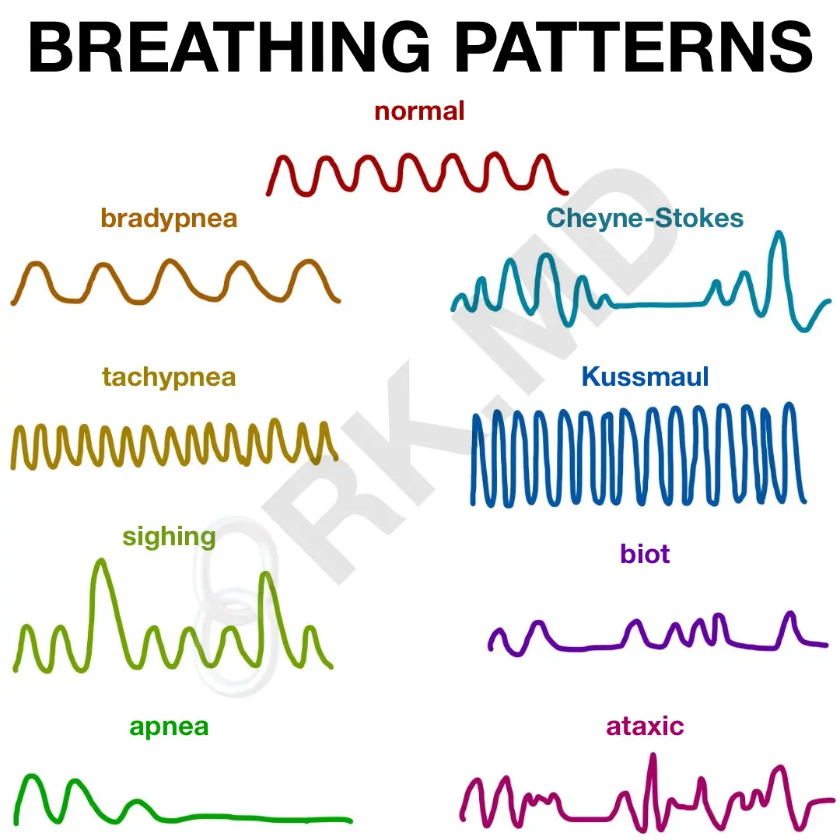
The nurse notes documentation that a client is exhibiting Cheyne-Stokes respirations. On assessment, what finding would the nurse expect?
A. Regular deep respirations interspersed with periods of apnea
Regular deep respirations interspersed with periods of apnea:This describes periodic breathing, which is different from Cheyne-Stokes respirations. Periodic breathing consists of regular cycles of deep respirations followed by periods of apnea.
B. A pattern of crescendo-decrescendo respirations followed by a period of apnea
A pattern of crescendo-decrescendo respirations followed by a period of apneaCheyne-Stokes respirations are characterized by a pattern of crescendo-decrescendo respirations, meaning that the depth and rate of breathing gradually increase and then decrease. This is followed by a period of apnea, during which there is a temporary cessation of breathing. The cycle then repeats.
C. Patient breathing less than 10 breaths per minute
Patient breathing less than 10 breaths per minute: This describes bradypnea, which is an abnormally slow respiratory rate. Cheyne-Stokes respirations involve rhythmic, cyclical changes in respiratory rate and depth.
D. Patient breathing shallow and more than 24 breaths per minute
Patient breathing shallow and more than 24 breaths per minute:This describes tachypnea, which is an abnormally fast respiratory rate. Cheyne-Stokes respirations are characterized by a distinct pattern of alternating crescendo-decrescendo respirations followed by apnea.
Full Explanation
A. Regular deep respirations interspersed with periods of apnea:
This describes periodic breathing, which is different from Cheyne-Stokes respirations. Periodic breathing consists of regular cycles of deep respirations followed by periods of apnea.
B. A pattern of crescendo-decrescendo respirations followed by a period of apnea
Cheyne-Stokes respirations are characterized by a pattern of crescendo-decrescendo respirations, meaning that the depth and rate of breathing gradually increase and then decrease. This is followed by a period of apnea, during which there is a temporary cessation of breathing. The cycle then repeats.
C. Patient breathing less than 10 breaths per minute:
This describes bradypnea, which is an abnormally slow respiratory rate. Cheyne-Stokes respirations involve rhythmic, cyclical changes in respiratory rate and depth.
D. Patient breathing shallow and more than 24 breaths per minute:
This describes tachypnea, which is an abnormally fast respiratory rate. Cheyne-Stokes respirations are characterized by a distinct pattern of alternating crescendo-decrescendo respirations followed by apnea.