
Nursing practice questions with comprehensive rationales
NurseDive Free Nursing Practice Question
A nurse finds a client in bed, unresponsive and breathing.
Which of the following actions should the nurse take first?
A. Initiate cardiac monitoring for the client.
Choice A: Initiating cardiac monitoring for the client is not an answer because it is not mentioned as the first action to take in my sources.
B. Apply a blood pressure cuff.
Choice B: Apply a blood pressure cuff is not an answer because it is not mentioned as the first action to take in my sources.
C. Palpate for the client's carotid pulse.
The first step when finding an unresponsive person is to check their breathing by tilting their head back and looking and feeling for breaths. When a person is unresponsive, their muscles relax and their tongue can block their airway so they can no longer breathe. Tilting their head back opens the airway by pulling the tongue forward. Palpating for the client’s carotid pulse is a way to check if the client has a pulse and is still breathing.
D. Establish an IV access.
Choice D: Establishing an IV access is not an answer because it is not mentioned as the first action to take in my sources.
This question is an excerpt from Nurse Dive's nursing test bank - ATI Adult Medical Surgical 2019 Proctored Exam. Take the full exam now
Full Explanation
The first step when finding an unresponsive person is to check their breathing by tilting their head back and looking and feeling for breaths.
When a person is unresponsive, their muscles relax and their tongue can block their airway so they can no longer breathe.
Tilting their head back opens the airway by pulling the tongue forward.
Palpating for the client’s carotid pulse is a way to check if the client has a pulse and is still breathing.
Choice A: Initiating cardiac monitoring for the client is not an answer because it is not mentioned as the first action to take in my sources.
Choice B: Apply a blood pressure cuff is not an answer because it is not mentioned as the first action to take in my sources.
Choice D: Establishing an IV access is not an answer because it is not mentioned as the first action to take in my sources.
Similar Questions
A nurse in a provider's office is teaching a client about the self-management of GERD.
Which of the following instructions should the nurse include?
A. "Increase your caloric intake by 250 calories per day."
Choice A: “Increase your caloric intake by 250 calories per day” is not an answer because it is not mentioned as a self-management strategy for GERD in my sources.
B. "Lie down for 30 minutes after each meal."
Choice B: “Lie down for 30 minutes after each meal” is not an answer because it is not mentioned as a self-management strategy for GERD in my sources.
C. "Eat a light meal 1 hour before bedtime."
Choice C: “Eat a light meal 1 hour before bedtime” is not an answer because it is not mentioned
D. "Sleep with the head of your bed elevated 6 inches.".
One of the lifestyle changes that doctors recommend for managing symptoms of gastroesophageal reflux disease (GERD) is elevating the head during sleep by placing a foam wedge or extra pillows under the head and upper back to incline the body and raising the head off the bed 6 to 8 inches.
Full Explanation

One of the lifestyle changes that doctors recommend for managing symptoms of gastroesophageal reflux disease (GERD) is elevating the head during sleep by placing a foam wedge or extra pillows under the head and upper back to incline the body and raising the head off the bed 6 to 8 inches.
Choice A: “Increase your caloric intake by 250 calories per day” is not an answer because it is not mentioned as a self-management strategy for GERD in my sources.
Choice B: “Lie down for 30 minutes after each meal” is not an answer because it is not mentioned as a self-management strategy for GERD in my sources.
Choice C: “Eat a light meal 1 hour before bedtime” is not an answer because it is not mentioned
A nurse in an emergency department is reviewing a client's ECG reading.
Which of the following findings should the nurse identify as an indication that the client has first-degree heart block?
A. Prolonged PR intervals.
First-degree heart block is a type of atrioventricular (AV) block that involves the consistent prolongation of the PR interval (defined as >0.20 seconds) due to delayed conduction via the atrioventricular node. This is seen on an ECG as a PR interval greater than 200 ms in length.
B. Nondiscernible P waves.
Choice B: Nondiscernible P waves are not an answer because it is not mentioned as a characteristic of first-degree heart block in my sources.
C. More P waves than QRS complexes.
Choice C: More P waves than QRS complexes is not an answer because it is not mentioned as a characteristic of first-degree heart block in my sources.
D. No correlation between P and QRS waves.
Choice D: No correlation between P and QRS waves is not an answer because it is not mentioned as a characteristic of first-degree heart block in my sources.
Full Explanation
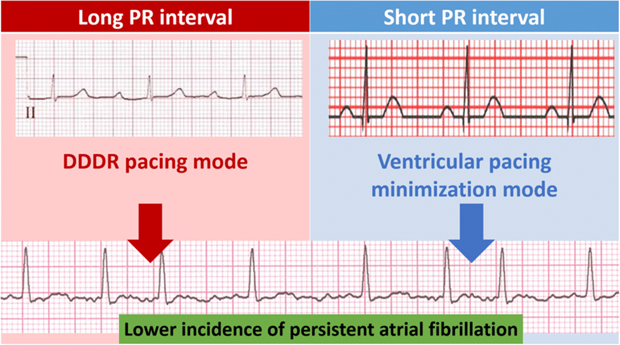
First-degree heart block is a type of atrioventricular (AV) block that involves the consistent prolongation of the PR interval (defined as >0.20 seconds) due to delayed conduction via the atrioventricular node.
This is seen on an ECG as a PR interval greater than 200 ms in length.
Choice B: Nondiscernible P waves are not an answer because it is not mentioned as a characteristic of first-degree heart block in my sources.
Choice C: More P waves than QRS complexes is not an answer because it is not mentioned as a characteristic of first-degree heart block in my sources.
Choice D: No correlation between P and QRS waves is not an answer because it is not mentioned as a characteristic of first-degree heart block in my sources.
A nurse is assessing a client who has heart failure.
Which of the following client statements should indicate to the nurse that the client needs a referral for cardiac rehabilitation?
A. "I will weigh myself daily.".
Choice A is not the correct answer because weighing oneself daily is a recommended self-monitoring technique for clients with heart failure.
B. "l hate how I feel all the time.".
Choice B is not the correct answer because while feeling unhappy can be a symptom of heart failure, it does not necessarily indicate a need for cardiac rehabilitation.
C. "I'm too tired to brush my teeth.".
“I’m too tired to brush my teeth.” This statement indicates that the client is experiencing fatigue, which is a common symptom of heart failure. Fatigue can significantly impact a person’s ability to perform daily activities and can be an indication that the client needs a referral for cardiac rehabilitation 1.
D. "I need to start eating a low-sodium diet.".
Choice D is not the correct answer because eating a low-sodium diet is a recommended dietary change for clients with heart failure.
Full Explanation
“I’m too tired to brush my teeth.” This statement indicates that the client is experiencing fatigue, which is a common symptom of heart failure.
Fatigue can significantly impact a person’s ability to perform daily activities and can be an indication that the client needs a referral for cardiac rehabilitation 1.
Choice A is not the correct answer because weighing oneself daily is a recommended self-monitoring technique for clients with heart failure.
Choice B is not the correct answer because while feeling unhappy can be a symptom of heart failure, it does not necessarily indicate a need for cardiac rehabilitation.
Choice D is not the correct answer because eating a low-sodium diet is a recommended dietary change for clients with heart failure.