
Nursing practice questions with comprehensive rationales
NurseDive Free Nursing Practice Question
A nurse in a pediatric clinic is discussing the pathophysiology of Reye syndrome with a newly licensed nurse. Which of the following statements by the newly licensed nurse indicate an understanding of the disorder?
A. "Reye syndrome causes fatty changes in the liver."
"Reye syndrome causes fatty changes in the liver."This statement is correct. Reye syndrome is characterized by acute non-inflammatory encephalopathy and fatty changes in the liver, which can lead to liver dysfunction and failure.
B. "Reye syndrome leads to venous thrombus formation."
"Reye syndrome leads to venous thrombus formation."This statement is incorrect. Reye syndrome primarily affects the brain and liver, leading to cerebral edema and liver dysfunction. It does not typically involve venous thrombus formation.
C. "Reye syndrome is associated with misuse of acetaminophen."
"Reye syndrome is associated with misuse of acetaminophen." This statement is incorrect. While the exact cause of Reye syndrome is not fully understood, it is not associated with the misuse of acetaminophen. However, there is a well-established association between Reye syndrome and the use of aspirin (salicylates) during viral infections, particularly in children and adolescents.
D. "Reye syndrome is linked to decreased serum ammonia levels."
"Reye syndrome is linked to decreased serum ammonia levels."This statement is incorrect. Reye syndrome is associated with increased serum ammonia levels due to liver dysfunction and impaired ammonia metabolism. Elevated ammonia levels can contribute to the encephalopathy seen in Reye syndrome.
This question is an excerpt from Nurse Dive's nursing test bank - Ati Nursing Care Of Children Proctored Exam. Take the full exam now
Full Explanation
A. "Reye syndrome causes fatty changes in the liver."
This statement is correct. Reye syndrome is characterized by acute non-inflammatory encephalopathy and fatty changes in the liver, which can lead to liver dysfunction and failure.
B. "Reye syndrome leads to venous thrombus formation."
This statement is incorrect. Reye syndrome primarily affects the brain and liver, leading to cerebral edema and liver dysfunction. It does not typically involve venous thrombus formation.
C. "Reye syndrome is associated with misuse of acetaminophen."
This statement is incorrect. While the exact cause of Reye syndrome is not fully understood, it is not associated with the misuse of acetaminophen. However, there is a well-established association between Reye syndrome and the use of aspirin (salicylates) during viral infections, particularly in children and adolescents.
D. "Reye syndrome is linked to decreased serum ammonia levels."
This statement is incorrect. Reye syndrome is associated with increased serum ammonia levels due to liver dysfunction and impaired ammonia metabolism. Elevated ammonia levels can contribute to the encephalopathy seen in Reye syndrome.

Similar Questions
A nurse on a pediatric unit is receiving change-of-shift report for a group of clients. Which of the following clients should the nurse see first?
A. A child who is postoperative following a tonsillectomy and reports moderate throat pain
A child who is postoperative following a tonsillectomy and reports moderate throat pain.While postoperative pain management is important, moderate throat pain in a child who has undergone a tonsillectomy is expected. This client's condition is stable, and their pain can be managed with appropriate interventions. It is not the most urgent situation among the options provided.
B. A child who had a cardiac catheterization using the femoral artery and has blanching of the toes
A child who had a cardiac catheterization using the femoral artery and has blanching of the toes.Blanching of the toes following a cardiac catheterization using the femoral artery can indicate compromised circulation, potentially leading to ischemia or necrosis. This requires immediate assessment to prevent further complications.
C. A child who has bacterial pneumonia and is due for their initial dose of IV antibiotics
A child who has bacterial pneumonia and is due for their initial dose of IV antibiotics. While timely administration of antibiotics is important in the treatment of bacterial pneumonia, missing the initial dose by a short period of time is not likely to result in significant harm compared to a potential circulatory compromise in option B.
D. A child who has juvenile idiopathic arthritis and needs assistance with application of prescribed splints
A child who has juvenile idiopathic arthritis and needs assistance with the application of prescribed splints.While providing assistance with splint application is necessary for comfort and mobility, it is not as urgent as assessing potential circulatory compromise or initiating antibiotic therapy for pneumonia.
Full Explanation
A. A child who is postoperative following a tonsillectomy and reports moderate throat pain.
While postoperative pain management is important, moderate throat pain in a child who has undergone a tonsillectomy is expected. This client's condition is stable, and their pain can be managed with appropriate interventions. It is not the most urgent situation among the options provided.
B. A child who had a cardiac catheterization using the femoral artery and has blanching of the toes.
Blanching of the toes following a cardiac catheterization using the femoral artery can indicate compromised circulation, potentially leading to ischemia or necrosis. This requires immediate assessment to prevent further complications.
C. A child who has bacterial pneumonia and is due for their initial dose of IV antibiotics.
While timely administration of antibiotics is important in the treatment of bacterial pneumonia, missing the initial dose by a short period of time is not likely to result in significant harm compared to a potential circulatory compromise in option B.
D. A child who has juvenile idiopathic arthritis and needs assistance with the application of prescribed splints.
While providing assistance with splint application is necessary for comfort and mobility, it is not as urgent as assessing potential circulatory compromise or initiating antibiotic therapy for pneumonia.
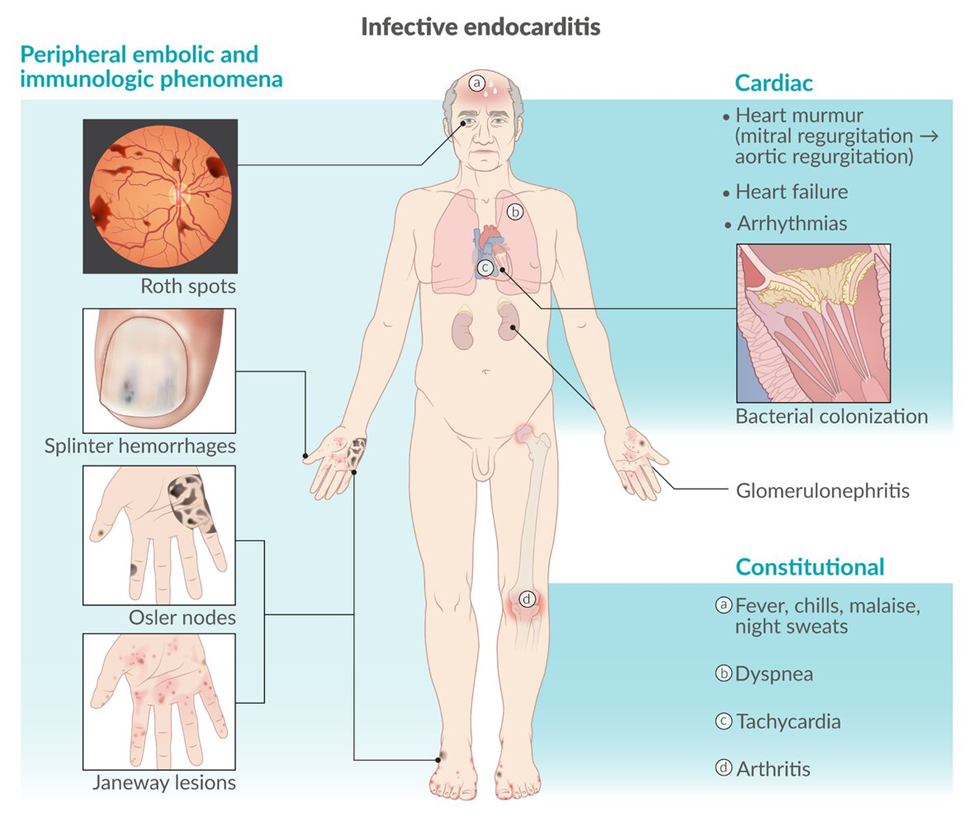
A nurse is assessing a toddler who has infective endocarditis. Which of the following findings should the nurse expect?
A. New heart murmur
New heart murmurThis is a common finding in infective endocarditis due to damage to the heart valves caused by the infection. The infection can lead to the development of new heart murmurs or changes in existing ones as the valves become affected.
B. Weight gain
Weight gainWeight gain is not typically associated with infective endocarditis. In fact, individuals with infective endocarditis may experience weight loss due to symptoms such as fever, loss of appetite, and malaise.
C. Bradycardia
Bradycardia Bradycardia, or a slow heart rate, is not a typical finding in infective endocarditis. In many cases, individuals with infective endocarditis may actually present with tachycardia (rapid heart rate) due to fever and the body's response to infection.
D. Decreased body temperature
Decreased body temperatureInfective endocarditis is often associated with fever, which would lead to an elevated body temperature rather than a decreased one.
Full Explanation
A. New heart murmur
This is a common finding in infective endocarditis due to damage to the heart valves caused by the infection. The infection can lead to the development of new heart murmurs or changes in existing ones as the valves become affected.
B. Weight gain
Weight gain is not typically associated with infective endocarditis. In fact, individuals with infective endocarditis may experience weight loss due to symptoms such as fever, loss of appetite, and malaise.
C. Bradycardia
Bradycardia, or a slow heart rate, is not a typical finding in infective endocarditis. In many cases, individuals with infective endocarditis may actually present with tachycardia (rapid heart rate) due to fever and the body's response to infection.
D. Decreased body temperature
Infective endocarditis is often associated with fever, which would lead to an elevated body temperature rather than a decreased one.
A nurse is creating a plan of care for a child who is awake and responsive following an acute head injury. Which of the following interventions should the nurse include?
A. Place the child in a room with bright fluorescent lighting.
Place the child in a room with bright fluorescent lighting.This option is not appropriate because bright fluorescent lighting can be uncomfortable and potentially aggravate symptoms such as headache or sensitivity to light, which are common after a head injury. Therefore, it is not included in the plan of care.
B. Initiate seizure precautions for the child.
Initiate seizure precautions for the child.This intervention is appropriate because children with head injuries are at an increased risk of seizures. Seizure precautions may include ensuring a safe environment, such as padding the sides of the bed, removing any objects that could cause harm during a seizure, and closely monitoring the child's neurological status for signs of seizure activity.
C. Use the COMFORT scale to rate the child's pain.
Use the COMFORT scale to rate the child's pain. While assessing and managing pain is important, the COMFORT scale may not be the most appropriate tool for evaluating pain in a child with a head injury. The nurse should use a pain assessment tool that is specifically designed for pediatric patients and is suitable for assessing pain in children with head injuries.
D. Suction the child's nares to determine the presence of fluid.
Suction the child's nares to determine the presence of fluid.Suctioning the child's nares may be indicated if there are concerns about airway patency or respiratory secretions. However, it is not a routine intervention for all children with head injuries. The nurse should assess the child's respiratory status and use suctioning only if necessary based on clinical findings.
Full Explanation
A. Place the child in a room with bright fluorescent lighting.
This option is not appropriate because bright fluorescent lighting can be uncomfortable and potentially aggravate symptoms such as headache or sensitivity to light, which are common after a head injury. Therefore, it is not included in the plan of care.
B. Initiate seizure precautions for the child.
This intervention is appropriate because children with head injuries are at an increased risk of seizures. Seizure precautions may include ensuring a safe environment, such as padding the sides of the bed, removing any objects that could cause harm during a seizure, and closely monitoring the child's neurological status for signs of seizure activity.
C. Use the COMFORT scale to rate the child's pain.
While assessing and managing pain is important, the COMFORT scale may not be the most appropriate tool for evaluating pain in a child with a head injury. The nurse should use a pain assessment tool that is specifically designed for pediatric patients and is suitable for assessing pain in children with head injuries.
D. Suction the child's nares to determine the presence of fluid.
Suctioning the child's nares may be indicated if there are concerns about airway patency or respiratory secretions. However, it is not a routine intervention for all children with head injuries. The nurse should assess the child's respiratory status and use suctioning only if necessary based on clinical findings.