Nursing practice questions with comprehensive rationales
NurseDive Free Nursing Practice Question
A nurse in a pediatric clinic is performing a history and physical for a toddler who is scheduled to receive a measles, mumps, and rubella (MMR) immunization. Which of the following findings indicate that the immunization should be withheld?
A. Temperature of 38° C (100.4° F)
Temperature of 38°C (100.4°F):A mild fever is not a contraindication for the MMR vaccine. In fact, a low-grade fever is common after immunizations and does not warrant withholding the vaccine.
B. Family history of sudden unexpected infant death (SUID)
Family history of sudden unexpected infant death (SUID): While a family history of SUID may be concerning, it is not a contraindication for administering the MMR vaccine. This history would not directly impact the safety or effectiveness of the vaccine.
C. Taking an antihistamine for seasonal allergies
Taking an antihistamine for seasonal allergies: Taking an antihistamine for seasonal allergies does not typically contraindicate the administration of the MMR vaccine. Antihistamines are generally safe to use with vaccines, and they do not interfere with the immune response to the vaccine.
D. Receiving prednisone for nephrotic syndrome
Receiving prednisone for nephrotic syndrome:Prednisone is an immunosuppressive medication. Children receiving high-dose corticosteroids (such as prednisone) should avoid live vaccines like MMR.
This question is an excerpt from Nurse Dive's nursing test bank - Ati Nursing Care Of Children Proctored Exam. Take the full exam now
Full Explanation
A. Temperature of 38°C (100.4°F): A mild fever is not a contraindication for the MMR vaccine. In fact, a low-grade fever is common after immunizations and does not warrant withholding the vaccine.
B. Family history of sudden unexpected infant death (SUID): While a family history of SUID may be concerning, it is not a contraindication for administering the MMR vaccine. This history would not directly impact the safety or effectiveness of the vaccine.
C. Taking an antihistamine for seasonal allergies: Taking an antihistamine for seasonal allergies does not typically contraindicate the administration of the MMR vaccine. Antihistamines are generally safe to use with vaccines, and they do not interfere with the immune response to the vaccine.
D. Receiving prednisone for nephrotic syndrome: Prednisone is an immunosuppressive medication. Children receiving high-dose corticosteroids (such as prednisone) should avoid live vaccines like MMR
Similar Questions
A nurse is caring for a school-age child who has metastatic osteosarcoma. The child asks the nurse, "Am I going to die?" Which of the following responses should the nurse make?
A. "What is your pain level right now?"
"What is your pain level right now?": This response doesn't directly address the child's question about mortality and may deflect the conversation away from the child's concerns. While assessing pain is important, it should not be the immediate response to a question about mortality.
B. "Your doctor will be able to answer your questions tomorrow."
"Your doctor will be able to answer your questions tomorrow.": This response delays addressing the child's concerns and may leave the child feeling anxious or unsupported in the meantime. It's important for the nurse to provide immediate support and reassurance when a child expresses fears or worries.
C. "It sounds like you are worried. Tell me what you have been told."
"It sounds like you are worried. Tell me what you have been told.": This response acknowledges the child's emotions and invites them to share their thoughts and concerns. It opens up a dialogue between the nurse and the child, allowing the nurse to provide appropriate support and information based on the child's understanding and perspective.
D. "It's natural to worry about death, but you should focus your energy on getting better."
"It's natural to worry about death, but you should focus your energy on getting better.": While this response acknowledges the child's worry, it may come across as dismissive or minimizing of the child's concerns about mortality. It's important to validate the child's emotions and offer support rather than redirecting their focus away from their worries.
Full Explanation
A. "What is your pain level right now?": This response doesn't directly address the child's question about mortality and may deflect the conversation away from the child's concerns. While assessing pain is important, it should not be the immediate response to a question about mortality.
B. "Your doctor will be able to answer your questions tomorrow.": This response delays addressing the child's concerns and may leave the child feeling anxious or unsupported in the meantime. It's important for the nurse to provide immediate support and reassurance when a child expresses fears or worries.
C. "It sounds like you are worried. Tell me what you have been told.": This response acknowledges the child's emotions and invites them to share their thoughts and concerns. It opens up a dialogue between the nurse and the child, allowing the nurse to provide appropriate support and information based on the child's understanding and perspective.
D. "It's natural to worry about death, but you should focus your energy on getting better.": While this response acknowledges the child's worry, it may come across as dismissive or minimizing of the child's concerns about mortality. It's important to validate the child's emotions and offer support rather than redirecting their focus away from their worries.
A nurse is assessing an infant who has intussusception. Which of the following manifestations should the nurse expect?
A. Polyuria
PolyuriaPolyuria, or excessive urination, is not typically associated with intussusception. This symptom is more commonly seen in conditions affecting the kidneys or urinary tract.
B. Scaphoid abdomen
Scaphoid abdomenA scaphoid abdomen refers to a concave or hollowed appearance of the abdomen, which is not typically observed in intussusception. In intussusception, abdominal distension and tenderness are more common findings.
C. Gelatinous red stool
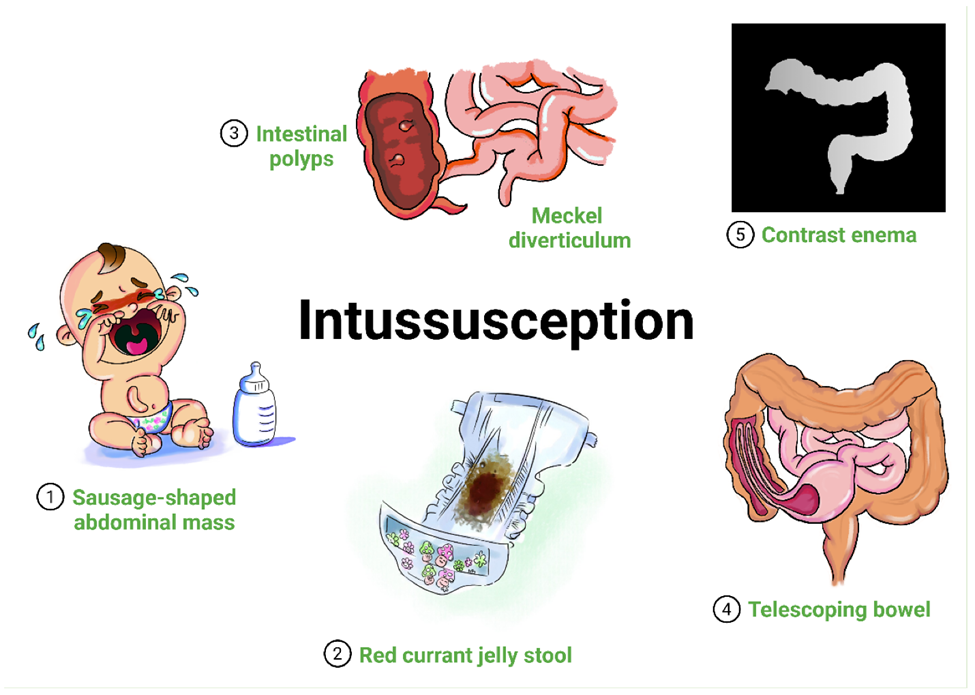
Gelatinous red stool Gelatinous red stool, often described as "currant jelly" stool, is a classic manifestation of intussusception. It occurs due to the mixture of blood, mucus, and bowel contents.
D. Generalized edema
Generalized edemaGeneralized edema, or swelling throughout the body, is not a typical manifestation of intussusception. It is more commonly associated with conditions such as heart failure or kidney disease.
Full Explanation
A. Polyuria
Polyuria, or excessive urination, is not typically associated with intussusception. This symptom is more commonly seen in conditions affecting the kidneys or urinary tract.
B. Scaphoid abdomen
A scaphoid abdomen refers to a concave or hollowed appearance of the abdomen, which is not typically observed in intussusception. In intussusception, abdominal distension and tenderness are more common findings.
C. Gelatinous red stool
Gelatinous red stool, often described as "currant jelly" stool, is a classic manifestation of intussusception. It occurs due to the mixture of blood, mucus, and bowel contents.
D. Generalized edema
Generalized edema, or swelling throughout the body, is not a typical manifestation of intussusception. It is more commonly associated with conditions such as heart failure or kidney disease.
A nurse is assessing a child who has a congenital heart defect. The nurse should recognize that which of the following defects is associated with increased pulmonary blood flow?
A. Coarctation of the aorta
Coarctation of the aortaCoarctation of the aorta involves a narrowing of the aorta, leading to decreased blood flow to the lower body. It is not associated with increased pulmonary blood flow.
B. Patent ductus arteriosus
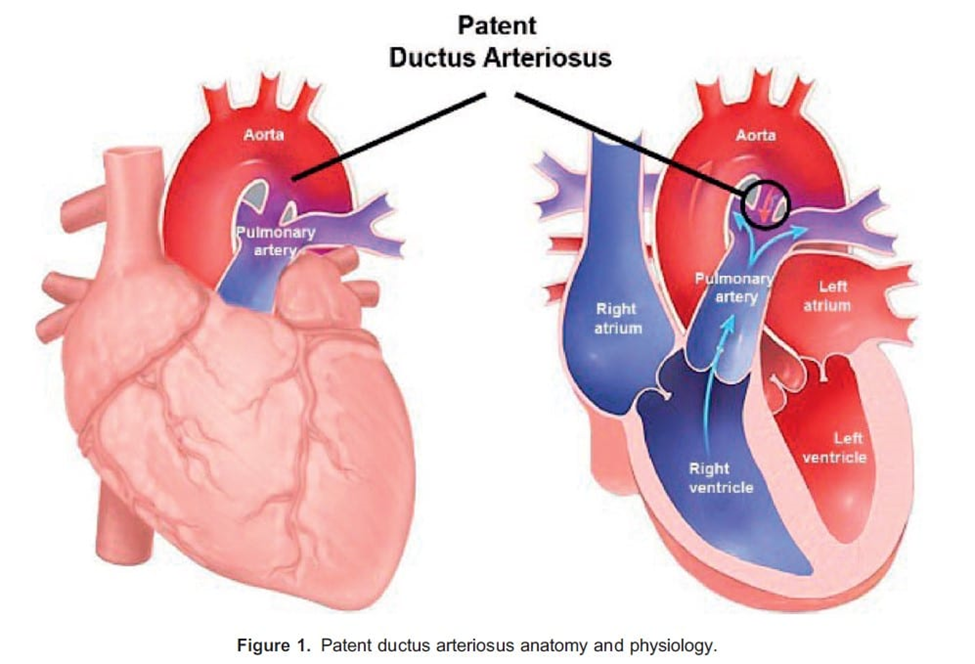
Patent ductus arteriosusPatent ductus arteriosus (PDA) is a congenital heart defect where the ductus arteriosus, a fetal blood vessel that usually closes shortly after birth, remains open. This allows blood to flow from the aorta into the pulmonary artery, increasing pulmonary blood flow. Therefore, option B is correct.
C. Tetralogy of Fallot
Tetralogy of Fallot Tetralogy of Fallot is a congenital heart defect characterized by four abnormalities, including a ventricular septal defect (VSD), pulmonary stenosis, right ventricular hypertrophy, and an overriding aorta. While it can lead to cyanosis due to right-to-left shunting, it is not primarily associated with increased pulmonary blood flow.
D. Tricuspid atresia
Tricuspid atresiaTricuspid atresia involves the absence of the tricuspid valve, leading to a lack of direct blood flow from the right atrium to the right ventricle. It usually presents with decreased pulmonary blood flow rather than increased pulmonary blood flow.
Full Explanation
A. Coarctation of the aorta
Coarctation of the aorta involves a narrowing of the aorta, leading to decreased blood flow to the lower body. It is not associated with increased pulmonary blood flow.
B. Patent ductus arteriosus
Patent ductus arteriosus (PDA) is a congenital heart defect where the ductus arteriosus, a fetal blood vessel that usually closes shortly after birth, remains open. This allows blood to flow from the aorta into the pulmonary artery, increasing pulmonary blood flow. Therefore, option B is correct.
C. Tetralogy of Fallot
Tetralogy of Fallot is a congenital heart defect characterized by four abnormalities, including a ventricular septal defect (VSD), pulmonary stenosis, right ventricular hypertrophy, and an overriding aorta. While it can lead to cyanosis due to right-to-left shunting, it is not primarily associated with increased pulmonary blood flow.
D. Tricuspid atresia
Tricuspid atresia involves the absence of the tricuspid valve, leading to a lack of direct blood flow from the right atrium to the right ventricle. It usually presents with decreased pulmonary blood flow rather than increased pulmonary blood flow.