
Nursing practice questions with comprehensive rationales
NurseDive Free Nursing Practice Question
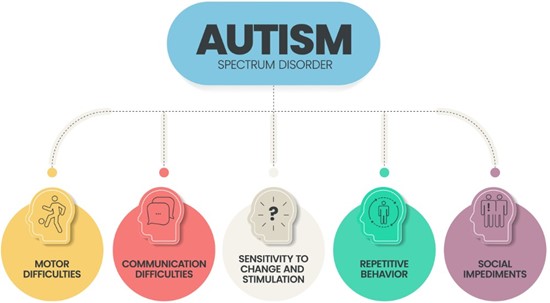
A nurse in a special education program is planning care for a child who has an autism spectrum disorder.
Which of the following interventions should the nurse include in the plan of care?
A. Allow for imaginative play with peers without supervision.
Choice A is not correct because allowing for imaginative play with peers without supervision is not a recommended intervention for a child with ASD.
B. Establish a reward system for positive behavior.
Behavioral approaches have the most evidence for treating symptoms of Autism Spectrum Disorder (ASD)1. Applied Behavior Analysis (ABA) is a notable behavioral treatment for people with ASD that encourages desired behaviors and discourages undesired behaviors to improve a variety of skills. A reward system for positive behavior is an example of an ABA technique.
C. Provide a flexible schedule that adjusts to the child's interests.
Choice C is not correct because providing a flexible schedule that adjusts to the child’s interests is not a recommended intervention for a child with ASD.
D. Allow for adjustment of rules to correlate with the child's behavior.
Choice D is not correct because allowing for adjustment of rules to correlate with the child’s behavior is not a recommended intervention for a child with ASD.
This question is an excerpt from Nurse Dive's nursing test bank - ATI Custom SP23 N23 N240 Proctored Exam 3 Ch 11 24 32 43 44. Take the full exam now
Full Explanation
Behavioral approaches have the most evidence for treating symptoms of Autism
Spectrum Disorder (ASD)1.
Applied Behavior Analysis (ABA) is a notable behavioral treatment for people with ASD that encourages desired behaviors and discourages undesired behaviors to improve a variety of skills.
A reward system for positive behavior is an example of an ABA technique.
Choice A is not correct because allowing for imaginative play with peers without supervision is not a recommended intervention for a child with ASD.
Choice C is not correct because providing a flexible schedule that adjusts to the child’s interests is not a recommended intervention for a child with ASD.
Choice D is not correct because allowing for adjustment of rules to correlate with the child’s behavior is not a recommended intervention for a child with ASD.
Similar Questions
A nurse is caring for an infant who has a hydrocele.
Which of the following actions should the nurse take?
A. Refer the family for genetic counseling.
Choice A is not correct because a hydrocele is not a genetic condition and does not require genetic counseling.
B. Retract the foreskin and cleanse it several times daily.
Choice B is not correct because retracting the foreskin and cleansing it several times daily is not necessary for a hydrocele.
C. Prepare the child for surgery.
Choice C is not correct because surgery is not always necessary for a hydrocele; it often goes away on its own.
D. Explain to the parents that the issue will self-resolve.
Hydroceles are common in newborns and often go away without treatment by age.
Full Explanation
Hydroceles are common in newborns and often go away without treatment by age.
Choice A is not correct because a hydrocele is not a genetic condition and does not require genetic counseling.
Choice B is not correct because retracting the foreskin and cleansing it several times daily is not necessary for a hydrocele.
Choice C is not correct because surgery is not always necessary for a hydrocele; it often goes away on its own.
A nurse is caring for a 10-month-old infant who is in a cast for developmental dysplasia of the hip (DDH).
Which of the following strategies should the nurse implement to promote the infant's growth and development?
A. Allow the infant to stand in the crib.
Encouraging the infant to stand in the crib while in a cast for developmental dysplasia of the hip (DDH) supports gross motor development and maintains neuromuscular stimulation. Standing promotes proprioceptive input, strengthens postural muscles, and supports bone mineralization through weight-bearing. Infants in hip spica casts or orthotic devices can safely stand with supervision, preserving developmental milestones. Normal serum calcium ranges from 8.5 to 10.5 mg/dL, and mechanical loading enhances osteoblastic activity and skeletal growth.
B. Provide a small electronic toy.
While electronic toys offer sensory stimulation, they do not adequately support gross motor development in infants with DDH. At 10 months, infants require opportunities for vertical positioning and weight-bearing to stimulate vestibular and musculoskeletal systems. Passive play with electronic toys may delay motor milestones such as cruising and standing. Developmental progress depends on integrated sensory-motor experiences, and reliance on sedentary toys may limit engagement of core and lower limb musculature.
C. Tie colorful latex balloons to the side of the crib.
Latex balloons pose a significant safety hazard due to the risk of aspiration and suffocation. When burst, latex fragments can occlude the airway, especially in infants with underdeveloped protective reflexes. The tracheal diameter in infants averages 4 to 5 mm, making obstruction by balloon fragments potentially fatal. Additionally, latex exposure may trigger allergic reactions, particularly in atopic individuals. The American Academy of Pediatrics strongly advises against latex balloon use in children under 8 years.
D. Change the infant's diaper as soon as soiling occurs.
Prompt diaper changes are essential for skin integrity, especially under a cast where moisture retention can lead to maceration and infection. However, this action does not directly promote growth and development. It is a hygiene measure that prevents irritant contact dermatitis and secondary infections such as Candida albicans. Normal skin pH ranges from 4.5 to 5.5, and prolonged exposure to urine and feces elevates pH, disrupting the acid mantle. While necessary, it lacks developmental stimulation.
E. None
None
F. None
None
Full Explanation
The correct answer is Choice A.
Choice A rationale: Encouraging the infant to stand in the crib while in a cast for developmental dysplasia of the hip (DDH) supports gross motor development and maintains neuromuscular stimulation. Standing promotes proprioceptive input, strengthens postural muscles, and supports bone mineralization through weight-bearing. Infants in hip spica casts or orthotic devices can safely stand with supervision, preserving developmental milestones. Normal serum calcium ranges from 8.5 to 10.5 mg/dL, and mechanical loading enhances osteoblastic activity and skeletal growth.
Choice B rationale: While electronic toys offer sensory stimulation, they do not adequately support gross motor development in infants with DDH. At 10 months, infants require opportunities for vertical positioning and weight-bearing to stimulate vestibular and musculoskeletal systems. Passive play with electronic toys may delay motor milestones such as cruising and standing. Developmental progress depends on integrated sensory-motor experiences, and reliance on sedentary toys may limit engagement of core and lower limb musculature.
Choice C rationale: Latex balloons pose a significant safety hazard due to the risk of aspiration and suffocation. When burst, latex fragments can occlude the airway, especially in infants with underdeveloped protective reflexes. The tracheal diameter in infants averages 4 to 5 mm, making obstruction by balloon fragments potentially fatal. Additionally, latex exposure may trigger allergic reactions, particularly in atopic individuals. The American Academy of Pediatrics strongly advises against latex balloon use in children under 8 years.
Choice D rationale: Prompt diaper changes are essential for skin integrity, especially under a cast where moisture retention can lead to maceration and infection. However, this action does not directly promote growth and development. It is a hygiene measure that prevents irritant contact dermatitis and secondary infections such as Candida albicans. Normal skin pH ranges from 4.5 to 5.5, and prolonged exposure to urine and feces elevates pH, disrupting the acid mantle. While necessary, it lacks developmental stimulation.
A school nurse is performing a routine health assessment for a school-age child.
Which of the following findings indicates the nurse should investigate further for pediculosis capitis?
A. Dry patches on the scalp.
Choice A is not correct because dry patches on the scalp are not a common symptom of pediculosis capitis 123.
B. Pruritus of the scalp.
Pruritus, or itching, of the scalp, is a common symptom of pediculosis capitis, also known as head lice infestation 123.
C. Bald patches on the scalp.
Choice C is not correct because bald patches on the scalp are not a common symptom of pediculosis capitis 123.
D. Blisters on the scalp.
Choice D is not correct because blisters on the scalp are not a common symptom of pediculosis capitis 123.
Full Explanation
Pruritus, or itching, of the scalp, is a common symptom of pediculosis capitis, also known as head lice infestation 123.
Choice A is not correct because dry patches on the scalp are not a common symptom of pediculosis capitis 123.
Choice C is not correct because bald patches on the scalp are not a common symptom of pediculosis capitis 123.
Choice D is not correct because blisters on the scalp are not a common symptom of pediculosis capitis 123.