
Nursing practice questions with comprehensive rationales
NurseDive Free Nursing Practice Question
A nurse in an emergency department is assessing a client who reports right lower quadrant pain, nausea, and vomiting for the past 48 hr.
Which of the following actions should the nurse take first?
A. Offer pain medication.
Choice A is wrong because while offering pain medication may provide temporary relief, it does not address the underlying cause of the client’s symptoms.
B. Auscultate bowel sounds.
The nurse should first auscultate the client’s bowel sounds. This will provide important information about the client’s gastrointestinal function and can help determine the cause of the client’s symptoms.
C. Palpate the abdomen.
Choice C is wrong because palpating the abdomen before auscultating bowel sounds can alter the bowel sounds and make it more difficult to accurately assess the client’s condition.
D. Administer an antiemetic.
Choice D is wrong because administering an antiemetic may provide temporary relief from nausea and vomiting, but it does not address the underlying cause of the client’s symptoms.
This question is an excerpt from Nurse Dive's nursing test bank - ATI RN Fundamentals 2019 with NGN Proctored Exam. Take the full exam now
Full Explanation
The nurse should first auscultate the client’s bowel sounds.
This will provide important information about the client’s gastrointestinal function and can help determine the cause of the client’s symptoms.
Choice A is wrong because while offering pain medication may provide temporary relief, it does not address the underlying cause of the client’s symptoms.
Choice C is wrong because palpating the abdomen before auscultating bowel sounds can alter the bowel sounds and make it more difficult to accurately assess the client’s condition.
Choice D is wrong because administering an antiemetic may provide temporary relief from nausea and vomiting, but it does not address the underlying cause of the client’s symptoms.
Similar Questions
A nurse is caring for a client who has a new diagnosis of terminal cancer.
Which of the following interventions is the priority?
A. Discuss the client's prior coping mechanisms.
The priority intervention for a client with a new diagnosis of terminal cancer is to discuss the client’s prior coping mechanisms. This can help the nurse understand how the client has dealt with difficult situations in the past and can provide insight into how the client may cope with their current diagnosis.
B. Teach the client to use progressive relaxation techniques.
Choice B is wrong because while teaching the client to use progressive relaxation techniques may be helpful in managing stress and anxiety, it is not the priority intervention.
C. Help the client to find a local support group.
Choice C is wrong because while helping the client find a local support group may provide emotional support, it is not the priority intervention.
D. Develop a list of goals with the client.
Choice D is wrong because while developing a list of goals with the client may provide direction and focus, it is not the priority intervention.
Full Explanation
The priority intervention for a client with a new diagnosis of terminal cancer is to discuss the client’s prior coping mechanisms.
This can help the nurse understand how the client has dealt with difficult situations in the past and can provide insight into how the client may cope with their current diagnosis.
Choice B is wrong because while teaching the client to use progressive relaxation techniques may be helpful in managing stress and anxiety, it is not the priority intervention.
Choice C is wrong because while helping the client find a local support group may provide emotional support, it is not the priority intervention.
Choice D is wrong because while developing a list of goals with the client may provide direction and focus, it is not the priority intervention.
A nurse is assessing a client who has diabetes mellitus prior to performing a blood glucose test.
Which of the following findings should indicate to the nurse that the client has hyperglycemia?
A. Thirst.
Thirst is a common symptom of hyperglycemia, or high blood sugar, in clients with diabetes mellitus.
B. Confusion.
Choice B is wrong because confusion can be a symptom of both hyperglycemia and hypoglycemia (low blood sugar).
C. Shakiness.
Choice C is wrong because shakiness is more commonly associated with hypoglycemia.
D. Cool skin.
Choice D is wrong because cool skin is not a common symptom of hyperglycemia.
Full Explanation
Thirst is a common symptom of hyperglycemia, or high blood sugar, in clients with diabetes mellitus.
Choice B is wrong because confusion can be a symptom of both hyperglycemia and hypoglycemia (low blood sugar).
Choice C is wrong because shakiness is more commonly associated with hypoglycemia.
Choice D is wrong because cool skin is not a common symptom of hyperglycemia.
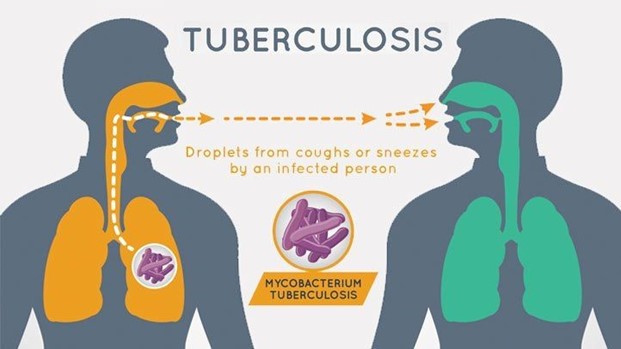
A nurse is caring for a client who has tuberculosis.
Which of the following precautions should the nurse plan to implement when working with the client?
A. Contact.
Contact precautions, are not necessary for TB patients as TB is not spread through contact.
B. Protective.
Protective precautions, are used to protect immunocompromised patients from infections and are not necessary for TB patients.
C. Droplet.
Droplet precautions are used for diseases that are spread through large respiratory droplets and are not necessary for TB patients as TB is spread through airborne droplet nuclei.
D. Airborne.
According to the Centers for Disease Control and Prevention (CDC), tuberculosis (TB) infection control plan is part of a general infection control program designed to ensure prompt detection of infectious TB patients, airborne precautions, and treatment of people who have suspected or confirmed TB disease.
Full Explanation
According to the Centers for Disease Control and Prevention (CDC), tuberculosis (TB) infection control plan is part of a general infection control program designed to ensure prompt detection of infectious TB patients, airborne precautions, and treatment of people who have suspected or confirmed TB disease.
Choice A, Contact precautions, are not necessary for TB patients as TB is not spread through contact.
Choice B, Protective precautions, are used to protect immunocompromised patients from infections and are not necessary for TB patients.
Choice C, Droplet precautions, are used for diseases that are spread through large respiratory droplets and are not necessary for TB patients as TB is spread through airborne droplet nuclei.