Nursing practice questions with comprehensive rationales
NurseDive Free Nursing Practice Question
A nurse in an emergency department is caring for a client who has burns on the front and back of both his legs and arms. Using the rule of nines the nurse should document burns to which percentage of the client's total body surface area (TBSA)?
A. 9 percent
B. 18 percent
C. 36 percent
This is because according to the rule of nines, each arm accounts for 9 percent and each leg accounts for 18 percent of the TBSA. Therefore, burns on both arms and both legs equal (9+9+18+18) =54%.
D. 54 percent
This question is an excerpt from Nurse Dive's nursing test bank - ATI SP 250 Exam 3 Med Surg Proctored Exam. Take the full exam now
Full Explanation
This is because according to the rule of nines, each arm accounts for 9 percent and each leg accounts for 18 percent of the TBSA. Therefore, burns on both arms and both legs equal (9+9+18+18) =54%.
Similar Questions
A nurse in a provider's office is assessing an older adult client whose son reports that the client has been sick with a respiratory illness for the past 6 days. Which of the following assessment findings is a manifestation of pneumonia in the older adult client?
A. Bradycardia
B. Confusion
This is because older adults may not have typical signs and symptoms of pneumonia, such as fever, cough, and chest pain. Instead, they may present with confusion, lethargy, or delirium due to hypoxia or dehydration.
C. Night sweats
D. Narrowed pulse pressure
Full Explanation
This is because older adults may not have typical signs and symptoms of pneumonia, such as fever, cough, and chest pain. Instead, they may present with confusion, lethargy, or delirium due to hypoxia or dehydration.
A nurse in a community health clinic is administering seasonal inactive influenza vaccine. Before administering it, the nurse must confirm that the client is not allergic to which of the following?
A. Gelatin
B. Yeast
C. Eggs
This is because some influenza vaccines are prepared using chicken eggs and may contain trace amounts of egg protein, which can cause an allergic reaction in some people.
D. Shellfish
Full Explanation
This is because some influenza vaccines are prepared using chicken eggs and may contain trace amounts of egg protein, which can cause an allergic reaction in some people.
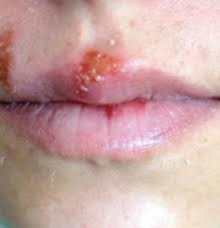
A nurse is assessing a client who has viral rhinitis and a history of herpes simplex virus type 1 (HSV-1) lesions. The nurse should assess which of the following areas of the body for the recurrence of HSV-1 lesions?
A. Scalp
B. Genitalia
C. Mouth
This is because HSV-1 typically causes oral herpes, which manifests as cold sores or fever blisters around the mouth or lips.
D. Extremities
Full Explanation
This is because HSV-1 typically causes oral herpes, which manifests as cold sores or fever blisters around the mouth or lips.