Nursing practice questions with comprehensive rationales
NurseDive Free Nursing Practice Question
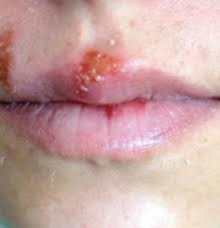
A nurse is assessing a client who has viral rhinitis and a history of herpes simplex virus type 1 (HSV-1) lesions. The nurse should assess which of the following areas of the body for the recurrence of HSV-1 lesions?
A. Scalp
B. Genitalia
C. Mouth
This is because HSV-1 typically causes oral herpes, which manifests as cold sores or fever blisters around the mouth or lips.
D. Extremities
This question is an excerpt from Nurse Dive's nursing test bank - ATI SP 250 Exam 3 Med Surg Proctored Exam. Take the full exam now
Full Explanation
This is because HSV-1 typically causes oral herpes, which manifests as cold sores or fever blisters around the mouth or lips.
Similar Questions
A nurse is assessing a client who has basal cell carcinoma on her nose. The nurse should expect which of the following findings?
A. A crusted lesion with indurated margins.
B. A small, translucent papule with rolled borders
Basal cell carcinoma is the most common type of skin cancer and usually occurs on sun-exposed areas of the skin. It is slow-growing and rarely metastasizes. It appears as a small, translucent papule with rolled borders that may ulcerate and bleed.
C. A multi-colored lesion with irregular borders
D. A small macule with dry yellow scale
Full Explanation
Basal cell carcinoma is the most common type of skin cancer and usually occurs on sun-exposed areas of the skin. It is slow-growing and rarely metastasizes. It appears as a small, translucent papule with rolled borders that may ulcerate and bleed.
A nurse is providing teaching to a client about preventing skin cancer. Which of the following client statements indicates a need for further teaching?
A. "Eating a high fiber diet will reduce my risk for developing skin cancer." B. "I should check my skin monthly for any changes."
Eating a high fiber diet has not been proven to reduce the risk for developing skin cancer. Skin cancer is mainly caused by exposure to ultraviolet (UV) radiation from the sun or artificial sources, such as tanning booths.
B. "I should avoid the use of tanning booths."
C. "I should use sunscreen even on cloudy days."
D. Wear barrier protection during vaginal intercourse.
Full Explanation
Eating a high fiber diet has not been proven to reduce the risk for developing skin cancer. Skin cancer is mainly caused by exposure to ultraviolet (UV) radiation from the sun or artificial sources, such as tanning booths.
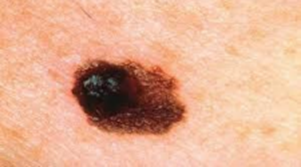
A nurse is caring for a client who has malignant melanoma. Which of the following findings should the nurse expect when assessing the lesion?
A. Pain
B. Pruritus
C. Purplish in color
Malignant melanoma is a rare but aggressive type of skin cancer that originates from melanocytes, the cells that produce pigment in the skin. It can appear as a new or changing mole that has an irregular shape, uneven color, large size, or bleeding tendency. It may also be purplish in color due to vascular invasion or hemorrhage within the lesion.
D. Purulent drainage
Full Explanation
Malignant melanoma is a rare but aggressive type of skin cancer that originates from melanocytes, the cells that produce pigment in the skin. It can appear as a new or changing mole that has an irregular shape, uneven color, large size, or bleeding tendency. It may also be purplish in color due to vascular invasion or hemorrhage within the lesion.