
Nursing practice questions with comprehensive rationales
NurseDive Free Nursing Practice Question
A nurse in the emergency department is caring for an adolescent who is requesting testing for STIs.
Which of the following actions is appropriate for the nurse to take?
A. Request verbal consent from the client.
The nurse should request verbal consent from the client for STI testing. All 50 states and the District of Columbia explicitly allow minors to consent for their own STI services.
B. Contact the client's parents to obtain phone consent.
Choice B is wrong because it is not necessary to contact the client’s parents to obtain phone consent.
C. Postpone the testing until the client's parents are present.
Choice C is wrong because it is not necessary to postpone the testing until the client’s parents are present.
D. Obtain written consent from the client.
Choice D is wrong because written consent is not required for STI testing.
This question is an excerpt from Nurse Dive's nursing test bank - ATI RN Nursing Care of Children 2019 Proctored Exam. Take the full exam now
Full Explanation
The nurse should request verbal consent from the client for STI testing.
All 50 states and the District of Columbia explicitly allow minors to consent for their own STI services.
Choice B is wrong because it is not necessary to contact the client’s parents to obtain phone consent.
Choice C is wrong because it is not necessary to postpone the testing until the client’s parents are present.
Choice D is wrong because written consent is not required for STI testing.
Similar Questions
A nurse is preparing to administer amoxicillin 80 mg/kg/day divided into two doses daily to a 2-year-old client who weighs 10 kg (22 lb).
Available is amoxicillin suspension 400 mg/5 mL.
How many mL of amoxicillin should the nurse administer per dose? (Round the answer to the nearest whole number.)
Use a leading zero if it applies. Do not use a trailing zero.
A. 2 mL
Choice A is wrong because it would result in an underdose of amoxicillin.
B. 4 mL
Choice B is wrong because it would result in an underdose of amoxicillin.
C. 8 mL
The nurse should administer 8 mL of amoxicillin per dose. Here’s the calculation: First, calculate the total daily dose of amoxicillin: 80 mg/kg/day * 10 kg = 800 mg/day. Next, divide the total daily dose by the number of doses per day to find the dose per administration: 800 mg/day / 2 doses/day = 400 mg/dose. Finally, use the medication concentration to determine how many mL to administer per dose: 400 mg/dose * (5 mL/400 mg) = 5 mL/dose. Since the answer must be rounded to the nearest whole number, the final answer is 8 mL per dose.
D. 16 mL
Choice D is wrong because it would result in an overdose of amoxicillin.
Full Explanation
The nurse should administer 8 mL of amoxicillin per dose.
Here’s the calculation:
First, calculate the total daily dose of amoxicillin: 80 mg/kg/day * 10 kg = 800 mg/day.
Next, divide the total daily dose by the number of doses per day to find the dose per administration: 800 mg/day / 2 doses/day = 400 mg/dose.
Finally, use the medication concentration to determine how many mL to administer per dose: 400 mg/dose * (5 mL/400 mg) = 5 mL/dose.
Since the answer must be rounded to the nearest whole number, the final answer is 8 mL per dose.
Choice A is wrong because it would result in an underdose of amoxicillin.
Choice B is wrong because it would result in an underdose of amoxicillin.
Choice D is wrong because it would result in an overdose of amoxicillin.
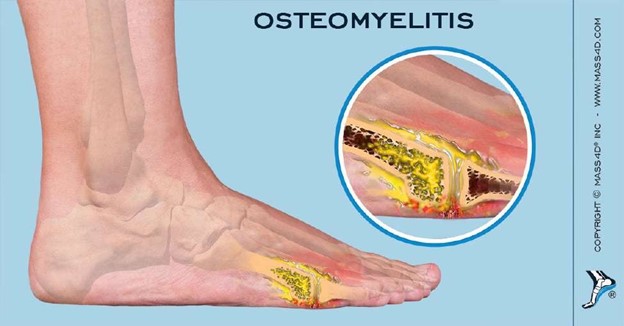
A nurse is planning care for a child who has osteomyelitis.
Which of the following interventions should the nurse include in the plan of care?
A. Initiate contact precautions for the child.
Choice A is wrong because contact precautions are not necessary for a child with osteomyelitis.
B. Maintain a patent intravenous catheter.
Maintaining a patent intravenous catheter is important for administering antibiotics and other medications to treat osteomyelitis.
C. Provide a high-calorie, low-protein diet.
Choice C is wrong because a high-calorie, low-protein diet is not indicated for a child with osteomyelitis.
D. Encourage frequent physical activity to increase bone mass.
Choice D is wrong because frequent physical activity may not be appropriate for a child with osteomyelitis due to pain and inflammation 1.
Full Explanation
Maintaining a patent intravenous catheter is important for administering antibiotics and other medications to treat osteomyelitis.
Choice A is wrong because contact precautions are not necessary for a child with osteomyelitis.
Choice C is wrong because a high-calorie, low-protein diet is not indicated for a child with osteomyelitis.
Choice D is wrong because frequent physical activity may not be appropriate for a child with osteomyelitis due to pain and inflammation 1.
A nurse is caring for a preschooler who is postoperative following a tonsillectomy. The child is now ready to resume oral intake.
Which of the following dietary choices should the nurse offer the child?
A. Chocolate milk.
Choice Ais wrong because dairy products like chocolate milk can increase mucus production and make stomach upset worse.
B. Vanilla ice cream.
Choice Bis wrong because dairy products like vanilla ice cream can increase mucus production and make stomach upset worse.
C. Sugar-free cherry gelatin.
Sugar-free cherry gelatin is a soft and cooling food that can make the child more comfortable during recovery and help them heal faster.
D. Lime-flavored ice pop.
Choice D is wrong because acidic foods like lime-flavored ice pops may cause discomfort.
Full Explanation
Sugar-free cherry gelatin is a soft and cooling food that can make the child more comfortable during recovery and help them heal faster.
Choice A is wrong because dairy products like chocolate milk can increase mucus production and make stomach upset worse.
Choice B is wrong because dairy products like vanilla ice cream can increase mucus production and make stomach upset worse.
Choice D is wrong because acidic foods like lime-flavored ice pops may cause discomfort.