Nursing practice questions with comprehensive rationales
NurseDive Free Nursing Practice Question
A nurse in the emergency room is caring for a client who presents with manifestations that indicate a myocardial infarction. Which of the following prescriptions should the nurse take first?
A. Attach the leads for a 12-lead ECG.
Attaching the leads for a 12-lead ECG is crucial for diagnosing a myocardial infarction. However, it is not the first priority. Ensuring the patient receives adequate oxygen is more critical to prevent further myocardial damage. The ECG can be performed immediately after oxygen therapy is initiated to confirm the diagnosis and guide further treatment.
B. Initiate oxygen therapy.
Initiating oxygen therapy is the first priority because it ensures that the heart muscle receives adequate oxygen, which is essential to prevent further damage during a myocardial infarction. Oxygen therapy helps to maintain tissue oxygenation and can reduce the extent of myocardial injury. This immediate intervention is vital to stabilize the patient and improve outcomes.
C. Insert the IV catheter.
Inserting the IV catheter is important for administering medications and fluids. However, it is not the first step. Oxygen therapy takes precedence to ensure the heart and other vital organs receive sufficient oxygen. Once oxygen is administered, IV access can be established to facilitate further treatment.
D. Obtain a blood sample.
Obtaining a blood sample is necessary for confirming the diagnosis and assessing cardiac markers. However, it is not the immediate priority. Ensuring the patient is oxygenated is more urgent to prevent further myocardial damage. Blood samples can be drawn after oxygen therapy is initiated.
This question is an excerpt from Nurse Dive's nursing test bank - ATI Med Surg 2 Proctored Exam. Take the full exam now
Full Explanation
The correct answer is: B. Initiate oxygen therapy.
Choice A reason:
Attaching the leads for a 12-lead ECG is crucial for diagnosing a myocardial infarction. However, it is not the first priority. Ensuring the patient receives adequate oxygen is more critical to prevent further myocardial damage. The ECG can be performed immediately after oxygen therapy is initiated to confirm the diagnosis and guide further treatment.
Choice B reason:
Initiating oxygen therapy is the first priority because it ensures that the heart muscle receives adequate oxygen, which is essential to prevent further damage during a myocardial infarction. Oxygen therapy helps to maintain tissue oxygenation and can reduce the extent of myocardial injury. This immediate intervention is vital to stabilize the patient and improve outcomes.
Choice C reason:
Inserting the IV catheter is important for administering medications and fluids. However, it is not the first step. Oxygen therapy takes precedence to ensure the heart and other vital organs receive sufficient oxygen. Once oxygen is administered, IV access can be established to facilitate further treatment.
Choice D reason:
Obtaining a blood sample is necessary for confirming the diagnosis and assessing cardiac markers. However, it is not the immediate priority. Ensuring the patient is oxygenated is more urgent to prevent further myocardial damage. Blood samples can be drawn after oxygen therapy is initiated.
Similar Questions
A nurse is admitting a client who has acute heart failure following myocardial infarction (MI). The nurse recognizes that which of the following prescriptions by the provider requires clarification?
A. Morphine sulfate 2 mg IV bolus every 2 hr PRN pain
Choice a) is incorrect because morphine sulfate is an appropriate prescription for a client who has acute heart failure following MI. Morphine sulfate is an opioid analgesic that can relieve pain, anxiety, and dyspnea. Morphine sulfate can also reduce the preload and afterload of the heart, which can improve the cardiac output and oxygenation.
B. Laboratory testing of serum potassium upon admission
Choice b) is incorrect because laboratory testing of serum potassium is an appropriate prescription for a client who has acute heart failure following MI. Serum potassium is an electrolyte that is important for the normal function of the cardiac cells and muscles. Serum potassium can be altered by various factors, such as renal function, acid-base balance, medications, or dietary intake. Serum potassium can affect the cardiac rhythm and contractility, which can influence the outcome of the client.
C. 0.9% normal saline IV at 50 mL/hr continuous
Choice c) is correct because 0.9% normal saline IV at 50 mL/hr continuous is a prescription that requires clarification for a client who has acute heart failure following MI. 0.9% normal saline is an isotonic solution that can maintain the fluid balance and blood pressure in the body. However, 0.9% normal saline can also cause fluid overload and worsen the heart failure symptoms, such as edema, crackles, and dyspnea. The nurse should clarify with the provider if this prescription is appropriate for the client's condition and if there are any parameters or limits for the fluid administration.
D. Bumetanide 1 mg IV bolus every 12 hr
Choice d) is incorrect because bumetanide 1 mg IV bolus every 12 hr is an appropriate prescription for a client who has acute heart failure following MI. Bumetanide is a loop diuretic that can increase the urine output and reduce the fluid volume and pressure in the body. Bumetanide can also decrease the preload and afterload of the heart, which can improve the cardiac output and oxygenation.
Full Explanation
Choice a) is incorrect because morphine sulfate is an appropriate prescription for a client who has acute heart failure following MI. Morphine sulfate is an opioid analgesic that can relieve pain, anxiety, and dyspnea. Morphine sulfate can also reduce the preload and afterload of the heart, which can improve the cardiac output and oxygenation.
Choice b) is incorrect because laboratory testing of serum potassium is an appropriate prescription for a client who has acute heart failure following MI. Serum potassium is an electrolyte that is important for the normal function of the cardiac cells and muscles. Serum potassium can be altered by various factors, such as renal function, acid-base balance, medications, or dietary intake. Serum potassium can affect the cardiac rhythm and contractility, which can influence the outcome of the client.
Choice c) is correct because 0.9% normal saline IV at 50 mL/hr continuous is a prescription that requires clarification for a client who has acute heart failure following MI. 0.9% normal saline is an isotonic solution that can maintain the fluid balance and blood pressure in the body. However, 0.9% normal saline can also cause fluid overload and worsen the heart failure symptoms, such as edema, crackles, and dyspnea. The nurse should clarify with the provider if this prescription is appropriate for the client's condition and if there are any parameters or limits for the fluid administration.
Choice d) is incorrect because bumetanide 1 mg IV bolus every 12 hr is an appropriate prescription for a client who has acute heart failure following MI. Bumetanide is a loop diuretic that can increase the urine output and reduce the fluid volume and pressure in the body. Bumetanide can also decrease the preload and afterload of the heart, which can improve the cardiac output and oxygenation.
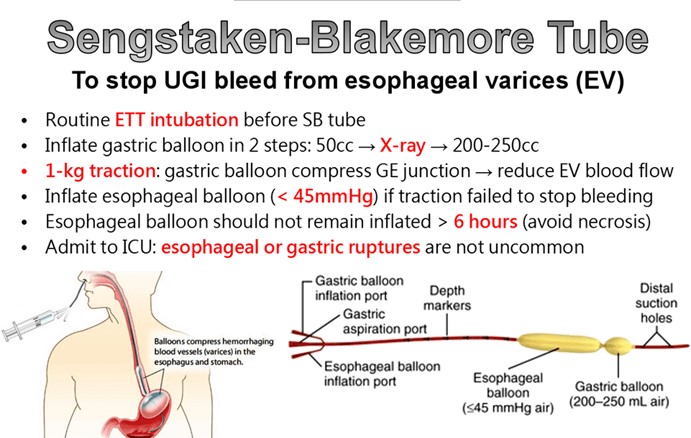
A nurse is caring for a client who has bleeding esophageal varices and is being treated with a Sengstaken-Blakemore tube. Which of the following actions should the nurse perform?
A. Deflate the balloons for 5 min every 2 hr to prevent tissue necrosis.
Reason: This is incorrect. The balloons should not be deflated without a physician's order, as this can cause rebleeding or aspiration.
B. Keep the head of the bed flat at all times to prevent the development of shock.
Reason: This is incorrect. The head of the bed should be elevated to 30 to 45 degrees to reduce pressure on the balloons and prevent gastric reflux.
C. Maintain constant observation while the balloons are inflated.
Reason: This is correct. The nurse should monitor the client closely for signs of complications, such as airway obstruction, aspiration, or balloon rupture. The nurse should also keep scissors at the bedside to cut the tube and release the balloons in case of an emergency.
D. Suction the tube every 2 hr and as needed to maintain patency.
Reason: This is incorrect. The tube should not be suctioned, as this can damage the mucosa and cause bleeding. The nurse should only aspirate gastric contents through the gastric lumen to decompress the stomach.
E. Suction the tube every 2 hr and as needed to maintain patency.
Full Explanation
Choice A Reason: This is incorrect. The balloons should not be deflated without a physician's order, as this can cause rebleeding or aspiration.
Choice B Reason: This is incorrect. The head of the bed should be elevated to 30 to 45 degrees to reduce pressure on the balloons and prevent gastric reflux.
Choice C Reason: This is correct. The nurse should monitor the client closely for signs of complications, such as airway obstruction, aspiration, or balloon rupture. The nurse should also keep scissors at the bedside to cut the tube and release the balloons in case of an emergency.
Choice D Reason: This is incorrect. The tube should not be suctioned, as this can damage the mucosa and cause bleeding. The nurse should only aspirate gastric contents through the gastric lumen to decompress the stomach.
A nurse is caring for a client who has bleeding esophageal varices and is being treated with a Sengstaken-Blakemore tube. Which of the following actions should the nurse perform?
A. Deflate the balloons for 5 min every 2 hr to prevent tissue necrosis.
Reason: This is incorrect. The balloons should not be deflated without a physician's order, as this can cause rebleeding or aspiration.
B. Keep the head of the bed flat at all times to prevent the development of shock.
Reason: This is incorrect. The head of the bed should be elevated to 30 to 45 degrees to reduce pressure on the balloons and prevent gastric reflux.
C. Maintain constant observation while the balloons are inflated.
Reason: This is correct. The nurse should monitor the client closely for signs of complications, such as airway obstruction, aspiration, or balloon rupture. The nurse should also keep scissors at the bedside to cut the tube and release the balloons in case of an emergency.
D. Suction the tube every 2 hr and as needed to maintain patency.
Reason: This is incorrect. The tube should not be suctioned, as this can damage the mucosa and cause bleeding. The nurse should only aspirate gastric contents through the gastric lumen to decompress the stomach.
Full Explanation
Choice A Reason: This is incorrect. The balloons should not be deflated without a physician's order, as this can cause rebleeding or aspiration.
Choice B Reason: This is incorrect. The head of the bed should be elevated to 30 to 45 degrees to reduce pressure on the balloons and prevent gastric reflux.
Choice C Reason: This is correct. The nurse should monitor the client closely for signs of complications, such as airway obstruction, aspiration, or balloon rupture. The nurse should also keep scissors at the bedside to cut the tube and release the balloons in case of an emergency.
Choice D Reason: This is incorrect. The tube should not be suctioned, as this can damage the mucosa and cause bleeding. The nurse should only aspirate gastric contents through the gastric lumen to decompress the stomach.