
Nursing practice questions with comprehensive rationales
NurseDive Free Nursing Practice Question
A nurse is admitting an infant who has severe dehydration from acute gastroenteritis. Which of the following findings should the nurse expect?
A. 13% weight loss
Infants with severe dehydration can experience significant weight loss due to fluid loss through vomiting and diarrhea. A 13% weight loss indicates a severe degree of dehydration and is a crucial finding in assessing the severity of the condition.
B. Bulging anterior fontanel
While a bulging anterior fontanel can be a sign of increased intracranial pressure, it is not typically associated with severe dehydration. In fact, severe dehydration often leads to a sunken fontanel rather than a bulging one. However, it's important to note that a sunken fontanel would be a more expected finding in dehydration.
C. Bradypnea
Bradypnea refers to abnormally slow breathing rate. In severe dehydration, the body often responds with compensatory mechanisms such as increased respiratory rate (tachypnea) to maintain oxygen levels. Bradypnea is not a typical finding in severe dehydration unless there are other concurrent issues affecting respiratory function.
D. Capillary refill 3 seconds
Capillary refill time is a measure of peripheral perfusion. In severe dehydration, capillary refill time is usually prolonged (>3 seconds) due to decreased circulating volume. However, a capillary refill time of 3 seconds is within the normal range and may not necessarily indicate severe dehydration on its own.
This question is an excerpt from Nurse Dive's nursing test bank - SIMMONS U BSN PEDIATRICS PROCTORED EXAM. Take the full exam now
Similar Questions
A nurse is caring for an infant who has gastroesophageal reflux. The nurse should place the infant in which of the following positions following feedings?
A. Place the infant in a prone position.
Placing the infant in a prone position (lying on the stomach) after feedings can increase the risk of choking and aspiration. It is essential to avoid this position, especially after feeding, to reduce the risk of reflux and its complications.
B. Place the infant on his left side.
Placing the infant on his left side is not the preferred position for GER management. While the left side is often recommended for sleeping to reduce the risk of sudden infant death syndrome (SIDS), it is not specifically indicated for GER management after feedings.
C. Place the infant in an infant seat.
Infants with gastroesophageal reflux should be placed in an infant seat or an upright position after feedings to help prevent regurgitation and aspiration of stomach contents into the airway. Placing the infant in an upright position facilitates gravity-assisted movement of stomach contents down and away from the esophagus, reducing the likelihood of reflux. It is essential to ensure that the infant seat is appropriate for the child's age and size and that the infant is safely secured within it. The other options are not recommended for infants with gastroesophageal reflux: When caring for an infant with gastroesophageal reflux (GER), the nurse should place the infant in an infant seat or an upright position following feedings. Placing the infant in an upright position helps to reduce the risk of reflux and regurgitation. Gravity can assist in keeping the stomach contents from flowing back into the esophagus, reducing the potential for discomfort and reflux symptoms.
D. Place the infant on his right side.
Placing the infant on his right side is also not the preferred position for GER management after feedings. The right side does not provide the benefits of an upright position in reducing the risk of reflux and regurgitation.
Full Explanation
Infants with gastroesophageal reflux should be placed in an infant seat or an upright position after feedings to help prevent regurgitation and aspiration of stomach contents into the airway. Placing the infant in an upright position facilitates gravity-assisted movement of stomach contents down and away from the esophagus, reducing the likelihood of reflux. It is essential to ensure that the infant seat is appropriate for the child's age and size and that the infant is safely secured within it.
The other options are not recommended for infants with gastroesophageal reflux:
When caring for an infant with gastroesophageal reflux (GER), the nurse should place the infant in an infant seat or an upright position following feedings. Placing the infant in an upright position helps to reduce the risk of reflux and regurgitation. Gravity can assist in keeping the stomach contents from flowing back into the esophagus, reducing the potential for discomfort and reflux symptoms.
The other options are not recommended for an infant with GER:
A. Placing the infant in a prone position (lying on the stomach) after feedings can increase the risk of choking and aspiration. It is essential to avoid this position, especially after feeding, to reduce the risk of reflux and its complications.
B. Placing the infant on his left side is not the preferred position for GER management. While the left side is often recommended for sleeping to reduce the risk of sudden infant death syndrome (SIDS), it is not specifically indicated for GER management after feedings.
D. Placing the infant on his right side is also not the preferred position for GER management after feedings. The right side does not provide the benefits of an upright position in reducing the risk of reflux and regurgitation.
A nurse is caring for a child who has Kawasaki disease. Which of the following systems should the nurse monitor in response to this diagnosis?
A. Gastrointestinal
Gastrointestinal:Kawasaki disease primarily affects blood vessels, and the gastrointestinal system is not the main target of this condition. While gastrointestinal symptoms can occur as part of the overall inflammatory response, such as abdominal pain, vomiting, or diarrhea, they are not the primary focus of concern in Kawasaki disease. The most critical system to monitor Kawasaki disease is the cardiovascular system, specifically the coronary arteries.
B. Respiratory
Respiratory:The respiratory system is not the primary system affected by Kawasaki disease. While respiratory symptoms can occur as part of the overall inflammatory response and fever associated with the disease, such as coughing or runny nose, they are not the main concern in Kawasaki disease. The primary system to monitor in this condition is the cardiovascular system, especially the coronary arteries.
C. Cardiovascular
Cardiovascular: This is the correct answer. Kawasaki disease is primarily a vasculitis (inflammation of blood vessels) that affects various blood vessels, including the coronary arteries. The inflammation of the coronary arteries can lead to coronary artery aneurysms and other cardiac complications. Monitoring the cardiovascular system is essential to detect any signs of coronary artery involvement and ensure timely intervention to prevent potential long-term cardiac problems.
D. Integumentary
Integumentary:The integumentary system (skin) is not the primary focus of Kawasaki disease. While some skin changes can occur during the acute phase of the disease, such as a rash or peeling skin on the hands and feet, these are not the primary concerns. Monitoring the cardiovascular system is critical in Kawasaki disease due to the risk of coronary artery inflammation and potential complications.
Full Explanation
A. Gastrointestinal:
Kawasaki disease primarily affects blood vessels, and the gastrointestinal system is not the main target of this condition. While gastrointestinal symptoms can occur as part of the overall inflammatory response, such as abdominal pain, vomiting, or diarrhea, they are not the primary focus of concern in Kawasaki disease. The most critical system to monitor in Kawasaki disease is the cardiovascular system, specifically the coronary arteries.
B. Respiratory:
The respiratory system is not the primary system affected by Kawasaki disease. While respiratory symptoms can occur as part of the overall inflammatory response and fever associated with the disease, such as coughing or runny nose, they are not the main concern in Kawasaki disease. The primary system to monitor in this condition is the cardiovascular system, especially the coronary arteries.
C. Cardiovascular:
This is the correct answer. Kawasaki disease is primarily a vasculitis (inflammation of blood vessels) that affects various blood vessels, including the coronary arteries. The inflammation of the coronary arteries can lead to coronary artery aneurysms and other cardiac complications. Monitoring the cardiovascular system is essential to detect any signs of coronary artery involvement and ensure timely intervention to prevent potential long-term cardiac problems.
D. Integumentary:
The integumentary system (skin) is not the primary focus of Kawasaki disease. While some skin changes can occur during the acute phase of the disease, such as a rash or peeling skin on the hands and feet, these are not the primary concerns. Monitoring the cardiovascular system is critical in Kawasaki disease due to the risk of coronary artery inflammation and potential complications.
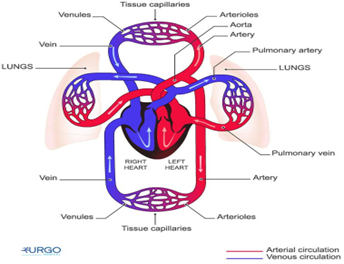
A nurse is obtaining vital signs from a 2-month-old infant. The infant's heart rate is 190/min and his temperature is 40° C (104° F). The father asks the nurse why the infant's heart is beating so fast. Which of the following responses by the nurse is appropriate?
A. "This is within the expected range for your baby."
"This is within the expected range for your baby." - A heart rate of 190/min is above the normal expected range for a 2-month-old infant, which is typically between 120 to 160 beats per minute. This response would not address the elevated heart rate and fever.
B. "The fever is causing an increase in your baby's heart rate."
In this scenario, the infant has a heart rate of 190/min and a fever of 40°C (104°F). Fever in infants can cause an increase in heart rate, which is a normal physiological response to elevated body temperature. Fever is the body's way of responding to an infection or illness, and it triggers various physiological changes, including an increase in heart rate. This helps the body to circulate blood and deliver immune cells to fight off the infection.
C. "As your baby begins to fall asleep. his heart rate will decrease."
"As your baby begins to fall asleep, his heart rate will decrease." - While heart rate may decrease during sleep, it does not explain the elevated heart rate and fever observed in this situation.
D. "Your baby's heart is beating fast in an attempt to cool down his body."
"Your baby's heart is beating fast in an attempt to cool down his body." - While tachycardia (fast heart rate) can be associated with increased metabolic demands during fever, the main reason for the increased heart rate in this case is the fever itself, not the body's attempt to cool down. Fever is a response to infection or illness and can cause an increase in heart rate as part of the body's normal immune response.
Full Explanation
In this scenario, the infant has a heart rate of 190/min and a fever of 40°C (104°F). Fever in infants can cause an increase in heart rate, which is a normal physiological response to elevated body temperature. Fever is the body's way of responding to an infection or illness, and it triggers various physiological changes, including an increase in heart rate. This helps the body to circulate blood and deliver immune cells to fight off the infection.
The other options are not accurate or relevant to the infant's current condition:
A. "This is within the expected range for your baby." - A heart rate of 190/min is above the normal expected range for a 2-month-old infant, which is typically between 120 to 160 beats per minute. This response would not address the elevated heart rate and fever.
C. "As your baby begins to fall asleep, his heart rate will decrease." - While heart rate may decrease during sleep, it does not explain the elevated heart rate and fever observed in this situation.
D. "Your baby's heart is beating fast in an attempt to cool down his body." - While tachycardia (fast heart rate) can be associated with increased metabolic demands during fever, the main reason for the increased heart rate in this case is the fever itself, not the body's attempt to cool down. Fever is a response to infection or illness and can cause an increase in heart rate as part of the body's normal immune response.