Nursing practice questions with comprehensive rationales
NurseDive Free Nursing Practice Question
A nurse is assessing a child who has nephrotic syndrome. Which of the following findings should the nurse expect?
A. Smokey brown urine.
Choice A is incorrect because smokey brown urine is not a symptom of nephrotic syndrome.
B. Facial edema.
Nephrotic syndrome is a kidney disorder that causes your body to pass too much protein in your urine. Swelling around the eyes is the most common sign of nephrotic syndrome in children 2.
C. Hypertension.
Choice C is incorrect because hypertension (high blood pressure) is a complication of nephrotic syndrome, not a symptom.
D. Polyuria.
Choice D is incorrect because polyuria (frequent urination) is not a symptom of nephrotic syndrome.
This question is an excerpt from Nurse Dive's nursing test bank - ATI Custom SP23 N23 N240 Proctored Exam 3 Ch 11 24 32 43 44. Take the full exam now
Full Explanation
Nephrotic syndrome is a kidney disorder that causes your body to pass too much protein in your urine.
Swelling around the eyes is the most common sign of nephrotic syndrome in children 2.
Choice A is incorrect because smokey brown urine is not a symptom of nephrotic syndrome.
Choice C is incorrect because hypertension (high blood pressure) is a complication of nephrotic syndrome, not a symptom.
Choice D is incorrect because polyuria (frequent urination) is not a symptom of nephrotic syndrome.
Similar Questions
A nurse is reviewing the laboratory results of an adolescent who has chronic glomerulonephritis. Which of the following findings should the nurse expect?
A. BUN 50 mg/dL.
Chronic glomerulonephritis is a condition that causes inflammation of the glomeruli, which are tiny filtering units in the kidneys. This can lead to poor kidney function and an increase in waste products in the bloodstream. Blood urea nitrogen (BUN) is a waste product that is normally filtered by the kidneys and excreted in urine. A BUN level of 50 mg/dL is higher than the normal range, indicating poor kidney function.
B. Serum phosphorus 4.0 mg/dL.
Choice B is incorrect because a serum phosphorus level of 4.0 mg/dL is within the normal range for adults.
C. Serum potassium.8 mEq/L.
Choice C is incorrect because a serum potassium level of.8 mEq/L is within the normal range for adults.
D. Absence of proteinuria.
Choice D is incorrect because proteinuria (the presence of protein in urine) is a common finding in glomerulonephritis.
Full Explanation
Chronic glomerulonephritis is a condition that causes inflammation of the glomeruli, which are tiny filtering units in the kidneys.
This can lead to poor kidney function and an increase in waste products in the bloodstream.
Blood urea nitrogen (BUN) is a waste product that is normally filtered by the kidneys and excreted in urine.
A BUN level of 50 mg/dL is higher than the normal range, indicating poor kidney function.
Choice B is incorrect because a serum phosphorus level of 4.0 mg/dL is within
the normal range for adults.
Choice C is incorrect because a serum potassium level of.8 mEq/L is within the normal range for adults.
Choice D is incorrect because proteinuria (the presence of protein in urine) is a
common finding in glomerulonephritis.
A nurse is caring for an infant who has diaper dermatitis. Which of the following actions should the nurse take?
A. Apply a light layer of talcum powder with each diaper change.
Talcum powder is not recommended for use with infants because it can be inhaled, potentially causing respiratory problems. Instead, a barrier cream or ointment (such as zinc oxide or petroleum jelly) should be used to protect the skin from moisture and irritants.
B. Change to cloth diapers until the skin is healed.
While cloth diapers can be less irritating than some disposable diapers, they may not be as effective at keeping the skin dry. The priority is to keep the area dry and clean, regardless of the type of diaper used. Super-absorbent disposable diapers are often recommended because they can help keep the skin dry.
C. Expose the excoriated area to hot air frequently.
Exposing the skin to hot air can cause burns and further irritation. Instead, allowing the skin to air dry naturally (without the use of hot air) during diaper changes can be beneficial.
D. Use a moisturizer to wipe urine from the skin.
A moisturizer creates a barrier between the skin and irritants like urine and stool. Wiping with a moisturizer can minimize friction during cleaning, which can be uncomfortable for the baby and further irritate the skin. Some moisturizers can help soothe and hydrate the inflamed skin, promoting healing.
Full Explanation
a. Talcum powder is not recommended for use with infants because it can be inhaled, potentially causing respiratory problems. Instead, a barrier cream or ointment (such as zinc oxide or petroleum jelly) should be used to protect the skin from moisture and irritants.
b.While cloth diapers can be less irritating than some disposable diapers, they may not be as effective at keeping the skin dry. The priority is to keep the area dry and clean, regardless of the type of diaper used. Super-absorbent disposable diapers are often recommended because they can help keep the skin dry.
c. Exposing the skin to hot air can cause burns and further irritation. Instead, allowing the skin to air dry naturally (without the use of hot air) during diaper changes can be beneficial.
d. A moisturizer creates a barrier between the skin and irritants like urine and stool. Wiping with a moisturizer can minimize friction during cleaning, which can be uncomfortable for the baby and further irritate the skin. Some moisturizers can help soothe and hydrate the inflamed skin, promoting healing.
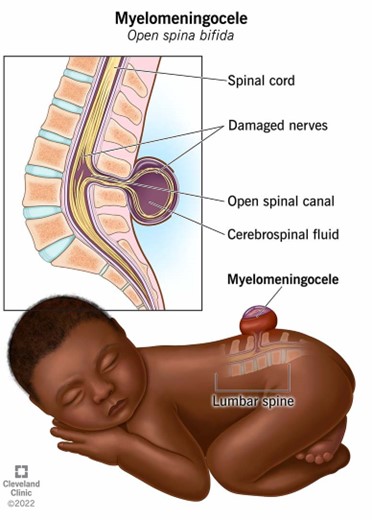
A nurse is orienting a newly licensed nurse in the care of an infant who has myelomeningocele.
Which of the following actions by the new nurse indicates the teaching has been effective?
A. Takes an axillary temperature.
Infants with spina bifida, including those with myelomeningocele, have an increased risk of rectal anomalies, so avoiding rectal temperatures is essential. The correct and safe method of temperature measurement for these infants is typically axillary.
B. Places the infant in a side-lying position.
Placing the infant in a side-lying position is not recommended for a child with myelomeningocele. The preferred position is prone to avoid pressure on the sac and reduce the risk of rupture and infection.
C. Maintains a dry dressing over the sac.
Maintains a dry dressing over the sac: While the sac should be kept covered, it is typically kept moist with sterile saline-soaked gauze to prevent it from drying out and to minimize the risk of infection.
D. Performs range of motion on the infant's hips.
Performs range of motion on the infant's hips: Range of motion exercises might be indicated later on, but initially, the focus is on protecting the sac and preventing complications.
Full Explanation
A. Infants with spina bifida, including those with myelomeningocele, have an increased risk of rectal anomalies, so avoiding rectal temperatures is essential. The correct and safe method of temperature measurement for these infants is typically axillary.
B. Placing the infant in a side-lying position is not recommended for a child with myelomeningocele. The preferred position is prone to avoid pressure on the sac and reduce the risk of rupture and infection.
C. Maintains a dry dressing over the sac: While the sac should be kept covered, it is typically kept moist with sterile saline-soaked gauze to prevent it from drying out and to minimize the risk of infection.
D. Performs range of motion on the infant's hips: Range of motion exercises might be indicated later on, but initially, the focus is on protecting the sac and preventing complications.