
Nursing practice questions with comprehensive rationales
NurseDive Free Nursing Practice Question
A nurse is caring for an infant who has diaper dermatitis. Which of the following actions should the nurse take?
A. Apply a light layer of talcum powder with each diaper change.
Talcum powder is not recommended for use with infants because it can be inhaled, potentially causing respiratory problems. Instead, a barrier cream or ointment (such as zinc oxide or petroleum jelly) should be used to protect the skin from moisture and irritants.
B. Change to cloth diapers until the skin is healed.
While cloth diapers can be less irritating than some disposable diapers, they may not be as effective at keeping the skin dry. The priority is to keep the area dry and clean, regardless of the type of diaper used. Super-absorbent disposable diapers are often recommended because they can help keep the skin dry.
C. Expose the excoriated area to hot air frequently.
Exposing the skin to hot air can cause burns and further irritation. Instead, allowing the skin to air dry naturally (without the use of hot air) during diaper changes can be beneficial.
D. Use a moisturizer to wipe urine from the skin.
A moisturizer creates a barrier between the skin and irritants like urine and stool. Wiping with a moisturizer can minimize friction during cleaning, which can be uncomfortable for the baby and further irritate the skin. Some moisturizers can help soothe and hydrate the inflamed skin, promoting healing.
This question is an excerpt from Nurse Dive's nursing test bank - ATI Custom SP23 N23 N240 Proctored Exam 3 Ch 11 24 32 43 44. Take the full exam now
Full Explanation
a. Talcum powder is not recommended for use with infants because it can be inhaled, potentially causing respiratory problems. Instead, a barrier cream or ointment (such as zinc oxide or petroleum jelly) should be used to protect the skin from moisture and irritants.
b.While cloth diapers can be less irritating than some disposable diapers, they may not be as effective at keeping the skin dry. The priority is to keep the area dry and clean, regardless of the type of diaper used. Super-absorbent disposable diapers are often recommended because they can help keep the skin dry.
c. Exposing the skin to hot air can cause burns and further irritation. Instead, allowing the skin to air dry naturally (without the use of hot air) during diaper changes can be beneficial.
d. A moisturizer creates a barrier between the skin and irritants like urine and stool. Wiping with a moisturizer can minimize friction during cleaning, which can be uncomfortable for the baby and further irritate the skin. Some moisturizers can help soothe and hydrate the inflamed skin, promoting healing.
Similar Questions
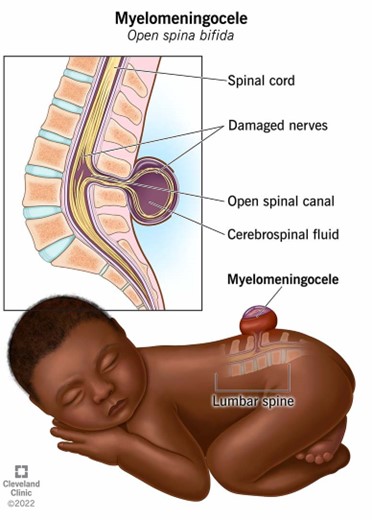
A nurse is orienting a newly licensed nurse in the care of an infant who has myelomeningocele.
Which of the following actions by the new nurse indicates the teaching has been effective?
A. Takes an axillary temperature.
Infants with spina bifida, including those with myelomeningocele, have an increased risk of rectal anomalies, so avoiding rectal temperatures is essential. The correct and safe method of temperature measurement for these infants is typically axillary.
B. Places the infant in a side-lying position.
Placing the infant in a side-lying position is not recommended for a child with myelomeningocele. The preferred position is prone to avoid pressure on the sac and reduce the risk of rupture and infection.
C. Maintains a dry dressing over the sac.
Maintains a dry dressing over the sac: While the sac should be kept covered, it is typically kept moist with sterile saline-soaked gauze to prevent it from drying out and to minimize the risk of infection.
D. Performs range of motion on the infant's hips.
Performs range of motion on the infant's hips: Range of motion exercises might be indicated later on, but initially, the focus is on protecting the sac and preventing complications.
Full Explanation
A. Infants with spina bifida, including those with myelomeningocele, have an increased risk of rectal anomalies, so avoiding rectal temperatures is essential. The correct and safe method of temperature measurement for these infants is typically axillary.
B. Placing the infant in a side-lying position is not recommended for a child with myelomeningocele. The preferred position is prone to avoid pressure on the sac and reduce the risk of rupture and infection.
C. Maintains a dry dressing over the sac: While the sac should be kept covered, it is typically kept moist with sterile saline-soaked gauze to prevent it from drying out and to minimize the risk of infection.
D. Performs range of motion on the infant's hips: Range of motion exercises might be indicated later on, but initially, the focus is on protecting the sac and preventing complications.
A nurse is assessing an 11-month-old infant. Which of the following manifestations is associated with a CNS infection?
A. Oliguria.
Choice A is incorrect because oliguria, or decreased urine output, is not typically associated with a CNS infection.
B. Jaundice.
Choice B is incorrect because jaundice, or yellowing of the skin and eyes, is not typically associated with a CNS infection.
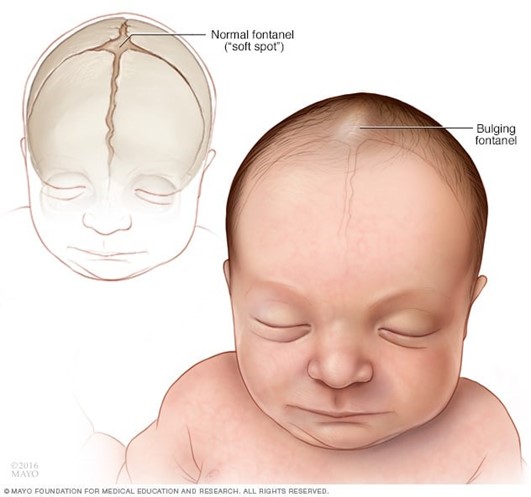
C. Bulging fontanel.
A bulging fontanel is a manifestation associated with a CNS infection in an 11- month-old infant. A bulging fontanel can be a sign of increased intracranial pressure, which can occur with meningitis or encephalitis, both of which are types of CNS infections.
D. Negative Brudzinski sign.
Choice D is incorrect because a negative Brudzinski sign would indicate that there is no neck stiffness, which would be an unlikely finding in a CNS infection.
Full Explanation
A bulging fontanel is a manifestation associated with a CNS infection in an 11- month-old infant.
A bulging fontanel can be a sign of increased intracranial pressure, which can
occur with meningitis or encephalitis, both of which are types of CNS infections.
Choice A is incorrect because oliguria, or decreased urine output, is not typically associated with a CNS infection.
Choice B is incorrect because jaundice, or yellowing of the skin and eyes, is not typically associated with a CNS infection.
Choice D is incorrect because a negative Brudzinski sign would indicate that there is no neck stiffness, which would be an unlikely finding in a CNS infection.
A nurse is caring for a toddler who has a fractured right femur and is in Bryant traction.
When determining that the traction is appropriately assembled, the nurse should observe which of the following?
A. A padded sling is under the knee of the affected leg.
Choice A is incorrect because a padded sling is not used under the knee of the affected leg in Bryant traction.
B. Skin straps maintain the leg in an extended position.
Choice B is incorrect because skin straps are not used to maintain the leg in an extended position in Bryant traction.
C. Weights are attached to a pin that is inserted into the femur.
Choice C is incorrect because weights are not attached to a pin that is inserted into the femur in Bryant traction.
D. The buttocks are elevated slightly off of the bed.
When determining that Bryant's traction is appropriately assembled, the nurse should observe that the buttocks is elevated slightly off of the bed. In Bryant traction, both of the patient’s limbs are suspended in the air vertically at a ninety-degree angle from the hips and knees slightly flexed.
Full Explanation
When determining that Bryant's traction is appropriately assembled, the nurse should observe that the buttocks is elevated slightly off of the bed.
In Bryant traction, both of the patient’s limbs are suspended in the air vertically at a ninety-degree angle from the hips and knees slightly flexed.
Choice A is incorrect because a padded sling is not used under the knee of the affected leg in Bryant traction.
Choice B is incorrect because skin straps are not used to maintain the leg in an
extended position in Bryant traction.
Choice C is incorrect because weights are not attached to a pin that is inserted into the femur in Bryant traction.