Nursing practice questions with comprehensive rationales
NurseDive Free Nursing Practice Question
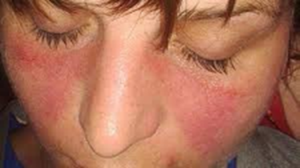
A nurse is assessing a client who has systemic lupus erythematosus (SLE). Which of the following findings should the nurse expect?
A. Iritis
B. Wrinkles in the skin
C. Facial rash
This is because SLE is an autoimmune disorder that causes inflammation and damage to various tissues and organs, including the skin. A facial rash, also known as a malar rash or butterfly rash, is one of the characteristic signs of SLE and affects about half of people with the condition.
D. Constipation
This question is an excerpt from Nurse Dive's nursing test bank - ATI SP 250 Exam 3 Med Surg Proctored Exam. Take the full exam now
Full Explanation
This is because SLE is an autoimmune disorder that causes inflammation and damage to various tissues and organs, including the skin. A facial rash, also known as a malar rash or butterfly rash, is one of the characteristic signs of SLE and affects about half of people with the condition.
Similar Questions
A nurse is teaching a client about risk factors for skin cancer. Which of the following statements by the client indicates an understanding of the teaching?
A. "I should apply sunscreen prior to going outside, even in the winter months."
This is because sunscreen protects the skin from ultraviolet (UV) radiation, which is a major risk factor for skin cancer. UV radiation can damage DNA and cause mutations that lead to abnormal cell growth and division. Sunscreen should be applied every day, regardless of the season or weather, as UV rays can penetrate clouds and reflect off snow and water.
B. "I used to lie in the sun all the time, but now I know the tanning bed is a better option."
C. "My father was treated for melanoma, but skin cancer isn't related to genetics."
D. "Because I'm dark-complected, I won't have to worry about skin cancer."
Full Explanation
This is because sunscreen protects the skin from ultraviolet (UV) radiation, which is a major risk factor for skin cancer. UV radiation can damage DNA and cause mutations that lead to abnormal cell growth and division. Sunscreen should be applied every day, regardless of the season or weather, as UV rays can penetrate clouds and reflect off snow and water.
A nurse is assessing the depth and extent of injury on a client who has severe burns to the face, neck, and upper extremities. Which of the following factors is the nurse's priority when assessing the severity of the client's burns?
A. Age of the client
B. Associated medical history
C. Cause of the burn
D. Location of the burn
This is because burns to the face, neck, and upper extremities can compromise the airway, circulation, and mobility of the client. The nurse should monitor for signs of respiratory distress, infection, and contractures in these areas.
Full Explanation
This is because burns to the face, neck, and upper extremities can compromise the airway, circulation, and mobility of the client. The nurse should monitor for signs of respiratory distress, infection, and contractures in these areas.
A nurse is caring for a client who has a new diagnosis of systemic lupus erythematosus (SLE) and asks where this disease originates within the body. The nurse should tell the client that SLE originates in which of the following locations in the body?
A. Connective tissue
This is because SLE is an autoimmune disorder that causes inflammation and damage to various organs and tissues, such as the skin, joints, kidneys, heart, and blood vessels. Connective tissue is a type of tissue that supports and binds other tissues and organs in the body.
B. Peripheral vascular system
C. Muscle tissue
D. Lymphatic system
Full Explanation
This is because SLE is an autoimmune disorder that causes inflammation and damage to various organs and tissues, such as the skin, joints, kidneys, heart, and blood vessels. Connective tissue is a type of tissue that supports and binds other tissues and organs in the body.