
Nursing practice questions with comprehensive rationales
NurseDive Free Nursing Practice Question
A nurse is assessing a client who is at 32 weeks of gestation and is receiving magnesium sulfate via continuous IV infusion.
Which of the following findings should the nurse report to the provider?
A. Decrease in frequency of contractions.
Choice A is not correct because a decrease in the frequency of contractions is an expected outcome of magnesium sulfate use as a tocolytic to stop preterm labor.
B. Urinary output 35 mL/hr.
Choice B is not correct because a urinary output of 35 mL/hr is within the normal range.
C. Absent deep-tendon reflexes.
A nurse should report absent deep-tendon reflexes to the provider when a client is receiving magnesium sulfate via continuous IV infusion 1. This is because reduced tendon reflexes can be a side effect of magnesium sulfate use during pregnancy.
D. BP 150/100 mm Hg.
Choice D is not correct because an elevated blood pressure is not a known side effect of magnesium sulfate use during pregnancy.
This question is an excerpt from Nurse Dive's nursing test bank - ATI RN Maternal Newborn 2019 with NGN Proctored Exam. Take the full exam now
Full Explanation
A nurse should report absent deep-tendon reflexes to the provider when a client is receiving magnesium sulfate via continuous IV infusion.
This is because reduced tendon reflexes can be a side effect of magnesium sulfate use during pregnancy.
Choice A is not correct because a decrease in the frequency of contractions is an expected outcome of magnesium sulfate use as a tocolytic to stop preterm labor.
Choice B is not correct because a urinary output of 35 mL/hr is within the normal range.
Choice D is not correct because an elevated blood pressure is not a known side effect of magnesium sulfate use during pregnancy.
Similar Questions
A nurse is caring for a client who is receiving oxytocin to induce labor.
The nurse should discontinue the oxytocin if which of the following occurs?
A. Six contractions in 10 min.
A nurse should discontinue oxytocin if the client experiences uterine hyperkinesia, which is defined as more than 5 contractions in 10 minutes.
B. Contractions last 60 seconds.
Choice B is not correct because contractions lasting 60 seconds are within the normal range.
C. Moderate variability of the fetal heart rate.
Choice C is not correct because moderate variability of the fetal heart rate is a reassuring sign.
D. Nonrepetitive early decelerations.
Choice D is not correct because nonrepetitive early decelerations are generally considered benign and do not require intervention.
Full Explanation
A nurse should discontinue oxytocin if the client experiences uterine hyperkinesia, which is defined as more than 5 contractions in 10 minutes.
Choice B is not correct because contractions lasting 60 seconds are within the normal range.
Choice C is not correct because moderate variability of the fetal heart rate is a reassuring sign.
Choice D is not correct because nonrepetitive early decelerations are generally considered benign and do not require intervention.
A nurse is caring for a newborn following delivery.
Which of the following actions should the nurse take first?
A. Apply prophylactic eye ointment.
Applying prophylactic eye ointment (choice A), administering vitamin K (choice B), and obtaining the newborn’s weight (choice C) can be done after the identification bands have been applied.
B. Administer vitamin K.
Applying prophylactic eye ointment (choice A), administering vitamin K (choice B), and obtaining the newborn’s weight (choice C) can be done after the identification bands have been applied.
C. Obtain the newborn's weight.
Applying prophylactic eye ointment (choice A), administering vitamin K (choice B), and obtaining the newborn’s weight (choice C) can be done after the identification bands have been applied.
D. Apply identification bands to the newborn.
The first action the nurse should take is to apply identification bands to the newborn (choice D). This is an important step in ensuring the safety and security of the newborn and helps to prevent errors such as misidentification. Choices A, B, and C are also important actions that should be taken when caring for a newborn following delivery. However, applying prophylactic eye ointment (choice A), administering vitamin K (choice B), and obtaining the newborn’s weight (choice C) can be done after the identification bands have been applied.
Full Explanation
The first action the nurse should take is to apply identification bands to the newborn (choice D).
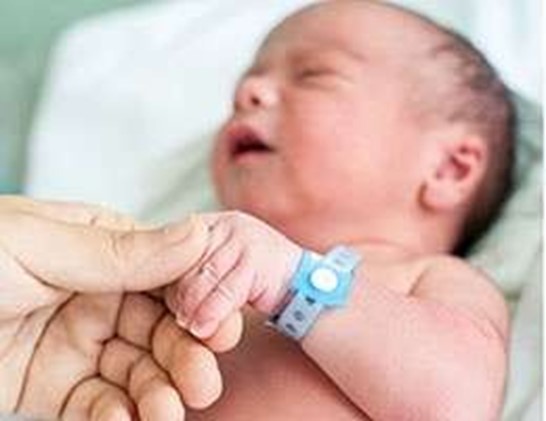
This is an important step in ensuring the safety and security of the newborn and helps to prevent errors such as misidentification.
Choices A, B, and C are also important actions that should be taken when caring for a newborn following delivery.
However, applying prophylactic eye ointment (choice A), administering vitamin K (choice B), and obtaining the newborn’s weight (choice C) can be done after the identification bands have been applied.
A nurse is caring for a client who is at 6 weeks of gestation and reports nausea and vomiting.
Which of the following recommendations should the nurse make?
A. "Eat a high-fat snack before getting out of bed.”
Choice A is not correct because high-fat foods can worsen nausea and vomiting during pregnancy.
B. "Avoid eating snacks before bedtime.”
Choice B is not correct because eating a snack before bedtime may help prevent nausea and vomiting in the morning.
C. "Consume foods served at cool temperatures.”
A nurse should recommend that a client who is experiencing nausea and vomiting during pregnancy consume foods served at cool temperatures. This is because cool foods may be easier to tolerate than hot foods.
D. "Drink additional liquids with each meal.”
Choice D is not correct because drinking additional liquids with meals can worsen nausea and vomiting during pregnancy. Instead, it may be helpful to sip fluids throughout the day.
Full Explanation
A nurse should recommend that a client who is experiencing nausea and vomiting during pregnancy consume foods served at cool temperatures. This is because cool foods may be easier to tolerate than hot foods.
Choice A is not correct because high-fat foods can worsen nausea and vomiting during pregnancy.
Choice B is not correct because eating a snack before bedtime may help prevent nausea and vomiting in the morning.
Choice D is not correct because drinking additional liquids with meals can worsen nausea and vomiting during pregnancy.
Instead, it may be helpful to sip fluids throughout the day.