
Nursing practice questions with comprehensive rationales
NurseDive Free Nursing Practice Question
A nurse is caring for a newborn following delivery.
Which of the following actions should the nurse take first?
A. Apply prophylactic eye ointment.
Applying prophylactic eye ointment (choice A), administering vitamin K (choice B), and obtaining the newborn’s weight (choice C) can be done after the identification bands have been applied.
B. Administer vitamin K.
Applying prophylactic eye ointment (choice A), administering vitamin K (choice B), and obtaining the newborn’s weight (choice C) can be done after the identification bands have been applied.
C. Obtain the newborn's weight.
Applying prophylactic eye ointment (choice A), administering vitamin K (choice B), and obtaining the newborn’s weight (choice C) can be done after the identification bands have been applied.
D. Apply identification bands to the newborn.
The first action the nurse should take is to apply identification bands to the newborn (choice D). This is an important step in ensuring the safety and security of the newborn and helps to prevent errors such as misidentification. Choices A, B, and C are also important actions that should be taken when caring for a newborn following delivery. However, applying prophylactic eye ointment (choice A), administering vitamin K (choice B), and obtaining the newborn’s weight (choice C) can be done after the identification bands have been applied.
This question is an excerpt from Nurse Dive's nursing test bank - ATI RN Maternal Newborn 2019 with NGN Proctored Exam. Take the full exam now
Full Explanation
The first action the nurse should take is to apply identification bands to the newborn (choice D).
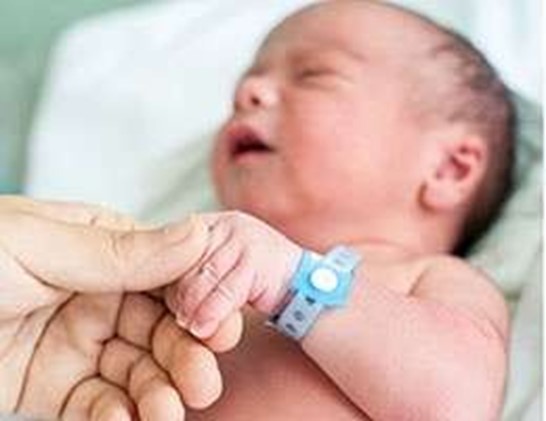
This is an important step in ensuring the safety and security of the newborn and helps to prevent errors such as misidentification.
Choices A, B, and C are also important actions that should be taken when caring for a newborn following delivery.
However, applying prophylactic eye ointment (choice A), administering vitamin K (choice B), and obtaining the newborn’s weight (choice C) can be done after the identification bands have been applied.
Similar Questions
A nurse is caring for a client who is at 6 weeks of gestation and reports nausea and vomiting.
Which of the following recommendations should the nurse make?
A. "Eat a high-fat snack before getting out of bed.”
Choice A is not correct because high-fat foods can worsen nausea and vomiting during pregnancy.
B. "Avoid eating snacks before bedtime.”
Choice B is not correct because eating a snack before bedtime may help prevent nausea and vomiting in the morning.
C. "Consume foods served at cool temperatures.”
A nurse should recommend that a client who is experiencing nausea and vomiting during pregnancy consume foods served at cool temperatures. This is because cool foods may be easier to tolerate than hot foods.
D. "Drink additional liquids with each meal.”
Choice D is not correct because drinking additional liquids with meals can worsen nausea and vomiting during pregnancy. Instead, it may be helpful to sip fluids throughout the day.
Full Explanation
A nurse should recommend that a client who is experiencing nausea and vomiting during pregnancy consume foods served at cool temperatures. This is because cool foods may be easier to tolerate than hot foods.
Choice A is not correct because high-fat foods can worsen nausea and vomiting during pregnancy.
Choice B is not correct because eating a snack before bedtime may help prevent nausea and vomiting in the morning.
Choice D is not correct because drinking additional liquids with meals can worsen nausea and vomiting during pregnancy.
Instead, it may be helpful to sip fluids throughout the day.
A nurse is caring for a client who has hyperemesis gravidarum.
Which of the following laboratory tests should the nurse anticipate?
A. Rapid plasma reagin.
Choice A, Rapid plasma reagin, is a blood test used to screen for syphilis.
B. Prothrombin time.
Choice B, Prothrombin time, is a blood test that measures how long it takes for blood to clot.
C. Urine ketones.
Hyperemesis gravidarum is a severe form of nausea and vomiting during pregnancy that can result in dehydration, weight loss, and ketosis. Clinicians suspect hyperemesis gravidarum based on symptoms and can support the diagnosis by measuring urine ketones.
D. Urine culture.
Choice D, Urine culture, may be indicated because urinary tract infection is common in pregnancy and can be associated with nausea and vomiting. However, urine ketones would be a more specific test for hyperemesis gravidarum.
Full Explanation
Hyperemesis gravidarum is a severe form of nausea and vomiting during pregnancy that can result in dehydration, weight loss, and ketosis.
Clinicians suspect hyperemesis gravidarum based on symptoms and can support the diagnosis by measuring urine ketones.
Choice A, Rapid plasma reagin, is a blood test used to screen for syphilis.
Choice B, Prothrombin time, is a blood test that measures how long it takes for blood to clot.
Choice D, Urine culture, may be indicated because urinary tract infection is common in pregnancy and can be associated with nausea and vomiting.
However, urine ketones would be a more specific test for hyperemesis gravidarum.
A nurse in a newborn nursery is receiving change-of-shift report for four newborns.
Which of the following newborns should the nurse assess first?
A. A newborn who is 24 hr old and has not had a meconium stool.
Choice A, a newborn who is 24 hr old and has not had a meconium stool, may require further assessment but is not as urgent as a newborn with tachypnea.
B. A newborn who has a short frenulum and is having difficulty breastfeeding.
Choice B, a newborn who has a short frenulum and is having difficulty breastfeeding, may require assistance with feeding but is not as urgent as a newborn with tachypnea.
C. A newborn who is 10 hr old and has onset tachypnea.
A newborn who is 10 hr old and has onset tachypnea. Tachypnea means rapid breathing and can be a sign of respiratory distress. Transient tachypnea of the newborn (TTN) is a respiratory disorder usually seen shortly after delivery in babies who are born near or at term. It is important for the nurse to assess this newborn first to determine the cause of the tachypnea and provide appropriate care.
D. A newborn who is 30 hr old and has blood-tinged discharge in her diaper.
Choice D, a newborn who is 30 hr old and has blood-tinged discharge in her diaper, may have pseudomenstruation which is normal and not a cause for concern.
Full Explanation
A newborn who is 10 hr old and has onset tachypnea.
Tachypnea means rapid breathing and can be a sign of respiratory distress.
Transient tachypnea of the newborn (TTN) is a respiratory disorder usually seen shortly after delivery in babies who are born near or at term.
It is important for the nurse to assess this newborn first to determine the cause of the tachypnea and provide appropriate care.

Choice A, a newborn who is 24 hr old and has not had a meconium stool, may
require further assessment but is not as urgent as a newborn with tachypnea.
Choice B, a newborn who has a short frenulum and is having difficulty breastfeeding, may require assistance with feeding but is not as urgent as a newborn with tachypnea.
Choice D, a newborn who is 30 hr old and has blood-tinged discharge in her diaper, may have pseudomenstruation which is normal and not a cause for concern.