Nursing practice questions with comprehensive rationales
NurseDive Free Nursing Practice Question
A nurse is assessing a client who is receiving heparin via continuous IV. The client has an aPTT of 90 seconds. The nurse should monitor the client for which of the following changes in their vital signs?
A. Increased pulse rate.
An aPTT of 90 seconds is much higher than the normal range of 30-40 seconds, which means the blood takes longer to clot and the client is at risk of bleeding. An increased pulse rate is a sign of blood loss and shock.
B. Increased blood pressure.
Hypotension, not hypertension, is a sign of significant blood loss.
C. Decreased temperature.
While severe shock can lead to hypothermia, temperature changes are not an early indicator of heparin overdose.
D. Decreased respiratory rate.
If bleeding leads to hypovolemic shock, respiratory rate would likely increase, not decrease.
This question is an excerpt from Nurse Dive's nursing test bank - ATI RN Pharmacology 2019 Proctored Exam. Take the full exam now
Full Explanation
An aPTT of 90 seconds is much higher than the normal range of 30-40 seconds, which means the blood takes longer to clot and the client is at risk of bleeding. An increased pulse rate is a sign of blood loss and shock.
Choice B is wrong because increased blood pressure is not a sign of bleeding, but rather a sign of hypertension or stress.
Choice C is wrong because decreased temperature is not a sign of bleeding, but rather a sign of hypothermia or infection.
Choice D is wrong because decreased respiratory rate is not a sign of bleeding, but rather a sign of respiratory depression or sedation.
Similar Questions
A nurse is assessing a client who is receiving intravenous therapy. The nurse should identify which of the following findings as a manifestation of fluid volume excess?
A. Decreased bowel sounds.
Choice A is wrong because decreased bowel sounds are not related to fluid volume excess. Decreased bowel sounds can indicate ileus, obstruction, or peritonitis.
B. Bilateral muscle weakness.
Choice B is wrong because bilateral muscle weakness is not a sign of fluid volume excess. Bilateral muscle weakness can be caused by electrolyte imbalances, neuromuscular disorders, or stroke.
C. Thready pulse.
Choice C is wrong because thready pulse is a sign of fluid volume deficit, not excess. Thready pulse indicates poor perfusion and low cardiac output, which can result from dehydration, hemorrhage, or shock.
D. Distended neck veins
Distended neck veins are a sign of increased central venous pressure, which can result from fluid volume excess. Fluid volume excess can also cause edema, crackles in the lungs, and increased blood pressure.
Full Explanation
Distended neck veins are a sign of increased central venous pressure, which can result from fluid volume excess. Fluid volume excess can also cause edema, crackles in the lungs, and increased blood pressure.
Choice A is wrong because decreased bowel sounds are not related to fluid volume excess.
Decreased bowel sounds can indicate ileus, obstruction, or peritonitis. Choice B is wrong because bilateral muscle weakness is not a sign of fluid volume excess.
Bilateral muscle weakness can be caused by electrolyte imbalances, neuromuscular disorders, or stroke.
Choice C is wrong because thready pulse is a sign of fluid volume deficit, not excess.
Thready pulse indicates poor perfusion and low cardiac output, which can result from dehydration, hemorrhage, or shock.
A nurse is preparing to administer the initial dose of penicillin G IM to a client. The nurse should monitor for which of the following as an indication of an allergic reaction following the injection?
A. Pallor.
Choice A is wrong because pallor is not a typical sign of an allergic reaction to penicillin. Pallor means pale skin and may be caused by other conditions such as anemia or shock.
B. Bradycardia.
Choice B is wrong because bradycardia is not a typical sign of an allergic reaction to penicillin. Bradycardia means slow heart rate and may be caused by other conditions such as heart block or medication side effects.
C. Urticaria.
Urticaria, also known as hives, is a common sign of an allergic reaction to penicillin. An allergic reaction is an abnormal response of the immune system to the drug. Other signs and symptoms of penicillin allergy may include skin rash, itching, fever, swelling, shortness of breath, wheezing, runny nose, itchy eyes, and anaphylaxis. Anaphylaxis is a rare but life-threatening condition that affects multiple body systems and requires immediate emergency treatment.
D. Dyspepsia.
Choice D is wrong because dyspepsia is not a typical sign of an allergic reaction to penicillin. Dyspepsia means indigestion and may be caused by other conditions such as gastritis or peptic ulcer.
Full Explanation
Urticaria, also known as hives, is a common sign of an allergic reaction to penicillin. An allergic reaction is an abnormal response of the immune system to the drug. Other signs and symptoms of penicillin allergy may include skin rash, itching, fever, swelling, shortness of breath, wheezing, runny nose, itchy eyes, and anaphylaxis. Anaphylaxis is a rare but life-threatening condition that affects multiple body systems and requires immediate emergency treatment.
Choice A is wrong because pallor is not a typical sign of an allergic reaction to penicillin.
Pallor means pale skin and may be caused by other conditions such as anemia or shock.
Choice B is wrong because bradycardia is not a typical sign of an allergic reaction to penicillin.
Bradycardia means slow heart rate and may be caused by other conditions such as heart block or medication side effects.
Choice D is wrong because dyspepsia is not a typical sign of an allergic reaction to penicillin.
Dyspepsia means indigestion and may be caused by other conditions such as gastritis or peptic ulcer.
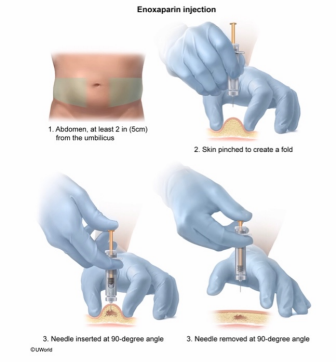
A nurse is preparing to administer subcutaneous heparin to a client. Which of the following actions should the nurse take?
A. Insert the needle at least 5 cm (2 in) from the umbilicus.
This is because the umbilicus is a potential site of infection and should be avoided when administering subcutaneous heparin.
B. Massage the site after administering the medication.
Choice B is wrong because massaging the site after administering the medication can cause bruising and hematoma formation.
C. Use a 21-gauge needle for the injection.
Choice C is wrong because a 21-gauge needle is too large for subcutaneous injection and can cause tissue trauma and bleeding. A smaller needle, such as 25- or 27-gauge, should be used.
D. Aspirate before injecting the medication.
Choice D is wrong because aspirating before injecting the medication can increase the risk of hematoma formation and is not recommended for subcutaneous heparin.
Full Explanation
This is because the umbilicus is a potential site of infection and should be avoided when administering subcutaneous heparin.
Choice B is wrong because massaging the site after administering the medication can cause bruising and hematoma formation.
Choice C is wrong because a 21-gauge needle is too large for subcutaneous injection and can cause tissue trauma and bleeding.
A smaller needle, such as 25- or 27-gauge, should be used.
Choice D is wrong because aspirating before injecting the medication can increase the risk of hematoma formation and is not recommended for subcutaneous heparin.