
Nursing practice questions with comprehensive rationales
NurseDive Free Nursing Practice Question
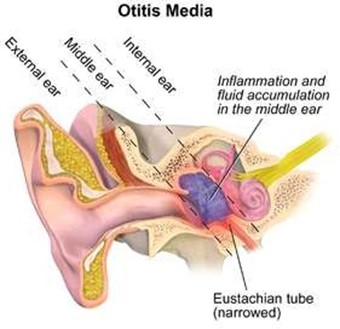
A nurse is assessing an infant who has acute otitis media.
Which of the following findings should the nurse expect? (Select all that apply.).
A. Increased appetite.
Choice A is wrong because an infant with acute otitis media may have a decreased appetite.
B. Crying.
An infant with acute otitis media may exhibit crying, restlessness and fever.
C. Restlessness.
An infant with acute otitis media may exhibit crying, restlessness and fever.
D. Fever.
An infant with acute otitis media may exhibit crying, restlessness and fever.
E. Enlarged subclavicular lymph node.
Choice E is not the best answer because an enlarged subclavicular lymph node is not a common finding in acute otitis media.
This question is an excerpt from Nurse Dive's nursing test bank - ATI RN Nursing Care of Children 2019 Proctored Exam. Take the full exam now
Full Explanation
An infant with acute otitis media may exhibit crying, restlessness and fever.
Choice A is wrong because an infant with acute otitis media may have a decreased appetite.
Choice E is not the best answer because an enlarged subclavicular lymph node is not a common finding in acute otitis media.
Similar Questions
A nurse is providing teaching about home care to the parent of a child who has scabies.
Which of the following instructions should the nurse include in the teaching?
A. Wash the child's hair with shampoo containing ketoconazole.
Choice A is wrong because ketoconazole shampoo is used to treat fungal infections of the scalp, not scabies.
B. Treat everyone who came into close contact with the child.
Scabies is a highly contagious skin condition caused by mites and can spread easily through close physical contact. It is important to treat everyone who came into close contact with the child to prevent reinfestation.
C. Soak combs and brushes in boiling water for 10 min.
Choice C is wrong because while it is important to clean combs and brushes, soaking them in boiling water for 10 minutes may not be necessary.
D. Apply petroleum jelly to the affected areas.
Choice D is wrong because petroleum jelly is not an effective treatment for scabies.
Full Explanation
Scabies is a highly contagious skin condition caused by mites and can spread easily through close physical contact.
It is important to treat everyone who came into close contact with the child to prevent reinfestation.
Choice A is wrong because ketoconazole shampoo is used to treat fungal infections of the scalp, not scabies.
Choice C is wrong because while it is important to clean combs and brushes, soaking them in boiling water for 10 minutes may not be necessary.
Choice D is wrong because petroleum jelly is not an effective treatment for scabies.
A nurse is caring for a 5-year-old child following a tonsillectomy and adenoidectomy.
Which of the following findings should the nurse identify as an indication of hemorrhage?
A. Blood pressure 95/56 mm Hg.
Choice A is wrong because a blood pressure of 95/56 mm Hg is within the normal range for a 5-year-old child.
B. Heart rate 54/min.
Choice B is wrong because a heart rate of 54/min is within the normal range for a 5-year-old child.
C. Continuous swallowing.
Continuous swallowing can be an indication of hemorrhage following a tonsillectomy and adenoidectomy. This is because the child may be swallowing blood that is coming from the surgical site.
D. Flushing of the face.
Choice D is wrong because flushing of the face is not an indication of hemorrhage following a tonsillectomy and adenoidectomy.
Full Explanation
Continuous swallowing can be an indication of hemorrhage following a tonsillectomy and adenoidectomy.
This is because the child may be swallowing blood that is coming from the surgical site.
Choice A is wrong because a blood pressure of 95/56 mm Hg is within the normal range for a 5-year-old child.
Choice B is wrong because a heart rate of 54/min is within the normal range for a 5-year-old child.
Choice D is wrong because flushing of the face is not an indication of hemorrhage following a tonsillectomy and adenoidectomy.
A nurse is preparing to collect a urine specimen from a female infant using a urine collection bag.
Which of the following actions should the nurse take?
A. Position the opening of the bag over the urethra and the anus.
Incorrect because the bag should only cover the urethral opening. Covering the anus risks contamination of the urine sample.
B. Place a snug-fitting diaper over the drainage bag.
Incorrect because placing a diaper over the bag can dislodge it or prevent proper adhesion. Instead, the bag should remain exposed to adhere well.
C. Apply lidocaine gel to the perineum before attaching the bag.
Incorrect because lidocaine is unnecessary; applying topical anesthetic is not required for urine collection with a bag.
D. Stretch the perineum taut when applying the bag.
When collecting a urine specimen from a female infant using a urine collection bag, the nurse should ensure the perineal area is clean and the skin is dry. Stretching the perineum taut helps the bag adhere properly to the skin around the urethral opening, preventing leaks and contamination of the specimen.
Full Explanation
A. Incorrect because the bag should only cover the urethral opening. Covering the anus risks contamination of the urine sample.
B. Incorrect because placing a diaper over the bag can dislodge it or prevent proper adhesion. Instead, the bag should remain exposed to adhere well.
C. Incorrect because lidocaine is unnecessary; applying topical anesthetic is not required for urine collection with a bag.
D. When collecting a urine specimen from a female infant using a urine collection bag, the nurse should ensure the perineal area is clean and the skin is dry. Stretching the perineum taut helps the bag adhere properly to the skin around the urethral opening, preventing leaks and contamination of the specimen.