Nursing practice questions with comprehensive rationales
NurseDive Free Nursing Practice Question
A nurse is assisting in the care of a client who is in active labor. The nurse notes variable decelerations of the FHR. The nurse should identify which of the following as a cause of variable decelerations?
A. Fetal head compression
Choice A reason: Fetal head compression is incorrect, as this factor can cause early decelerations in the fetal heart rate. Early decelerations are symmetrical decreases in the FHR that mirror the contractions, which indicate fetal head compression and vagal stimulation. Fetal head compression occurs as the fetus descends into the birth canal and does not pose a threat to the fetal well-being.
B. Polyhydramnios
Choice B reason: Polyhydramnios is incorrect, as this factor can cause variable or late decelerations in the fetal heart rate, depending on the underlying cause. Polyhydramnios refers to an excessive amount of amniotic fluid, which can result from fetal anomalies, maternal diabetes, multiple gestation, or other conditions. Polyhydramnios can cause umbilical cord prolapse, uterine overdistension, or placental abruption, leading to reduced blood flow and oxygen delivery to the fetus.
C. Maternal fever
Choice C reason: Maternal fever is incorrect, as this factor can cause late decelerations in the fetal heart rate. Late decelerations are symmetrical decreases in the FHR that begin after the peak of the contraction and return to baseline after the contraction ends, which indicate uteroplacental insufficiency. Maternal fever can increase maternal and fetal metabolism and oxygen demand, leading to fetal hypoxia and acidosis.
D. Umbilical cord compression
Choice D reason: Umbilical cord compression is correct, as this factor can cause variable decelerations in the fetal heart rate. Variable decelerations are abrupt decreases in the FHR that vary in onset, duration, and depth, which indicate umbilical cord compression and reduced blood flow to the fetus. Umbilical cord compression can occur due to cord prolapse, nuchal cord, short cord, or other causes. The nurse should reposition the client, administer oxygen, and prepare for delivery if indicated.
This question is an excerpt from Nurse Dive's nursing test bank - ATI Maternity Proctored Exam. Take the full exam now
Full Explanation
Choice A reason:
Fetal head compression is incorrect, as this factor can cause early decelerations in the fetal heart rate. Early decelerations are symmetrical decreases in the FHR that mirror the contractions, which indicate fetal head compression and vagal stimulation. Fetal head compression occurs as the fetus descends into the birth canal and does not pose a threat to the fetal well-being.
Choice B reason:
Polyhydramnios is incorrect, as this factor can cause variable or late decelerations in the fetal heart rate, depending on the underlying cause. Polyhydramnios refers to an excessive amount of amniotic fluid, which can result from fetal anomalies, maternal diabetes, multiple gestation, or other conditions. Polyhydramnios can cause umbilical cord prolapse, uterine overdistension, or placental abruption, leading to reduced blood flow and oxygen delivery to the fetus.
Choice C reason:
Maternal fever is incorrect, as this factor can cause late decelerations in the fetal heart rate. Late decelerations are symmetrical decreases in the FHR that begin after the peak of the contraction and return to baseline after the contraction ends, which indicate uteroplacental insufficiency. Maternal fever can increase maternal and fetal metabolism and oxygen demand, leading to fetal hypoxia and acidosis.
Choice D reason:
Umbilical cord compression is correct, as this factor can cause variable decelerations in the fetal heart rate. Variable decelerations are abrupt decreases in the FHR that vary in onset, duration, and depth, which indicate umbilical cord compression and reduced blood flow to the fetus. Umbilical cord compression can occur due to cord prolapse, nuchal cord, short cord, or other causes. The nurse should reposition the client, administer oxygen, and prepare for delivery if indicated.
Similar Questions
A nurse is caring for a postpartum client who saturates a perineal pad in 10 min. Which of the following actions should the nurse take first?
A. Massage the client's fundus.
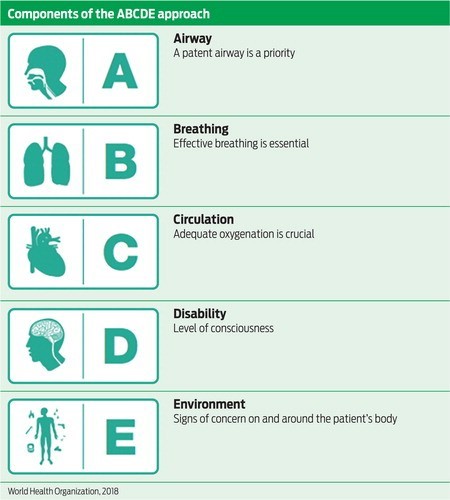
Choice A reason: Massage the client's fundus is correct, as this is the first action the nurse should take according to the ABCDE priority framework. Saturating a perineal pad in 10 min indicates excessive bleeding and possible postpartum hemorrhage, which can compromise the client's airway, breathing, and circulation. Massaging the fundus can stimulate uterine contraction and reduce blood loss.
B. Check the client's blood pressure.
Choice B reason: Check the client's blood pressure is incorrect, as this is not the first action the nurse should take, although it is important to monitor for signs of shock. Checking the blood pressure does not address the cause of bleeding or prevent further blood loss.
C. Administer oxytocin.
Choice C reason: Administer oxytocin is incorrect, as this is not the first action the nurse should take, although it may be indicated later. Administering oxytocin requires a provider's order and may have adverse effects such as nausea, vomiting, headache, or water intoxication. The nurse should first atempt to control bleeding by massaging the fundus and then administer oxytocin as ordered.
D. Observe for pooling of blood under the butocks.
Choice D reason: Observe for pooling of blood under the butocks is incorrect, as this is not the first action the nurse should take, although it can help estimate blood loss. Observing for pooling of blood does not address the cause of bleeding or prevent further blood loss. The nurse should first atempt to control bleeding by massaging the fundus and then assess for other signs of hemorrhage.
Full Explanation
Choice A reason: Massage the client's fundus is correct, as this is the first action the nurse should take according to the ABCDE priority framework. Saturating a perineal pad in 10 min indicates excessive bleeding and possible postpartum hemorrhage, which can compromise the client's airway, breathing, and circulation. Massaging the fundus can stimulate uterine contraction and reduce blood loss.
Choice B reason: Check the client's blood pressure is incorrect, as this is not the first action the nurse should take, although it is important to monitor for signs of shock. Checking the blood pressure does not address the cause of bleeding or prevent further blood loss.
Choice C reason: Administer oxytocin is incorrect, as this is not the first action the nurse should take, although it may be indicated later. Administering oxytocin requires a provider's order and may have adverse effects such as nausea,
vomiting, headache, or water intoxication. The nurse should first atempt to control bleeding by massaging the fundus and then administer oxytocin as ordered.
Choice D reason: Observe for pooling of blood under the butocks is incorrect, as this is not the first action the nurse should take, although it can help estimate blood loss. Observing for pooling of blood does not address the cause of bleeding or prevent further blood loss. The nurse should first atempt to control bleeding by massaging the fundus and then assess for other signs of hemorrhage.
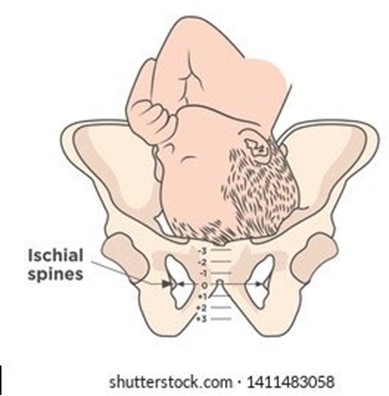
A nurse is assisting in the care of a client who is in labor. The doctor documents the vaginal examination as: 3 cm, 30%, and -1. The nurse evaluates this documentation to mean which of the following?
A. The cervix is effaced 3 cm, it is dilated 30%, and the presenting part is 1 cm above the ischial spines.
Choice A reason: The cervix is effaced 3 cm, it is dilated 30%, and the presenting part is 1 cm above the ischial spines is incorrect, as this does not follow the correct order and measurement of cervical assessment. Cervical effacement is measured in percentage, not in centimeters, and it indicates the thinning or shortening of the cervix. Cervical dilation is measured in centimeters, not in percentage, and it indicates the opening or widening of the cervix.
B. The cervix is dilated 3 cm, it is effaced 30%, and the presenting part is 1 cm above the ischial spines.
Choice B reason: The cervix is dilated 3 cm, it is effaced 30%, and the presenting part is 1 cm above the ischial spines is correct, as this follows the correct order and measurement of cervical assessment. Cervical dilation, effacement, and station are recorded in that order to describe the progress of labor. Station refers to the relationship between the presenting part of the fetus and the maternal pelvis, measured by the level of the ischial spines. A negative station means that the presenting part is above the spines, while a positive station means that it is below.
C. The cervix is effaced 3 cm, it is dilated 30%, and the presenting part is 1 cm below the ischial spines.
Choice C reason: The cervix is effaced 3 cm, it is dilated 30%, and the presenting part is 1 cm below the ischial spines is incorrect, as this does not follow the correct order and measurement of cervical assessment. Cervical effacement is measured in percentage, not in centimeters, and it indicates the thinning or shortening of the cervix. Cervical dilation is measured in centimeters, not in percentage, and it indicates the opening or widening of the cervix.
D. The cervix is dilated 3 cm, it is effaced 30%, and the presenting part is 1 cm below the ischial spines.
Choice D reason: The cervix is dilated 3 cm, it is effaced 30%, and the presenting part is 1 cm below the ischial spines is incorrect, as this does not match the documentation of station. A negative station means that the presenting part is above the spines, while a positive station means that it is below.
Full Explanation
Choice A reason: The cervix is effaced 3 cm, it is dilated 30%, and the presenting part is 1 cm above the ischial spines is incorrect, as this does not follow the correct order and measurement of cervical assessment. Cervical effacement is measured in percentage, not in centimeters, and it indicates the thinning or shortening of the cervix. Cervical dilation is measured in centimeters, not in percentage, and it indicates the opening or widening of the cervix.
Choice B reason: The cervix is dilated 3 cm, it is effaced 30%, and the presenting part is 1 cm above the ischial spines is correct, as this follows the correct order and measurement of cervical assessment. Cervical dilation, effacement, and station are recorded in that order to describe the progress of labor. Station refers to the relationship between the presenting part of the fetus and the maternal pelvis, measured by the level of the ischial spines. A negative station means that the presenting part is above the spines, while a positive station means that it is below.
Choice C reason: The cervix is effaced 3 cm, it is dilated 30%, and the presenting part is 1 cm below the ischial spines is incorrect, as this does not follow the correct order and measurement of cervical assessment. Cervical effacement is measured in percentage, not in centimeters, and it indicates the thinning or shortening of the cervix. Cervical dilation is measured in centimeters, not in percentage, and it indicates the opening or widening of the cervix.
Choice D reason: The cervix is dilated 3 cm, it is effaced 30%, and the presenting part is 1 cm below the ischial spines is incorrect, as this does not match the documentation of station. A negative station means that the presenting part is above the spines, while a positive station means that it is below.
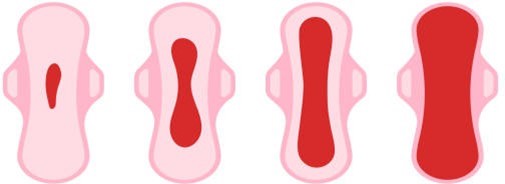
A nurse is caring for a client who is 4 hr postpartum. The nurse finds a small amount of lochia rubra on the client's perineal pad. The fundus is midline and firm at the umbilicus. Which of the following actions should the nurse take?
A. Perform fundal massage.
Choice A reason: Perform fundal massage is incorrect, as this action is not indicated for a client who has a firm and midline fundus. Fundal massage is used to stimulate uterine contraction and prevent hemorrhage in clients who have a boggy or deviated fundus.
B. Assist the client to ambulate.
Choice B reason: Assist the client to ambulate is correct, as this action can promote lochia drainage and prevent pooling of blood in the vagina. The nurse should encourage the client to ambulate early and frequently after birth, as long as there are no contraindications. The nurse should also monitor the client for signs of orthostatic hypotension and provide assistance as needed.
C. Check for blood under the client's butock.
Choice C reason: Check for blood under the client's butock is incorrect, as this action is not necessary for a client who has a small amount of lochia rubra on the perineal pad. Lochia rubra is normal and expected in the first few days after birth, and it indicates that the placental site is healing. The nurse should check for blood under the butock only if there is suspicion of excessive bleeding or concealed hemorrhage.
D. Increase the rate of the IV fluids.
Choice D reason: Increase the rate of the IV fluids is incorrect, as this action is not indicated for a client who has a small amount of lochia rubra on the perineal pad. Increasing the rate of IV fluids can cause fluid overload and electrolyte imbalance in the client. The nurse should maintain the IV fluids at the prescribed rate and monitor the client's intake and output.
Full Explanation
Choice A reason: Perform fundal massage is incorrect, as this action is not indicated for a client who has a firm and midline fundus. Fundal massage is used to stimulate uterine contraction and prevent hemorrhage in clients who have a boggy or deviated fundus.
Choice B reason: Assist the client to ambulate is correct, as this action can promote lochia drainage and prevent pooling of blood in the vagina. The nurse should encourage the client to ambulate early and frequently after birth, as long as there are no contraindications. The nurse should also monitor the client for signs of orthostatic hypotension and provide assistance as needed.
Choice C reason: Check for blood under the client's butock is incorrect, as this action is not necessary for a client who has a small amount of lochia rubra on the perineal pad. Lochia rubra is normal and expected in the first few days after birth, and it indicates that the placental site is healing. The nurse should check for blood under the butock only if there is suspicion of excessive bleeding or concealed hemorrhage.
Choice D reason: Increase the rate of the IV fluids is incorrect, as this action is not indicated for a client who has a small amount of lochia rubra on the perineal pad. Increasing the rate of IV fluids can cause fluid overload and electrolyte imbalance in the client. The nurse should maintain the IV fluids at the prescribed rate and monitor the client's intake and output.