
Nursing practice questions with comprehensive rationales
NurseDive Free Nursing Practice Question
A nurse is assisting in the care of a newborn following birth. At 1 min after birth, the nurse notes the following: heart rate 110/min; slow, weak cord flexion of extremities; grimace in response to suctioning of the nares; body pink in color with blue extremities.
What should the nurse document as the newborn's 1-min Apgar score?
This question is an excerpt from Nurse Dive's nursing test bank - Postpartum AMD Newborn Care Proctored Exam. Take the full exam now
Full Explanation
The Apgar score is a scoring system used by doctors and nurses to assess newborns one minute and five minutes after they are born. The score is based on five criteria: activity, pulse, grimace, appearance, and respiration, with each criterion receiving a score of 0 to 2 points.
If we apply this scoring system to the information provided, the newborn's 1- minute Apgar score would be:
Activity: 1 point (limbs flexed)
Pulse: 1 point (heart rate less than 100 beats per minute) Grimace: 1 point (facial movement/grimace with stimulation) Appearance: 1 point (body pink but extremities blue) Respiration: 1 point (irregular, weak crying)
The total score is 5 points, which is considered moderately abnormal.
Similar Questions
When the newborn's crib was moved suddenly, the nurse noticed that his legs flexed and the arms fanned out, and then both came back toward the midline. The nurse would interpret this behavior as:
A. The Moro reflex was elicited.
The Moro reflex was elicited. This is because the Moro reflex is a normal newborn reflex that occurs when the baby is startled by a loud noise or a sudden movement. The baby responds by extending the arms and legs, opening the hands, and then bringing the arms and legs back to the chest. The Moro reflex is present at birth and disappears by 3 to 6 months of age.
B. This is abnormal for a full-term infant.
This is wrong because this is not abnormal for a full-term infant. The Moro reflex is a sign of a healthy nervous system and brain development.
C. There may be an abnormality in the musculoskeletal system.
This is wrong because there is no evidence of an abnormality in the musculoskeletal system. The Moro reflex does not indicate any problems with the bones or muscles of the baby.
D. The full-term infant should not react to sudden movement.
This is wrong because the full-term infant should react to sudden movement. The Moro reflex is a protective response that helps the baby cling to the mother in case of danger.
Full Explanation
The Moro reflex was elicited. This is because the Moro reflex is a normal newborn reflex that occurs when the baby is startled by a loud noise or a sudden movement. The baby responds by extending the arms and legs, opening the hands, and then bringing the arms and legs back to the chest.
The Moro reflex is present at birth and disappears by 3 to 6 months of age.
Choice B is wrong because this is not abnormal for a full-term infant. The Moro reflex is a sign of a healthy nervous system and brain development.
Choice C is wrong because there is no evidence of an abnormality in the musculoskeletal system. The Moro reflex does not indicate any problems with the bones or muscles of the baby.
Choice D is wrong because the full-term infant should react to sudden movement. The Moro reflex is a protective response that helps the baby cling to the mother in case of danger.
A nurse is caring for a client who is experiencing shaking chills during the immediate postpartum period. Which of the following actions should the nurse take?
A. Place the client on seizure precautions.
This is wrong because placing the client on seizure precautions is not indicated for shaking chills. Seizure precautions are used for clients who have eclampsia or other conditions that increase the risk of seizures.
B. Cover the client with warm blankets.
This is wrong because covering the client with warm blankets may not be helpful for shaking chills. Warm blankets may increase the body temperature and worsen the infection.
C. Notify the charge nurse.
This is wrong because notifying the charge nurse is not the first action the nurse should take. The nurse should assess the client’s condition before reporting to the charge nurse or the provider.
D. Determine the client's temperature.
Determine the client’s temperature. This is because shaking chills during the immediate postpartum period can be a sign of infection, such as endometritis or mastitis. Infection is a serious complication that can lead to sepsis and shock if not treated promptly. The nurse should measure the client’s temperature and look for other signs of infection, such as foul-smelling lochia, breast tenderness, or tachycardia.
Full Explanation
Determine the client’s temperature. This is because shaking chills during the immediate postpartum period can be a sign of infection, such as endometritis or mastitis. Infection is a serious complication that can lead to sepsis and shock if not treated promptly. The nurse should measure the client’s temperature and look for other signs of infection, such as foul-smelling lochia, breast tenderness, or tachycardia.
Choice A is wrong because placing the client on seizure precautions is not indicated for shaking chills. Seizure precautions are used for clients who have eclampsia or other conditions that increase the risk of seizures.
Choice B is wrong because covering the client with warm blankets may not be helpful for shaking chills. Warm blankets may increase the body temperature and worsen the infection.
Choice C is wrong because notifying the charge nurse is not the first action the nurse should take. The nurse should assess the client’s condition before reporting to the charge nurse or the provider.
The nurse is preparing the nursing care plan for a newborn who was born via cesarean delivery. Which diagnosis should the nurse prioritize?
A. Ineffective thermoregulation related to heat loss to the environment.
This is wrong because ineffective thermoregulation related to heat loss to the environment is not specific to cesarean delivery. All newborns are prone to heat loss due to their large surface area and thin skin. The nurse should maintain a warm and dry environment for the newborn and prevent exposure to cold surfaces.
B. Altered nutrition less than body requirement related to limited formula intake.
This is wrong because altered nutrition less than the body requirement related to limited formula intake is not specific to cesarean delivery. All newborns need adequate nutrition to support their growth and development. The nurse should monitor the intake and output of the newborn and assist with feeding as needed.
C. Altered urinary elimination related to post-circumcision status.
This is wrong because altered urinary elimination related to post- circumcision status is not specific to cesarean delivery. Circumcision is an elective procedure that may or may not be performed on male newborns. The nurse should provide wound care and pain relief for the circumcised newborn and observe for signs of infection or bleeding.
D. Ineffective airway clearance related to mucus and water secretions.
Ineffective airway clearance related to mucus and water secretions. This is because newborns who are born via cesarean delivery are at risk for respiratory distress due to the lack of compression of the chest during birth. This can result in retained mucus and fluid in the lungs that can interfere with breathing and oxygenation. The nurse should prioritize clearing the airway and monitoring the respiratory status of the newborn.
Full Explanation
Ineffective airway clearance related to mucus and water secretions. This is because newborns who are born via cesarean delivery are at risk for respiratory distress due to the lack of compression of the chest during birth. This can result in retained mucus and fluid in the lungs that can interfere with breathing and oxygenation. The nurse should prioritize clearing the airway and monitoring the respiratory status of the newborn.
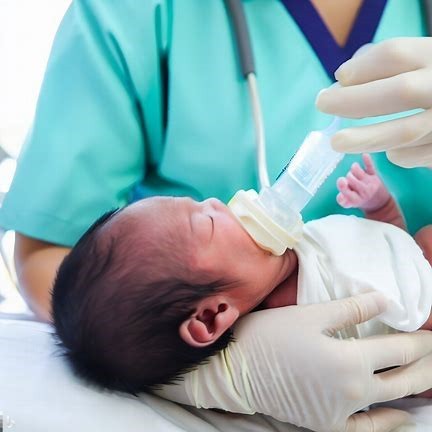
Choice A is wrong because ineffective thermoregulation related to heat loss to the environment is not specific to cesarean delivery. All newborns are prone to heat loss due to their large surface area and thin skin. The nurse should maintain a warm and dry environment for the newborn and prevent exposure to cold surfaces.
Choice B is wrong because altered nutrition less than the body requirement related to limited formula intake is not specific to cesarean delivery. All newborns need adequate nutrition to support their growth and development. The nurse should monitor the intake and output of the newborn and assist with feeding as needed.
Choice C is wrong because altered urinary elimination related to post- circumcision status is not specific to cesarean delivery. Circumcision is an elective procedure that may or may not be performed on male newborns. The nurse should provide wound care and pain relief for the circumcised newborn and observe for signs of infection or bleeding.