Nursing practice questions with comprehensive rationales
NurseDive Free Nursing Practice Question
A nurse is assisting with the admission of an older adult client who has impaired mobility and is at risk for falls. Which of the following actions should the nurse plan to perform first?
A. Check the client's ability to use the call light.
The first action the nurse should plan to perform is to check the client's ability to use the call light. This is essential to ensure that the client can easily communicate with the healthcare team if they need assistance or experience a fall risk situation. By confirming the client's ability to use the call light, the nurse can address any potential communication barriers and ensure that the client has a means to request help promptly.
B. Document the client's risk in the medical record.
While documenting the client's risk in the medical record is important, it is not the first action to be taken. Ensuring the client's immediate safety and ability to request assistance is the priority.
C. Request a referral for physical therapy
Referring the client for physical therapy may be a necessary step to address their impaired mobility and reduce fall risk, but it is not the first action to be performed. Assessing their ability to use the call light takes precedence in order to address immediate safety concerns.
D. Place a gait belt in the client's room.
Providing a gait belt is a measure to assist with mobility and falls prevention. However, it should not be the first action. Checking the client's ability to use the call light is more critical to ensure their immediate safety and ability to request help.
This question is an excerpt from Nurse Dive's nursing test bank - VATI PN Comprehensive Predictor 2020 Proctored Exam. Take the full exam now
Full Explanation
The first action the nurse should plan to perform is to check the client's ability to use the call light. This is essential to ensure that the client can easily communicate with the healthcare team if they need assistance or experience a fall risk situation. By confirming the client's ability to use the call light, the nurse can address any potential communication barriers and ensure that the client has a means to request help promptly.
Explanation for the other options:
b) Document the client's risk in the medical record: While documenting the client's risk in the medical record is important, it is not the first action to be taken. Ensuring the client's immediate safety and ability to request assistance is the priority.
c) Request a referral for physical therapy: Referring the client for physical therapy may be a necessary step to address their impaired mobility and reduce fall risk, but it is not the first action to be performed. Assessing their ability to use the call light takes precedence in order to address immediate safety concerns.
d) Place a gait belt in the client's room: Providing a gait belt is a measure to assist with mobility and falls prevention. However, it should not be the first action. Checking the client's ability to use the call light is more critical to ensure their immediate safety and ability to request help.
Similar Questions
A nurse is caring for a client who has a new colostomy. The client tells the nurse, "I don't want anyone to
see me with this bag." Which of the following responses should the nurse make?
A. Many people have colostomies, and they live full lives
When a client expresses concerns or distress regarding their colostomy and not wanting others to see the colostomy bag, it is essential for the nurse to provide support and reassurance. Responding by acknowledging that many people live full lives with colostomies helps normalize the experience and offers hope to the client.
B. "Would it help to speak to someone else who has a colostomy?
Would it help to speak to someone else who has a colostomy?" may be a helpful suggestion, but it should not be the initial response. First, it is important to provide immediate reassurance and support to the client before exploring additional resources or contacts.
C. Why don't you want people to see the colostomy bag?
Why don't you want people to see the colostomy bag?" may be seen as invasive and may put the client on the spot, potentially making them feel uncomfortable or defensive. It is important to create a safe and non-judgmental environment for the client
D. The colostomy is probably only temporary
The colostomy is probably only temporary," assumes information about the client's specific situation that may not be accurate. It is important to avoid making assumptions about the duration or permanence of the colostomy unless the client has shared that information. Providing false reassurances can negatively impact the client's trust and emotional well-being
Full Explanation
a. "Many people have colostomies and they live full lives."
Explanation:
The correct answer is a. "Many people have colostomies and they live full lives."
When a client expresses concerns or distress regarding their colostomy and not wanting others to see the colostomy bag, it is essential for the nurse to provide support and reassurance. Responding by acknowledging that many people live full lives with colostomies helps normalize the experience and offers hope to the client.
Option b, "Would it help to speak to someone else who has a colostomy?" may be a helpful suggestion, but it should not be the initial response. First, it is important to provide immediate reassurance and support to the client before exploring additional resources or contacts.
Option c, "Why don't you want people to see the colostomy bag?" may be seen as invasive and may put the client on the spot, potentially making them feel uncomfortable or defensive. It is important to create a safe and non-judgmental environment for the client.
Option d, "The colostomy is probably only temporary," assumes information about the client's specific situation that may not be accurate. It is important to avoid making assumptions about the duration or permanence of the colostomy unless the client has shared that information. Providing false reassurances can negatively impact the client's trust and emotional well-being.
By responding with the statement that many people live full lives with colostomies, the nurse offers support, normalizes the client's experience, and promotes a positive outlook for the client's future.
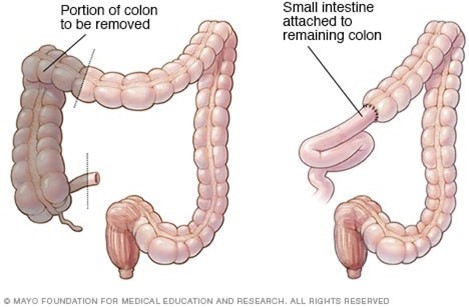
A nurse is caring for a client who is postoperative following a hemicolectomy. Which of the following is a subjective indication that the client needs PRN pain medication?
A. The client's heart rate is 110/min.
An increased heart rate can be an objective indication of pain, but it is not a subjective indication. Subjective indications are based on the client's self-report or personal experiences.
B. The client is guarding their abdominal incision.
Guarding the abdominal incision may suggest discomfort or pain, but it is an objective indication that can be observed by the nurse. Subjective indications focus on the client's self-report.
C. The client exhibits facial grimacing.
Facial grimacing can be an objective indication of pain, but it is not a subjective indication. Again, subjective indications are based on the client's self-report or personal experiences.
D. The client reports pain.
The subjective indication that the client needs PRN (as needed) pain medication is when the client reports pain. Pain is a subjective experience, and it is essential to address the client's self-reported pain level and provide appropriate pain management.
Full Explanation
The subjective indication that the client needs PRN (as needed) pain medication is when the client reports pain. Pain is a subjective experience, and it is essential to address the client's self-reported pain level and provide appropriate pain management.
Explanation for the other options:
a) The client's heart rate is 110/min: An increased heart rate can be an objective indication of pain, but it is not a subjective indication. Subjective indications are based on the client's self-report or personal experiences.
b) The client is guarding their abdominal incision: Guarding the abdominal incision may suggest discomfort or pain, but it is an objective indication that can be observed by the nurse. Subjective indications focus on the client's self-report.
c) The client exhibits facial grimacing: Facial grimacing can be an objective indication of pain, but it is not a subjective indication. Again, subjective indications are based on the client's self-report or personal experiences.
In this scenario, the most reliable and appropriate indication for administering PRN pain medication is when the client reports pain, as this acknowledges the client's own perception of their pain level.
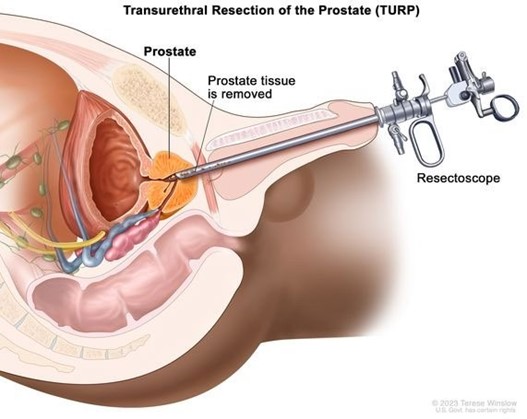
A nurse is caring for a client who had a transurethral resection of the prostate and now is receiving continuous bladder irrigation. Which of the following actions should the nurse take? (Select all that apply.)
A. Document urine color
Documenting urine color is important to monitor for any changes that may indicate complications or issues with the bladder irrigation. It helps identify any bleeding or clot formation
B. Monitor the client for reports of bladder spasms.
b. Monitoring the client for reports of bladder spasms is crucial as bladder spasms can indicate irritation or obstruction in the urinary system. Prompt intervention can be provided to alleviate discomfort and prevent complications.
C. Check the drainage tubing for obstructions
Checking the drainage tubing for obstructions is essential to ensure proper flow of the bladder irrigation solution. Obstructions in the tubing can lead to inadequate irrigation, which can affect the effectiveness of the procedure and potentially lead to complications.
D. Maintain the client in a left side-lying position
d. Maintaining the client in a left side-lying position is not specifically indicated for continuous bladder irrigation after a transurethral resection of the prostate. The client's position should be based on their comfort and overall condition, and there is no specific requirement for a left side-lying position in this context.
E. Use clean technique for intermitent irrigation
Using clean technique for intermitent irrigation is not appropriate for continuous bladder irrigation. Continuous bladder irrigation requires aseptic technique to reduce the risk of infection and contamination
Full Explanation
The correct answers are a. Document urine color, b. Monitor the client for reports of bladder spasms, and
c. Check the drainage tubing for obstructions.
a. Documenting urine color is important to monitor for any changes that may indicate complications or issues with the bladder irrigation. It helps identify any bleeding or clot formation.
b. Monitoring the client for reports of bladder spasms is crucial as bladder spasms can indicate irritation or obstruction in the urinary system. Prompt intervention can be provided to alleviate discomfort and prevent complications.
c. Checking the drainage tubing for obstructions is essential to ensure proper flow of the bladder irrigation solution. Obstructions in the tubing can lead to inadequate irrigation, which can affect the effectiveness of the procedure and potentially lead to complications.
d. Maintaining the client in a left side-lying position is not specifically indicated for continuous bladder irrigation after a transurethral resection of the prostate. The client's position should be based on their comfort and overall condition, and there is no specific requirement for a left side-lying position in this context.
e. Using clean technique for intermitent irrigation is not appropriate for continuous bladder irrigation. Continuous bladder irrigation requires aseptic technique to reduce the risk of infection and contamination.
By performing these actions, the nurse ensures proper monitoring, documentation, and maintenance of the bladder irrigation system, promoting the client's safety and well-being.