
Nursing practice questions with comprehensive rationales
NurseDive Free Nursing Practice Question
A nurse is caring for a 9-month-old infant in a pediatric clinic. The child's guardian tells the nurse that the child has missed the scheduled 6-month immunizations. Which of the following responses should the nurse make?
A. "We can give your child all of the missed immunizations in one injection."
Administering all the missed immunizations in one injection is not recommended and can lead to increased discomfort and potential adverse reactions.
B. "Your child will have to start their immunization series over from the beginning."
Starting the immunization series over is unnecessary and can delay the child's protection against vaccine-preventable diseases.
C. "We will administer the immunizations your child missed today."
The most appropriate action is to administer the immunizations the child missed at the earliest opportunity to catch up on the schedule.
D. "We will give your child all of the needed immunizations at 12 months."
Waiting until 12 months of age is not necessary if the child has already missed scheduled immunizations. The catch-up schedule should be followed based on the child's current age.
This question is an excerpt from Nurse Dive's nursing test bank - RN ati Concept-based assessment level proctored exam. Take the full exam now
Full Explanation
Choice A rationale:
Administering all the missed immunizations in one injection is not recommended and can lead to increased discomfort and potential adverse reactions.
Choice B rationale:
Starting the immunization series over is unnecessary and can delay the child's protection against vaccine-preventable diseases.
Choice C rationale:
The most appropriate action is to administer the immunizations the child missed at the earliest opportunity to catch up on the schedule.
Choice D rationale:
Waiting until 12 months of age is not necessary if the child has already missed scheduled immunizations. The catch-up schedule should be followed based on the child's current age.
Similar Questions
A nurse is teaching a male client who has erectile dysfunction and a new prescription for sildenafil. Which of the following information should the nurse include in the teaching?
A. "Take this medication twice per day."
Sildenafil is typically taken as needed, not twice per day.
B. "Constipation is a common adverse effect of this medication."
Constipation is not a common adverse effect of sildenafil.
C. "Change positions slowly after taking this medication."
Changing positions slowly after taking the medication is not related to sildenafil's mechanism of action.
D. "You should expect temporary visual changes while taking this medication."
Sildenafil is a medication used to treat erectile dysfunction. Temporary visual changes, often described as a blue-green tinge or increased light sensitivity, are potential side effects of sildenafil due to its effect on the retinal enzyme.
Full Explanation
Choice A rationale:
Sildenafil is typically taken as needed, not twice per day.
Choice B rationale:
Constipation is not a common adverse effect of sildenafil.
Choice C rationale:
Changing positions slowly after taking the medication is not related to sildenafil's mechanism of action.
Choice D rationale:
Sildenafil is a medication used to treat erectile dysfunction. Temporary visual changes, often described as a blue-green tinge or increased light sensitivity, are potential side effects of sildenafil due to its effect on the retinal enzyme.
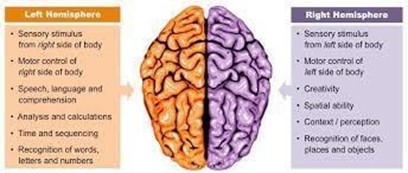
A nurse in an emergency department is assessing a client who has experienced a right hemispheric stroke. Which of the following findings should the nurse expect?
A. Aphasia
Aphasia, or difficulty with language, is more commonly associated with left hemispheric stroke.
B. Depression
Depression can be a common psychological reaction following stroke, but it is not a specific finding associated with right hemispheric stroke.
C. Loss of depth perception
Right hemispheric stroke can lead to loss of depth perception and spatial awareness due to its impact on the visual-spatial processing areas of the brain.
D. Slow, cautious behavior
Slow, cautious behavior is a common finding after stroke regardless of the affected hemisphere.
Full Explanation
Choice A rationale:
Aphasia, or difficulty with language, is more commonly associated with left hemispheric stroke.
Choice B rationale:
Depression can be a common psychological reaction following stroke, but it is not a specific finding associated with right hemispheric stroke.
Choice C rationale:
Right hemispheric stroke can lead to loss of depth perception and spatial awareness due to its impact on the visual-spatial processing areas of the brain.
Choice D rationale:
Slow, cautious behavior is a common finding after stroke regardless of the affected hemisphere.
A nurse is providing teaching about electroconvulsive therapy to a client who has treatment-resistant depression. Which of the following client statements indicates an understanding of the teaching?
A. "I should expect to have up to 12 treatments."
Electroconvulsive therapy (ECT) is typically administered as a series of treatments, often ranging from 6 to 12 sessions, to achieve optimal therapeutic effects.
B. "I should expect this treatment to cure my illness."
ECT can provide relief from severe depressive symptoms, but it is not necessarily considered a "cure" for depression.
C. "I will receive an antianxiety medication during the treatments."
ECT is not usually accompanied by antianxiety medication during the treatments.
D. "I will wake up 2 hours after the treatment."
Recovery from ECT typically occurs within minutes after the treatment, not after 2 hours.
Full Explanation
Choice A rationale:
Electroconvulsive therapy (ECT) is typically administered as a series of treatments, often ranging from 6 to 12 sessions, to achieve optimal therapeutic effects.
Choice B rationale:
ECT can provide relief from severe depressive symptoms, but it is not necessarily considered a "cure" for depression.
Choice C rationale:
ECT is not usually accompanied by antianxiety medication during the treatments.
Choice D rationale:
Recovery from ECT typically occurs within minutes after the treatment, not after 2 hours.