Nursing practice questions with comprehensive rationales
NurseDive Free Nursing Practice Question
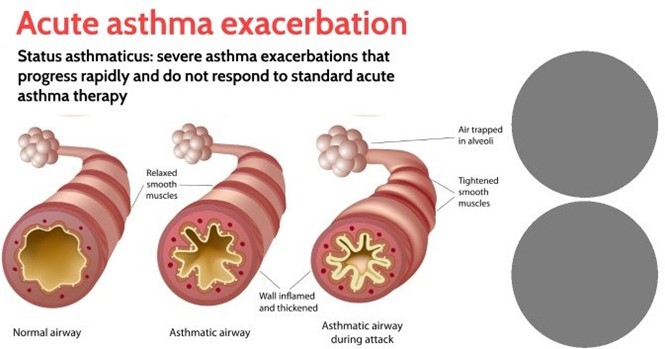
A nurse is caring for a child who is experiencing status asthmaticus. Which of the following interventions is the priority for the nurse to take?
A. Determine the cause of the acute exacerbation.
Determining the cause of the acute exacerbation is important, but not the priority intervention for the nurse to take. The cause may be an allergen, infection, stress, or exercise, but it does not affect the immediate management of status asthmaticus. The nurse should focus on restoring airway patency and oxygenation first, and then identify and avoid triggers later.
B. Obtain a peak flow reading.
Obtaining a peak flow reading is important, but not the priority intervention for the nurse to take. The peak flow reading measures the maximum expiratory flow rate and indicates the degree of airway obstruction. However, it may not be feasible or accurate in a child who is experiencing status asthmaticus, as they may be too dyspneic or agitated to perform the test. The nurse should rely on other signs or respiratory distress, such as wheezes, retractions, cyanosis, or pulse oximetry.
C. Administer an inhaled glucocorticoid.
Administering an inhaled glucocorticoid is important, but not the priority intervention for the nurse to take. Glucocorticoids, such as fluticasone or budesonide, reduce inflammation and mucus production in the airways, but they have a delayed onset of action and are not effective for acute asthma attacks. They are used for long-term control and prevention of asthma symptoms.
D. Administer a short-acting beta2-agonist (SABA).
Administering a short-acting beta2-agonist (SABA), such as albuterol, is the priority intervention for the nurse to take, as it provides rapid bronchodilation and relieves bronchospasm, which are the main features of status asthmaticus. Status asthmaticus is a severe and life-threatening asthma attack that does not respond to usual treatment and requires immediate medical attention.
This question is an excerpt from Nurse Dive's nursing test bank - ATI Med Surg Proctored Exam 1. Take the full exam now
Full Explanation
Administering a short-acting beta2-agonist (SABA), such as albuterol, is the priority intervention for the nurse to take, as it provides rapid bronchodilation and relieves bronchospasm, which are the main features of status asthmaticus. Status asthmaticus is a severe and life-threatening asthma attack that does not respond to usual treatment and requires immediate medical attention.
a) Determining the cause of the acute exacerbation is important, but not the priority intervention for the nurse to take. The cause may be an allergen, infection, stress, or exercise, but it does not affect the immediate management of status asthmaticus. The nurse should focus on restoring airway patency and oxygenation first, and then identify and avoid triggers later.
b) Obtaining a peak flow reading is important, but not the priority intervention for the nurse to take. The peak flow reading measures the maximum expiratory flow rate and indicates the degree of airway obstruction. However, it may not be feasible or accurate in a child who is experiencing status asthmaticus, as they may be too dyspneic or agitated to perform the test. The nurse should rely on other signs of respiratory distress, such as wheezes, retractions, cyanosis, or pulse oximetry.
c) Administering an inhaled glucocorticoid is important, but not the priority intervention for the nurse to take. Glucocorticoids, such as fluticasone or budesonide, reduce inflammation and mucus production in the airways, but they have a delayed onset of action and are not effective for acute asthma attacks. They are used for long-term control and prevention of asthma symptoms.
Similar Questions
A nurse is assessing a client who has postoperative atelectasis and is hypoxic. Which of the following manifestations should the nurse expect?
A. Lethargy
Lethargy, or a state of reduced mental alertness and energy, is not a typical manifestation of hypoxia. It can be caused by other factors, such as pain, medication, infection, or electrolyte imbalance. Hypoxia usually causes restlessness, anxiety, or confusion.
B. Bradycardia
Bradycardia, or a slow heart rate, is not a typical manifestation of hypoxia. It can be caused by other factors, such as medication, vagal stimulation, or heart block. Hypoxia usually causes tachycardia, or a fast heart rate, as the body tries to compensate for the low oxygen level.
C. Intercostal retractions
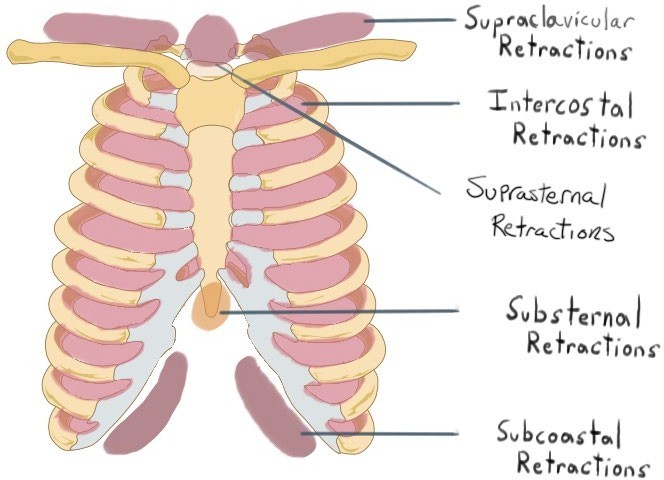
Intercostal retractions, or the inward movement of the chest wall between the ribs, are a sign of respiratory distress and hypoxia. They indicate increased work of breathing and reduced lung expansion, which are common in clients who have postoperative atelectasis. Atelectasis is a collapse of alveoli in a part of the lung, which impairs gas exchange and oxygenation.
D. Bradypnea
Bradypnea, or a slow respiratory rate, is not a typical manifestation of hypoxia. It can be caused by other factors, such as medication, brain injury, or metabolic alkalosis. Hypoxia usually causes tachypnea, or a fast respiratory rate, as the body tries to increase oxygen intake and carbon dioxide elimination.
Full Explanation
Intercostal retractions, or the inward movement of the chest wall between the ribs, are a sign of respiratory distress and hypoxia. They indicate increased work of breathing and reduced lung expansion, which are common in clients who have postoperative atelectasis. Atelectasis is a collapse of alveoli in a part of the lung, which impairs gas exchange and oxygenation.
a) Lethargy, or a state of reduced mental alertness and energy, is not a typical manifestation of hypoxia. It can be caused by other factors, such as pain, medication, infection, or electrolyte imbalance. Hypoxia usually causes restlessness, anxiety, or confusion.
b) Bradycardia, or a slow heart rate, is not a typical manifestation of hypoxia. It can be caused by other factors, such as medication, vagal stimulation, or heart block. Hypoxia usually causes tachycardia, or a fast heart rate, as the body tries to compensate for the low oxygen level.
d) Bradypnea, or a slow respiratory rate, is not a typical manifestation of hypoxia. It can be caused by other factors, such as medication, brain injury, or metabolic alkalosis. Hypoxia usually causes tachypnea, or a fast respiratory rate, as the body tries to increase oxygen intake and carbon dioxide elimination.
A nurse is caring for a client who asks how albuterol helps his breathing. Which of the following responses should the nurse make? (Select all that apply.)
A. The medication will prevent wheezing.
A. The medication will prevent wheezing: Albuterol is a bronchodilator, and one of its key effects is to relax the muscles around the airways, which helps prevent wheezing. Wheezing is often caused by narrowed airways, and by opening them, albuterol helps to prevent this sound, which is associated with asthma or other respiratory conditions.
B. The medication will decrease coughing episodes.
B. The medication will decrease coughing episodes: Albuterol can help decrease coughing in individuals with conditions like asthma or chronic obstructive pulmonary disease (COPD) by relaxing the muscles in the airways, which reduces airway constriction. Since coughing often occurs due to airway obstruction, albuterol’s bronchodilator effect can help alleviate this symptom.
C. The medication will reduce inflammation.
C. The medication will reduce inflammation: This is not correct for albuterol. While albuterol helps with bronchoconstriction and opens up the airways, it does not have a direct effect on inflammation. Inflammatory processes in conditions like asthma are typically treated with corticosteroids or other anti-inflammatory medications, not bronchodilators like albuterol.
D. The medication will open the airways.
D. The medication will open the airways: This is correct. Albuterol works as a bronchodilator, meaning it opens up the airways by relaxing the smooth muscles surrounding them. This improves airflow and makes breathing easier, which is why it is often used in conditions like asthma or COPD.
E. The medication will stimulate flow of mucus.
E. The medication will stimulate the flow of mucus: Albuterol does not stimulate the flow of mucus. Its main function is to dilate the airways and improve airflow. While some medications (e.g., expectorants) help loosen and clear mucus, albuterol's primary action is on airway relaxation rather than influencing mucus production.
Full Explanation
Answer: A, B D
Rationale:
-
Albuterol is a bronchodilator, and one of its key effects is to relax the muscles around the airways, which helps prevent wheezing. Wheezing is often caused by narrowed airways, and by opening them, albuterol helps to prevent this sound, which is associated with asthma or other respiratory conditions.
-
B. The medication will decrease coughing episodes:
Albuterol can help decrease coughing in individuals with conditions like asthma or chronic obstructive pulmonary disease (COPD) by relaxing the muscles in the airways, which reduces airway constriction. Since coughing often occurs due to airway obstruction, albuterol’s bronchodilator effect can help alleviate this symptom. -
C. The medication will reduce inflammation: Albuterol does not have anti-inflammatory properties. Its primary mechanism is bronchodilation, and anti-inflammatory treatment generally requires corticosteroids, not beta-agonists like albuterol.
-
D. The medication will open the airways:
This is correct. Albuterol works as a bronchodilator, meaning it opens up the airways by relaxing the smooth muscles surrounding them. This improves airflow and makes breathing easier, which is why it is often used in conditions like asthma or COPD. -
E. The medication will stimulate flow of mucus: Albuterol does not stimulate mucus production; it primarily works by relaxing the airways. However, by improving airflow, it can help clients more effectively expel mucus through coughing.
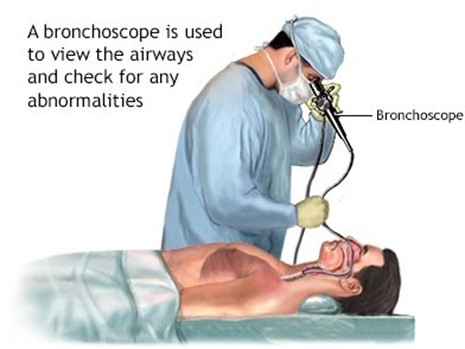
A nurse is teaching a client who will undergo a bronchoscopy procedure. The provider will use a rigid scope and general anesthesia. The nurse should explain that the client's neck will be in which of the following positions?
A. Hyperextended position
Hyperextended position, or backward bending of the neck, is the correct position for the client's neck during a bronchoscopy procedure with a rigid scope and general anesthesia. This position allows the provider to insert the scope through the mouth and into the trachea and bronchi, while avoiding injury to the teeth, tongue, or larynx. It also facilitates visualization of the airways and removal of foreign bodies or secretions.
B. Neutral position
Neutral position, or alignment of the head and neck with the spine, is not the correct position for the client's neck during a bronchoscopy procedure with a rigid scope and general anesthesia. This position may interfere with the insertion of the scope and cause damage to the oral structures or airways.
C. Extended position
Extended position, or forward bending of the neck, is not the correct position for the client's neck during a bronchoscopy procedure with a rigid scope and general anesthesia. This position may obstruct the airway and make it difficult for the provider to insert the scope and access the bronchi.
D. Flexed position
Flexed position, or downward bending of the neck, is not the correct position for the client's neck during a bronchoscopy procedure with a rigid scope and general anesthesia. This position may compress the airway and prevent adequate ventilation and oxygenation of the client.
Full Explanation
Hyperextended position, or backward bending of the neck, is the correct position for the client's neck during a bronchoscopy procedure with a rigid scope and general anesthesia. This position allows the provider to insert the scope through the mouth and into the trachea and bronchi, while avoiding injury to the teeth, tongue, or larynx. It also facilitates visualization of the airways and removal of foreign bodies or secretions.
b) Neutral position, or alignment of the head and neck with the spine, is not the correct position for the client's neck during a bronchoscopy procedure with a rigid scope and general anesthesia. This position may interfere with the insertion of the scope and cause damage to the oral structures or airways.
c) Extended position, or forward bending of the neck, is not the correct position for the client's neck during a bronchoscopy procedure with a rigid scope and general anesthesia. This position may obstruct the airway and make it difficult for the provider to insert the scope and access the bronchi.
d) Flexed position, or downward bending of the neck, is not the correct position for the client's neck during a bronchoscopy procedure with a rigid scope and general anesthesia. This position may compress the airway and prevent adequate ventilation and oxygenation of the client.