
Nursing practice questions with comprehensive rationales
NurseDive Free Nursing Practice Question
A nurse is caring for a client admitted with meningitis. The student nurse asks, "I know that the client has a lot of edemas in the brain, but what causes it?" Which of the following responses from the nurse best answers the student's question?
A. "Cerebral edema is caused by osmotic cerebral edema."
Osmotic edema refers to fluid shifts due to changes in osmotic gradients (as seen in conditions like hyponatremia), not the inflammatory process of meningitis.
B. "Cerebral edema is caused by whole body inflammation which affects the brain the most."
While inflammation is a key part of the body's response in meningitis, the edema is not a result of generalized whole-body inflammation. The edema is more directly linked to local inflammatory reactions in the brain triggered by the pathogen’s by-products.
C. "Cerebral edema is caused by the by-products of the pathogen that causes the meningitis."
Bacterial cell walls, endotoxins, and other components released by the bacteria directly stimulate inflammation, causing the breakdown of the blood brain barrier and allowing fluid and inflammatory cells to leak into the brain tissue.
D. "Cerebral edema is caused by cerebrospinal fluid flowing from the intraventricular space to the interstitial area of the brain."
This description is more aligned with the pathophysiology of conditions like hydrocephalus rather than meningitis. In meningitis, cerebral edema is primarily due to the inflammatory response, not abnormal CSF flow.
This question is an excerpt from Nurse Dive's nursing test bank - Ati Medical Surgical Proctored Exam 1. Take the full exam now
Full Explanation
A. Osmotic edema refers to fluid shifts due to changes in osmotic gradients (as seen in conditions like hyponatremia), not the inflammatory process of meningitis.
B. While inflammation is a key part of the body's response in meningitis, the edema is not a result of generalized whole-body inflammation. The edema is more directly linked to local inflammatory reactions in the brain triggered by the pathogen’s by-products.
C. Bacterial cell walls, endotoxins, and other components released by the bacteria directly stimulate inflammation, causing the breakdown of the BBB and allowing fluid and inflammatory cells to leak into the brain tissue.
D. This description is more aligned with the pathophysiology of conditions like hydrocephalus rather than meningitis. In meningitis, cerebral edema is primarily due to the inflammatory response, not abnormal CSF flow.
Similar Questions
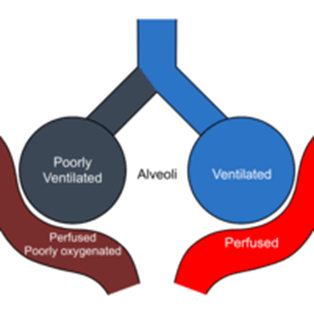
A nurse is caring for a client who has respiratory failure due to ventilation-perfusion (V/Q) mismatch. The nurse should recognize that the client most likely has which of the following conditions?
A. Flail chest
Flail chest is incorrect. Flail chest is a condition characterized by multiple rib fractures, causing instability in the chest wall. While it can lead to respiratory distress, it doesn't directly cause ventilation-perfusion (V/Q) mismatch. Instead, it impairs the mechanics of breathing by compromising chest wall integrity.
B. Emphysema
Emphysema is a chronic obstructive pulmonary disease (COPD) where the alveolar walls are destroyed, leading to a loss of surface area for gas exchange. This results in areas of the lungs that are well-perfused but poorly ventilated, causing a V/Q mismatch. The damage to alveoli leads to impaired ventilation, while blood flow may still be adequate, leading to hypoxemia (low oxygen levels in the blood).
C. Congestive heart failure
CHF primarily affects the heart’s ability to pump blood effectively, leading to pulmonary congestion and impaired gas exchange. However, it typically causes diffusion defects rather than a direct ventilation-perfusion mismatch. V/Q mismatch may occur secondary to pulmonary edema, but it’s not the primary mechanism of respiratory failure in CHF.
D. Guillain-Barré syndrome
Guillain-Barré syndrome is incorrect. Guillain-Barré syndrome (GBS) is a neurological disorder that affects the peripheral nervous system, leading to muscle weakness and paralysis. While respiratory muscle weakness can occur in GBS, it doesn't directly cause ventilation-perfusion (V/Q) mismatch. GBS primarily affects nerve function rather than lung function.
E. None
None
F. None
None
Full Explanation
Choice A Reason:
Flail chest is incorrect. Flail chest is a condition characterized by multiple rib fractures, causing instability in the chest wall. While it can lead to respiratory distress, it doesn't directly cause ventilation-perfusion (V/Q) mismatch. Instead, it impairs the mechanics of breathing by compromising chest wall integrity.
Choice B Reason:
Emphysema is a chronic obstructive pulmonary disease (COPD) where the alveolar walls are destroyed, leading to a loss of surface area for gas exchange. This results in areas of the lungs that are well-perfused but poorly ventilated, causing a V/Q mismatch. The damage to alveoli leads to impaired ventilation, while blood flow may still be adequate, leading to hypoxemia (low oxygen levels in the blood).
Choice C Reason:
CHF primarily affects the heart’s ability to pump blood effectively, leading to pulmonary congestion and impaired gas exchange. However, it typically causes diffusion defects rather than a direct ventilation-perfusion mismatch. V/Q mismatch may occur secondary to pulmonary edema, but it’s not the primary mechanism of respiratory failure in CHF.
Choice D Reason:
Guillain-Barré syndrome is incorrect. Guillain-Barré syndrome (GBS) is a neurological disorder that affects the peripheral nervous system, leading to muscle weakness and paralysis. While respiratory muscle weakness can occur in GBS, it doesn't directly cause ventilation-perfusion (V/Q) mismatch. GBS primarily affects nerve function rather than lung function.
A nurse is caring for a client who has multiple sclerosis and reports a tightening feeling around their torso. Which of the following conditions should the nurse recognize this finding indicates?
A. MS hug
MS hug is appropriate. The "MS hug" is a colloquial term used to describe a sensation of tightness, pressure, or squeezing around the torso or chest area experienced by some individuals with multiple sclerosis (MS). It is caused by spasms or contractions of the intercostal muscles (muscles between the ribs) or the diaphragm due to lesions in the spinal cord disrupting nerve signals. This sensation can be uncomfortable or painful for the individual.
B. Lhermitte's sign
Lhermitte's sign is inappropriate. Lhermitte's sign is a common symptom experienced by individuals with MS but it presents differently. It is characterized by an electric shock-like sensation that radiates down the spine and into the limbs, typically triggered by flexing the neck forward. It is caused by damage to the spinal cord's myelin sheath, leading to abnormal nerve signal transmission.
C. Paroxysmal spasms
Paroxysmal spasms is inappropriate. Paroxysmal spasms are sudden, involuntary muscle contractions or jerking movements that can occur in various parts of the body. While spasms are common in MS, they are not specifically associated with the sensation of tightness around the torso as described in the scenario.
D. Trigeminal neuralgia
Trigeminal neuralgia is inappropriate. Trigeminal neuralgia is a condition characterized by sudden, severe facial pain often described as stabbing or electric shock-like. It is caused by irritation or damage to the trigeminal nerve, which is responsible for facial sensation. While individuals with MS may experience trigeminal neuralgia, it typically does not present with a tightening feeling around the torso.
Full Explanation
Choice A Reason:
MS hug is appropriate. The "MS hug" is a colloquial term used to describe a sensation of tightness, pressure, or squeezing around the torso or chest area experienced by some individuals with multiple sclerosis (MS). It is caused by spasms or contractions of the intercostal muscles (muscles between the ribs) or the diaphragm due to lesions in the spinal cord disrupting nerve signals. This sensation can be uncomfortable or painful for the individual.
Choice B Reason:
Lhermitte's sign is inappropriate. Lhermitte's sign is a common symptom experienced by individuals with MS but it presents differently. It is characterized by an electric shock-like sensation that radiates down the spine and into the limbs, typically triggered by flexing the neck forward. It is caused by damage to the spinal cord's myelin sheath, leading to abnormal nerve signal transmission.
Choice C Reason:
Paroxysmal spasms is inappropriate. Paroxysmal spasms are sudden, involuntary muscle contractions or jerking movements that can occur in various parts of the body. While spasms are common in MS, they are not specifically associated with the sensation of tightness around the torso as described in the scenario.
Choice D Reason:
Trigeminal neuralgia is inappropriate. Trigeminal neuralgia is a condition characterized by sudden, severe facial pain often described as stabbing or electric shock-like. It is caused by irritation or damage to the trigeminal nerve, which is responsible for facial sensation. While individuals with MS may experience trigeminal neuralgia, it typically does not present with a tightening feeling around the torso.
A nurse is assessing a client who has tension pneumothorax. Which of the following findings should the nurse expect following tracheal deviation?
A. Respiratory alkalosis
Respiratory alkalosis is incorrect. Tension pneumothorax typically leads to respiratory distress and hypoxemia rather than respiratory alkalosis. The respiratory alkalosis may occur initially due to hyperventilation in response to hypoxemia but would not be directly related to tracheal deviation.
B. Increased venous return
Increased venous return is incorrect. Tension pneumothorax actually leads to decreased venous return due to compression of the great vessels in the thorax, particularly the superior vena cava and the inferior vena cava. This compression results from the increased pressure within the thorax, which impedes blood flow back to the heart.
C. Decreased cardiac output
Decreased cardiac output is correct. Tension pneumothorax can indeed lead to decreased cardiac output due to compression of the heart and the great vessels by the accumulating air in the pleural space. This compression decreases venous return and impairs cardiac function.
D. Dilated ventricles
Dilated ventricles is incorrect. As mentioned earlier, tension pneumothorax can lead to compression of the heart, including the ventricles. This compression can cause dilatation of the ventricles, particularly the right ventricle, due to increased afterload and decreased venous return.
Full Explanation
Choice A Reason:
Respiratory alkalosis is incorrect. Tension pneumothorax typically leads to respiratory distress and hypoxemia rather than respiratory alkalosis. The respiratory alkalosis may occur initially due to hyperventilation in response to hypoxemia but would not be directly related to tracheal deviation.
Choice B Reason:
Increased venous return is incorrect. Tension pneumothorax actually leads to decreased venous return due to compression of the great vessels in the thorax, particularly the superior vena cava and the inferior vena cava. This compression results from the increased pressure within the thorax, which impedes blood flow back to the heart.
Choice C Reason:
Decreased cardiac output is incorrect. Tension pneumothorax can indeed lead to decreased cardiac output due to compression of the heart and the great vessels by the accumulating air in the pleural space. This compression decreases venous return and impairs cardiac function.
Choice D Reason:
Dilated ventricles is incorrect. As mentioned earlier, tension pneumothorax can lead to compression of the heart, including the ventricles. This compression can cause dilatation of the ventricles, particularly the right ventricle, due to increased afterload and decreased venous return.