Nursing practice questions with comprehensive rationales
NurseDive Free Nursing Practice Question
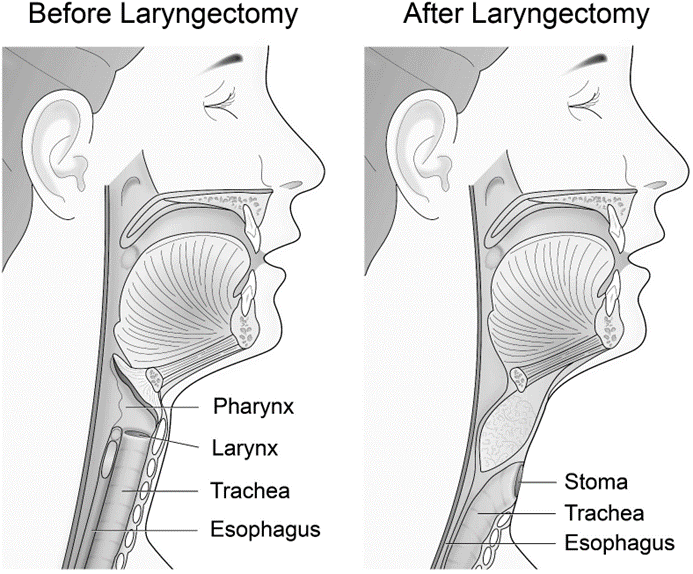
A nurse is caring for a client following a total laryngectomy. Which of the following is the priority observation in the client's care?
A. Patency of the intravenous line.
Patency of the intravenous line is important, but not the priority observation in the client's care. The intravenous line provides fluids, electrolytes, and medications to the client, but it does not affect the airway patency or oxygenation.
B. Need for suctioning.
Suctioning is the priority observation in the client's care, as it prevents airway obstruction and respiratory distress caused by blood, mucus, or secretions. The client has a permanent tracheostomy and cannot cough or clear the airway effectively. The nurse should assess the need for suctioning frequently and perform it as needed, using sterile technique and maintaining oxygenation.
C. Integrity of the dressing.
Integrity of the dressing is important, but not the priority observation in the client's care. The dressing protects the surgical site from infection and bleeding, but it does not affect the airway patency or oxygenation.
D. Level of pain.
Level of pain is important, but not the priority observation in the client's care. The pain can be managed with analgesics and nonpharmacological measures, but it does not affect the airway patency or oxygenation.
This question is an excerpt from Nurse Dive's nursing test bank - ATI Med Surg Proctored Exam 1. Take the full exam now
Full Explanation
Suctioning is the priority observation in the client's care, as it prevents airway obstruction and respiratory distress caused by blood, mucus, or secretions. The client has a permanent tracheostomy and cannot cough or clear the airway effectively. The nurse should assess the need for suctioning frequently and perform it as needed, using sterile technique and maintaining oxygenation.
a) Patency of the intravenous line is important, but not the priority observation in the client's care. The intravenous line provides fluids, electrolytes, and medications to the client, but it does not affect the airway patency or oxygenation.
c) Integrity of the dressing is important, but not the priority observation in the client's care. The dressing protects the surgical site from infection and bleeding, but it does not affect the airway patency or oxygenation.
d) Level of pain is important, but not the priority observation in the client's care. The pain can be managed with analgesics and nonpharmacological measures, but it does not affect the airway patency or oxygenation.
Similar Questions
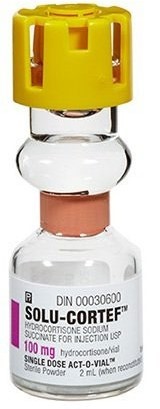
A nurse is preparing to administer hydrocortisone 100 mg IM daily to a client. Available is hydrocortisone 250 mg/2 mL. How many mL should the nurse administer per dose?
(Round the answer to the nearest tenth number. Use a leading zero if it applies. Do not use a trailing zero.)
Full Explanation
To calculate the amount of mL to administer, the nurse should use the following formula:
(mg ordered / mg available) x mL available = mL to administer
Substituting the values from the question, the nurse should do the following:
(100 mg / 250 mg) x 2 mL = 0.8 mL
A nurse is teaching a client who has tuberculosis and is to start medication therapy with isoniazid, rifampin, and pyrazinamide. Which of the following instructions should the nurse include?
A. "Expect your sputum cultures to be negative after 6 months of therapy."
A) "Expect your sputum cultures to be negative after 6 months of therapy": While sputum cultures may become negative after a period of effective therapy, it is not always guaranteed to happen within exactly 6 months. Tuberculosis (TB) treatment usually involves several months of medication, and sputum cultures are monitored periodically to assess treatment efficacy, not solely at the 6-month mark.
B. "Drink at least 8 ounces of water when you take the pyrazinamide tablet."
B) "Drink at least 8 ounces of water when you take the pyrazinamide tablet": Drinking plenty of water with pyrazinamide is important to prevent dehydration and to help minimize potential side effects, such as hyperuricemia or gout. Adequate hydration can also aid in the effective elimination of the medication from the body, thus reducing the risk of adverse effects.
C. "Provide a sputum specimen every 2 weeks to the clinic for testing."
C) "Provide a sputum specimen every 2 weeks to the clinic for testing": Sputum specimens are typically provided less frequently than every 2 weeks, usually monthly, to monitor the progress of TB treatment. Testing frequency may vary depending on the client's condition and the healthcare provider's recommendations.
D. "Take isoniazid with an antacid."
D) "Take isoniazid with an antacid": Isoniazid should not be taken with antacids, as antacids can interfere with the absorption of isoniazid. It is usually advised to take isoniazid on an empty stomach, and clients should be instructed to wait at least 1 hour after taking isoniazid before consuming antacids.
Full Explanation
Answer: B
Rationale:
A) "Expect your sputum cultures to be negative after 6 months of therapy":
While sputum cultures may become negative after a period of effective therapy, it is not always guaranteed to happen within exactly 6 months. Tuberculosis (TB) treatment usually involves several months of medication, and sputum cultures are monitored periodically to assess treatment efficacy, not solely at the 6-month mark.
B) "Drink at least 8 ounces of water when you take the pyrazinamide tablet":
Drinking plenty of water with pyrazinamide is important to prevent dehydration and to help minimize potential side effects, such as hyperuricemia or gout. Adequate hydration can also aid in the effective elimination of the medication from the body, thus reducing the risk of adverse effects.
C) "Provide a sputum specimen every 2 weeks to the clinic for testing":
Sputum specimens are typically provided less frequently than every 2 weeks, usually monthly, to monitor the progress of TB treatment. Testing frequency may vary depending on the client's condition and the healthcare provider's recommendations.
D) "Take isoniazid with an antacid":
Isoniazid should not be taken with antacids, as antacids can interfere with the absorption of isoniazid. It is usually advised to take isoniazid on an empty stomach, and clients should be instructed to wait at least 1 hour after taking isoniazid before consuming antacids.
A nurse is providing discharge teaching to a client who has asthma and a new prescription for fluticasone/salmeterol. For which of the following adverse effects should the nurse instruct the client to report to the provider?
A. Dry oral mucous membranes
Dry oral mucous membranes is a common and mild adverse effect of fluticasone/salmeterol, which can be relieved by drinking water, chewing sugarless gum, or using artificial saliva. It does not require reporting to the provider or stopping the medication.
B. White coating in the mouth
White coating in the mouth, also known as oral candidiasis or thrush, is a serious adverse effect of fluticasone/salmeterol, which is a combination of an inhaled corticosteroid and a long-acting beta2 agonist. It is caused by fungal infection of the oral cavity due to suppression of the normal flora by the corticosteroid component. The client should report this symptom to the provider, as it may require antifungal treatment and discontinuation of the medication.
C. Sedation
Sedation is not an adverse effect of fluticasone/salmeterol, but it may be caused by other medications, such as antihistamines, opioids, or benzodiazepines. The client should avoid driving or operating machinery if sedated and consult with the provider about possible drug interactions.
D. Increased appetite
Increased appetite is not an adverse effect of fluticasone/salmeterol, but it may be caused by other factors, such as stress, boredom, or hormonal changes. The client should maintain a balanced diet and exercise regularly to prevent weight gain and promote health.
Full Explanation
White coating in the mouth, also known as oral candidiasis or thrush, is a serious adverse effect of fluticasone/salmeterol, which is a combination of an inhaled corticosteroid and a long-acting beta2 agonist. It is caused by fungal infection of the oral cavity due to suppression of the normal flora by the corticosteroid component. The client should report this symptom to the provider, as it may require antifungal treatment and discontinuation of the medication.
a) Dry oral mucous membranes is a common and mild adverse effect of fluticasone/salmeterol, which can be relieved by drinking water, chewing sugarless gum, or using artificial saliva. It does not require reporting to the provider or stopping the medication.
c) Sedation is not an adverse effect of fluticasone/salmeterol, but it may be caused by other medications, such as antihistamines, opioids, or benzodiazepines. The client should avoid driving or operating machinery if sedated and consult with the provider about possible drug interactions.
d) Increased appetite is not an adverse effect of fluticasone/salmeterol, but it may be caused by other factors, such as stress, boredom, or hormonal changes. The client should maintain a balanced diet and exercise regularly to prevent weight gain and promote health.