Nursing practice questions with comprehensive rationales
NurseDive Free Nursing Practice Question
A nurse is caring for a client following his first hemodialysis treatment. The client reports a headache, nausea, and restlessness. The nurse should identify these findings as manifestations of which of the following complications?
A. Air embolism
Air embolism is a potential complication during hemodialysis, but it would likely present with more acute symptoms such as chest pain or difficulty breathing.
B. Septicemia
Septicemia would typically present with fever and hypotension, not necessarily with headache, nausea, and restlessness.
C. Dialysis disequilibrium
Dialysis disequilibrium syndrome can occur after hemodialysis, especially after the first treatment, and is characterized by symptoms such as headache, nausea, and restlessness.
D. Peritonitis
Peritonitis is a complication associated with peritoneal dialysis, not hemodialysis.
This question is an excerpt from Nurse Dive's nursing test bank - Ati Med Surg Proctored Exam 2. Take the full exam now
Full Explanation
Choice A reason: Air embolism is a potential complication during hemodialysis, but it would likely present with more acute symptoms such as chest pain or difficulty breathing.
Choice B reason: Septicemia would typically present with fever and hypotension, not necessarily with headache, nausea, and restlessness.
Choice C reason: Dialysis disequilibrium syndrome can occur after hemodialysis, especially after the first treatment, and is characterized by symptoms such as headache, nausea, and restlessness.
Choice D reason: Peritonitis is a complication associated with peritoneal dialysis, not hemodialysis.
Similar Questions
A nurse is caring for a client who has nephrotic syndrome and is receiving high-dose corticosteroid therapy. For which of the following electrolyte imbalances should the nurse monitor?
A. Hyperkalemia
Hyperkalemia is not typically associated with corticosteroid therapy. Corticosteroids can lead to increased excretion of potassium, not retention.
B. Hypokalemia
Hypokalemia is a common side effect of corticosteroid therapy due to increased excretion of potassium in the urine.
C. Hypomagnesemia
Hypomagnesemia is not commonly associated with corticosteroid therapy.
D. Hypermagnesemia
Hypermagnesemia is not typically induced by corticosteroid therapy.
Full Explanation
Choice A reason: Hyperkalemia is not typically associated with corticosteroid therapy. Corticosteroids can lead to increased excretion of potassium, not retention.
Choice B reason: Hypokalemia is a common side effect of corticosteroid therapy due to increased excretion of potassium in the urine.
Choice C reason: Hypomagnesemia is not commonly associated with corticosteroid therapy.
Choice D reason: Hypermagnesemia is not typically induced by corticosteroid therapy.
A nurse removes a client's Foley catheter and documents that the client urinates 4 hours later. Which of the following elements of postoperative care is the nurse performing?
A. Providing surgical site or wound care
The nurse is not providing surgical site or wound care by documenting urination.
B. Managing postoperative pain
Managing postoperative pain is not directly related to monitoring the client's ability to urinate.
C. Assisting with early ambulation
Assisting with early ambulation does not pertain to the urinary function directly.
D. Monitoring urinary function
Monitoring urinary function is part of postoperative care, especially after removal of a Foley catheter, to ensure the client is able to void normally.
Full Explanation
Choice A reason: The nurse is not providing surgical site or wound care by documenting urination.
Choice B reason: Managing postoperative pain is not directly related to monitoring the client's ability to urinate.
Choice C reason: Assisting with early ambulation does not pertain to the urinary function directly.
Choice D reason: Monitoring urinary function is part of postoperative care, especially after removal of a Foley catheter, to ensure the client is able to void normally.
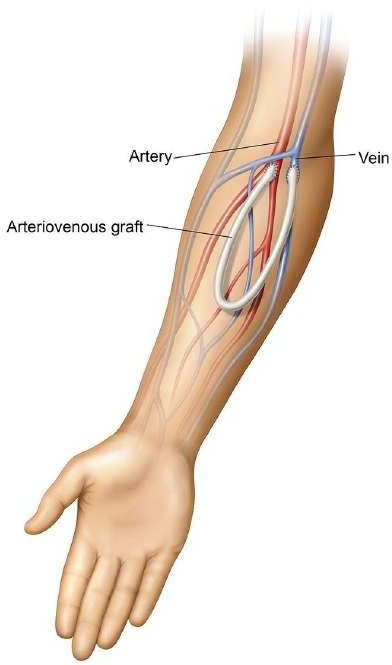
A nurse is caring for a client who has a new arteriovenous (AV) graft in his left forearm. Which of the following techniques should the nurse use to assess the patency of this graft?
A. Measure the client's blood pressure to ensure it is higher in the left arm than the right.
Measuring blood pressure di?erences is not a method to assess the patency of an AV graft.
B. Check the brachial and radial pulses of the left arm simultaneously.
Checking pulses is important but does not confirm the patency of the AV graft.
C. Auscultate the antecubital fossa using a Doppler stethoscope.
Using a Doppler stethoscope at the antecubital fossa is not the standard method for assessing AV graft patency.
D. Auscultate the site for a bruit.
Auscultating for a bruit at the site of the AV graft is a common and non-invasive way to assess for patency.
Full Explanation
Choice A reason: Measuring blood pressure di?erences is not a method to assess the patency of an AV graft.
Choice B reason: Checking pulses is important but does not confirm the patency of the AV graft.
Choice C reason: Using a Doppler stethoscope at the antecubital fossa is not the standard method for assessing AV graft patency.
Choice D reason: Auscultating for a bruit at the site of the AV graft is a common and non-invasive way to assess for patency.