
Nursing practice questions with comprehensive rationales
NurseDive Free Nursing Practice Question
A nurse removes a client's Foley catheter and documents that the client urinates 4 hours later. Which of the following elements of postoperative care is the nurse performing?
A. Providing surgical site or wound care
The nurse is not providing surgical site or wound care by documenting urination.
B. Managing postoperative pain
Managing postoperative pain is not directly related to monitoring the client's ability to urinate.
C. Assisting with early ambulation
Assisting with early ambulation does not pertain to the urinary function directly.
D. Monitoring urinary function
Monitoring urinary function is part of postoperative care, especially after removal of a Foley catheter, to ensure the client is able to void normally.
This question is an excerpt from Nurse Dive's nursing test bank - Ati Med Surg Proctored Exam 2. Take the full exam now
Full Explanation
Choice A reason: The nurse is not providing surgical site or wound care by documenting urination.
Choice B reason: Managing postoperative pain is not directly related to monitoring the client's ability to urinate.
Choice C reason: Assisting with early ambulation does not pertain to the urinary function directly.
Choice D reason: Monitoring urinary function is part of postoperative care, especially after removal of a Foley catheter, to ensure the client is able to void normally.
Similar Questions
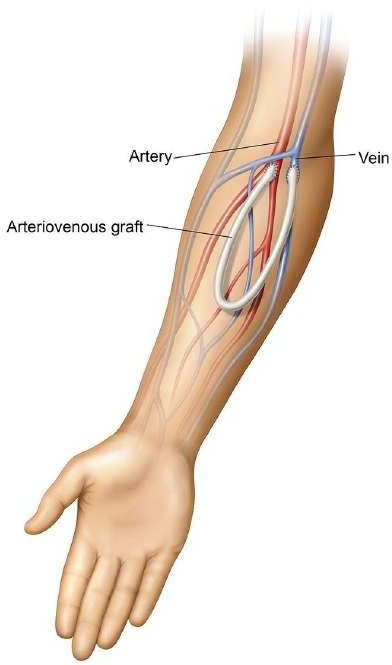
A nurse is caring for a client who has a new arteriovenous (AV) graft in his left forearm. Which of the following techniques should the nurse use to assess the patency of this graft?
A. Measure the client's blood pressure to ensure it is higher in the left arm than the right.
Measuring blood pressure di?erences is not a method to assess the patency of an AV graft.
B. Check the brachial and radial pulses of the left arm simultaneously.
Checking pulses is important but does not confirm the patency of the AV graft.
C. Auscultate the antecubital fossa using a Doppler stethoscope.
Using a Doppler stethoscope at the antecubital fossa is not the standard method for assessing AV graft patency.
D. Auscultate the site for a bruit.
Auscultating for a bruit at the site of the AV graft is a common and non-invasive way to assess for patency.
Full Explanation
Choice A reason: Measuring blood pressure di?erences is not a method to assess the patency of an AV graft.
Choice B reason: Checking pulses is important but does not confirm the patency of the AV graft.
Choice C reason: Using a Doppler stethoscope at the antecubital fossa is not the standard method for assessing AV graft patency.
Choice D reason: Auscultating for a bruit at the site of the AV graft is a common and non-invasive way to assess for patency.
A nurse is teaching a client who has chronic kidney disease and a new prescription for epoetin alfa. The nurse should instruct the client to increase dietary intake of which of the following substances?
A. Iron
Epoetin alfa is used to treat anemia associated with chronic kidney disease, and iron supplementation is often required to support red blood cell production.
B. Sodium
Sodium intake does not need to be increased with epoetin alfa therapy and should be monitored carefully in clients with chronic kidney disease.
C. Potassium
Potassium levels should be monitored in chronic kidney disease and not necessarily increased, as hyperkalemia can be a concern.
D. Protein
Protein intake should be managed carefully in chronic kidney disease to avoid excess nitrogen waste, which can be difficult for damaged kidneys to filter.
Full Explanation
Choice A reason: Epoetin alfa is used to treat anemia associated with chronic kidney disease, and iron supplementation is often required to support red blood cell production.
Choice B reason: Sodium intake does not need to be increased with epoetin alfa therapy and should be monitored carefully in clients with chronic kidney disease.
Choice C reason: Potassium levels should be monitored in chronic kidney disease and not necessarily increased, as hyperkalemia can be a concern.
Choice D reason: Protein intake should be managed carefully in chronic kidney disease to avoid excess nitrogen waste, which can be difficult for damaged kidneys to filter.
The nurse reviews data from a new client's kidney function test. Which of the following standards of transplant nursing practice is the nurse primarily performing?
A. Diagnosis
Diagnosis is the identification of a disease or condition, which is not directly related to reviewing kidney function test data.
B. Assessment
Assessment involves collecting and analyzing data, which is what the nurse is doing when reviewing kidney function test results.
C. Implementation
Implementation refers to carrying out interventions, not reviewing test data.
D. Outcomes identification
Outcomes identification involves setting goals and expected outcomes, not reviewing test data.
Full Explanation
Choice A reason: Diagnosis is the identification of a disease or condition, which is not directly related to reviewing kidney function test data.
Choice B reason: Assessment involves collecting and analyzing data, which is what the nurse is doing when reviewing kidney function test results.
Choice C reason: Implementation refers to carrying out interventions, not reviewing test data.
Choice D reason: Outcomes identification involves setting goals and expected outcomes, not reviewing test data.