
Nursing practice questions with comprehensive rationales
NurseDive Free Nursing Practice Question
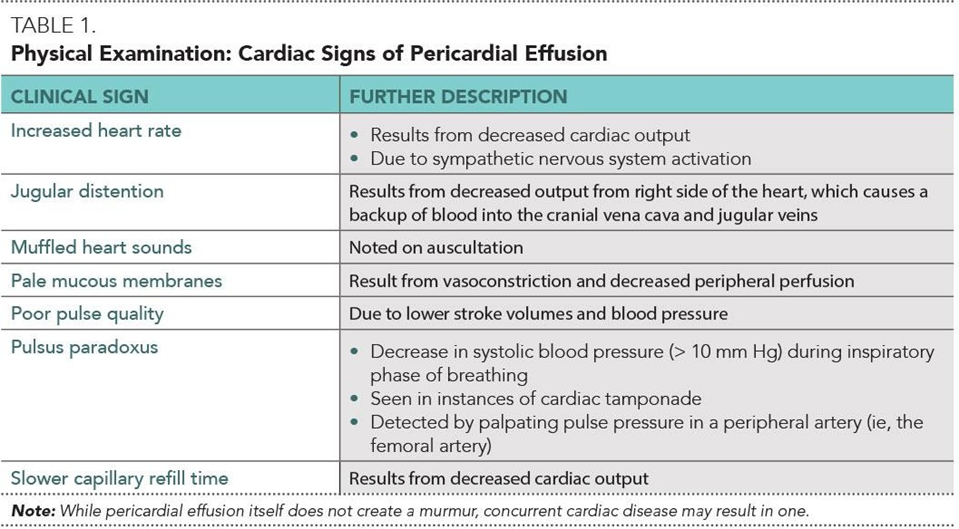
A nurse is caring for a client in a critical care unit who is 4 hours post operative coronary artery bypass surgery. The nurse performs the reassessment and suspects the client may be developing a pericardial effusion. What assessment findings would the nurse note in this case?
A. Diminished breath sounds
Diminished breath sounds are not typically associated with a pericardial effusion.
B. Increased blood pressure
Increased blood pressure is not typically associated with a pericardial effusion but it can instead result in hypotension due to decreased cardiac output due to compression of the heart by the accumulated fluid.
C. Diminished heart sounds
The heart sounds may become faint or distant due to fluid accumulation around the heart.
D. New systolic murmur
A new systolic murmur may indicate a pericardial effusion and should be further evaluated.
This question is an excerpt from Nurse Dive's nursing test bank - Ati Rn Nsg 232 Proctored Exam Med Surg. Take the full exam now
Full Explanation
Rationale:
A. Diminished breath sounds are not typically associated with a pericardial effusion.
B. Increased blood pressure is not typically associated with a pericardial effusion but it can instead result in hypotension due to decreased cardiac output due to compression of the heart by the accumulated fluid.
C. The heart sounds may become faint or distant due to fluid accumulation around the heart.
D. A new systolic murmur may indicate a pericardial effusion and should be further evaluated.
Similar Questions
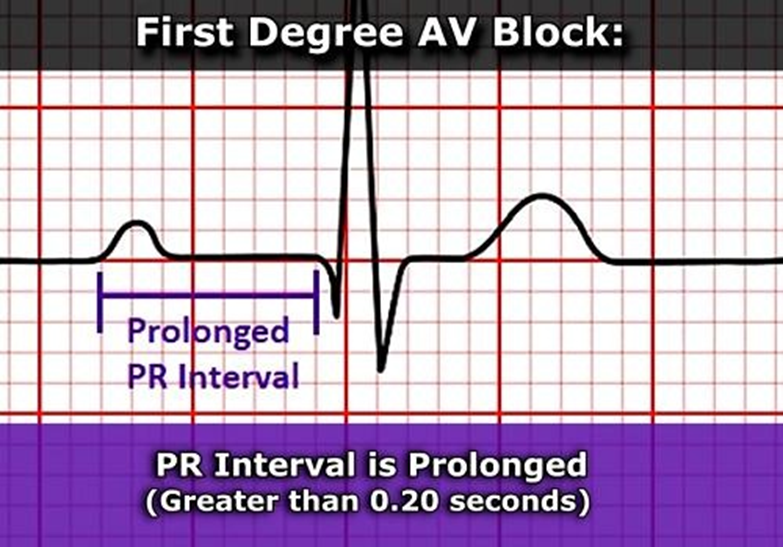
A nurse is reviewing cardiac rhythms and heart blocks for a critical care course. The nurse is aware that which of the following describes first degree heart block?
A. The PR interval gets longer then drops.
This describes a second-degree heart block, specifically Mobitz Type I (Wenckebach).
B. PR interval greater than 0.20 seconds in duration
A PR interval greater than 0.20 seconds is characteristic of first-degree heart block.
C. There are absent P waves
This describes third-degree heart block, also known as complete heart block.
D. R-R is irregular
An irregular R-R interval is not specific to first-degree heart block.
Full Explanation
Rationale:
A. This describes a second-degree heart block, specifically Mobitz Type I (Wenckebach).
B. A PR interval greater than 0.20 seconds is characteristic of first-degree heart block.
C. This describes third-degree heart block, also known as complete heart block.
D. An irregular R-R interval is not specific to first-degree heart block.
A nurse is caring for a client with infective endocarditis with involvement of the tricuspid valve. Which of the following is the appropriate education the nurse should provide to the client prior to discharge.
A. The client will need annual flu vaccine
The client may need an annual flu vaccine, but this is not specific to infective endocarditis.
B. Update Covid 19 vaccination
Updating the Covid-19 vaccination is important, but this is not specific to infective endocarditis.
C. You will require antibiotics before dental work.
The client will require antibiotics before dental work to prevent the spread of bacteria from the mouth to the heart.
D. Avoid sick contacts
Avoiding sick contacts is important for general health but is not specific to infective endocarditis.
Full Explanation
Rationale:
A. The client may need an annual flu vaccine, but this is not specific to infective endocarditis.
B. Updating the Covid-19 vaccination is important, but this is not specific to infective endocarditis.
C. The client will require antibiotics before dental work to prevent the spread of bacteria from the mouth to the heart.
D. Avoiding sick contacts is important for general health but is not specific to infective endocarditis.
A nurse is providing discharge instructions for a client diagnosed with congestive heart failure. Which of the following client statements indicates to the nurse that the teaching was effective?
A. "I will take my diuretic before sleep and drink fluids during the day."
Taking a diuretic before sleep and drinking fluids during the day is important but does not specifically address sodium intake.
B. "I will read food labels and limit my sodium to 4 grams per day."
This statement indicates an understanding of the importance of limiting sodium intake, which is crucial in managing congestive heart failure.
C. "I plan to pace my activities to avoid fatigue."
Pacing activities is important but is not specific to sodium intake.
D. "I should use naproxen to manage discomfort."
Naproxen is not typically used to manage discomfort in congestive heart failure.
Full Explanation
Rationale:
A. Taking a diuretic before sleep and drinking fluids during the day is important but does not specifically address sodium intake.
B. This statement indicates an understanding of the importance of limiting sodium intake, which is crucial in managing congestive heart failure.
C. Pacing activities is important but is not specific to sodium intake.
D. Naproxen is not typically used to manage discomfort in congestive heart failure.