
Nursing practice questions with comprehensive rationales
NurseDive Free Nursing Practice Question
A. Ototoxicity
Ototoxicity is not a severe reaction to propranolol, but it may occur with some other medications, such as aminoglycosides, loop diuretics, or salicylates. Ototoxicity may damage the inner ear or the auditory nerve and cause hearing loss, tinnitus, or vertigo. The nurse should assess the client's medication history and monitor the client's hearing function.
B. Hypokalemia
Hypokalemia is not a severe reaction to propranolol, but it may occur with some other medications, such as thiazide diuretics, corticosteroids, or insulin. Hypokalemia may cause muscle weakness, cramps, arrhythmias, or cardiac arrest. The nurse should advise the client to eat foods rich in potassium, such as bananas, oranges, or potatoes, and to have regular blood tests to check the electrolyte levels.
C. Tachycardia
Tachycardia is not a severe reaction to propranolol, but it may be a sign of overdose, withdrawal, or rebound effect. Propranolol is a beta-blocker that lowers the heart rate and blood pressure by blocking the effects of epinephrine and norepinephrine. Propranolol may cause bradycardia, not tachycardia, as a side effect. The nurse should monitor the client's vital signs and advise the client to take the medication as prescribed and not to stop it abruptly.
D. Postural hypotension
Postural hypotension is a severe reaction to propranolol, as it may cause dizziness, fainting, or falls. Postural hypotension occurs when the blood pressure drops significantly when the client changes position, such as from lying to sitting or standing. Propranolol may cause postural hypotension by reducing the vascular tone and the cardiac output. The nurse should instruct the client to change position slowly and to report any symptoms of postural hypotension to the provider.
This question is an excerpt from Nurse Dive's nursing test bank - Ati Pharmacology Proctored Exam 2. Take the full exam now
Full Explanation
Choice A reason: Ototoxicity is not a severe reaction to propranolol, but it may occur with some other medications, such as aminoglycosides, loop diuretics, or salicylates. Ototoxicity may damage the inner ear or the auditory nerve and cause hearing loss, tinnitus, or vertigo. The nurse should assess the client's medication history and monitor the client's hearing function.
Choice B reason: Hypokalemia is not a severe reaction to propranolol, but it may occur with some other medications, such as thiazide diuretics, corticosteroids, or insulin. Hypokalemia may cause muscle weakness, cramps, arrhythmias, or cardiac arrest. The nurse should advise the client to eat foods rich in potassium, such as bananas, oranges, or potatoes, and to have regular blood tests to check the electrolyte levels.
Choice C reason: Tachycardia is not a severe reaction to propranolol, but it may be a sign of overdose, withdrawal, or rebound effect. Propranolol is a beta-blocker that lowers the heart rate and blood pressure by blocking the effects of epinephrine and norepinephrine. Propranolol may cause bradycardia, not tachycardia, as a side effect. The nurse should monitor the client's vital signs and advise the client to take the medication as prescribed and not to stop it abruptly.
Choice D reason: Postural hypotension is a severe reaction to propranolol, as it may cause dizziness, fainting, or falls. Postural hypotension occurs when the blood pressure drops significantly when the client changes position, such as from lying to sitting or standing. Propranolol may cause postural hypotension by reducing the vascular tone and the cardiac output. The nurse should instruct the client to change position slowly and to report any symptoms of postural hypotension to the provider.
Similar Questions
A nurse is reviewing laboratory results of a client who has atrial fibrillation and is taking warfarin. For which of the following results should the nurse notify the provider?
A. Platelets 190,000/mm3
Platelets 190,000/mm3 is within the normal range of 150,000 to 450,000/mm3. This result does not indicate a bleeding risk or a need to adjust the warfarin dose.
B. Hct 44%
Hct 44% is within the normal range of 37% to 47% for females and 42% to 52% for males. This result does not indicate anemia or polycythemia, which could affect the warfarin therapy.
C. PT 45 seconds
PT 45 seconds is above the normal range of 11 to 13.5 seconds. This result indicates that the blood is taking too long to clot, which increases the risk of bleeding. The nurse should notify the provider and expect a decrease in the warfarin dose.
D. Hgb 16 g/dL
Hgb 16 g/dL is within the normal range of 12 to 16 g/dL for females and 14 to 18 g/dL for males. This result does not indicate anemia or polycythemia, which could affect the warfarin therapy.
Full Explanation
Choice A reason: Platelets 190,000/mm3 is within the normal range of 150,000 to 450,000/mm3. This result does not indicate a bleeding risk or a need to adjust the warfarin dose.
Choice B reason: Hct 44% is within the normal range of 37% to 47% for females and 42% to 52% for males. This result does not indicate anemia or polycythemia, which could affect the warfarin therapy.
Choice C reason: PT 45 seconds is above the normal range of 11 to 13.5 seconds. This result indicates that the blood is taking too long to clot, which increases the risk of bleeding. The nurse should notify the provider and expect a decrease in the warfarin dose.
Choice D reason: Hgb 16 g/dL is within the normal range of 12 to 16 g/dL for females and 14 to 18 g/dL for males. This result does not indicate anemia or polycythemia, which could affect the warfarin therapy.
A nurse is caring for a client who is receiving heparin by continuous IV infusion. Which of the following medications should the nurse plan to administer in the event of an overdose?
A. Vitamin K
Vitamin K is the antidote for warfarin, not heparin. Vitamin K reverses the effects of warfarin by increasing the synthesis of clotting factors in the liver.
B. Glucagon
Glucagon is the antidote for insulin, not heparin. Glucagon increases the blood glucose level by stimulating the breakdown of glycogen in the liver.
C. Protamine
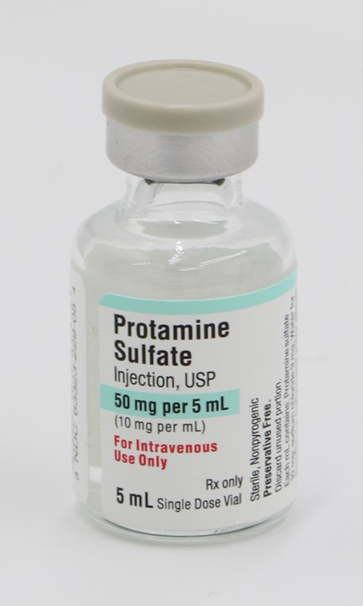
Protamine is the antidote for heparin, not vitamin K or glucagon. Protamine neutralizes the effects of heparin by binding to it and forming a stable complex.
D. Iron
Iron is not an antidote for any anticoagulant. Iron is a mineral that is essential for the production of hemoglobin and red blood cells.
Full Explanation
Choice A reason: Vitamin K is the antidote for warfarin, not heparin. Vitamin K reverses the effects of warfarin by increasing the synthesis of clotting factors in the liver.
Choice B reason: Glucagon is the antidote for insulin, not heparin. Glucagon increases the blood glucose level by stimulating the breakdown of glycogen in the liver.
Choice C reason: Protamine is the antidote for heparin, not vitamin K or glucagon. Protamine neutralizes the effects of heparin by binding to it and forming a stable complex.
Choice D reason: Iron is not an antidote for any anticoagulant. Iron is a mineral that is essential for the production of hemoglobin and red blood cells.
A nurse is caring for a client who has hypertension and asks the nurse about a prescription for propranolol. The nurse should inform the client that this medication is contraindicated in clients who have a history of which of the following conditions?
A. Migraines
Migraines are not a contraindication for propranolol. In fact, propranolol is used as a prophylactic treatment for migraines, as it reduces the frequency and severity of migraine attacks.
B. Glaucoma
Glaucoma is not a contraindication for propranolol. Propranolol does not affect the intraocular pressure or the drainage of aqueous humor in the eye.
C. Asthma
Asthma is a contraindication for propranolol. Propranolol is a nonselective beta-blocker, which means it blocks both beta-1 and beta-2 receptors in the body. Beta-2 receptors are found in the bronchial smooth muscle, and when they are blocked, they cause bronchoconstriction and increased airway resistance. This can worsen the symptoms of asthma and cause a life-threatening asthma attack.
D. Depression
Depression is not a contraindication for propranolol. Propranolol does not cause depression, although it may cause some side effects such as fatigue, insomnia, and sexual dysfunction. However, these side effects are usually mild and reversible.
Full Explanation
Choice A reason: Migraines are not a contraindication for propranolol. In fact, propranolol is used as a prophylactic treatment for migraines, as it reduces the frequency and severity of migraine attacks.
Choice B reason: Glaucoma is not a contraindication for propranolol. Propranolol does not affect the intraocular pressure or the drainage of aqueous humor in the eye.
Choice C reason: Asthma is a contraindication for propranolol. Propranolol is a nonselective beta-blocker, which means it blocks both beta-1 and beta-2 receptors in the body. Beta-2 receptors are found in the bronchial smooth muscle, and when they are blocked, they cause bronchoconstriction and increased airway resistance. This can worsen the symptoms of asthma and cause a life-threatening asthma attack.
Choice D reason: Depression is not a contraindication for propranolol. Propranolol does not cause depression, although it may cause some side effects such as fatigue, insomnia, and sexual dysfunction. However, these side effects are usually mild and reversible.