
Nursing practice questions with comprehensive rationales
NurseDive Free Nursing Practice Question
A nurse is caring for a client who has a prescription for levothyroxine.
Which of the following laboratory tests should the nurse monitor?
A. Serum potassium
Should not be monitored because they are not directly affected by levothyroxine. However, imbalances in electrolytes can occur in some individuals with thyroid disorders. Electrolyte levels may be monitored, but it is not the primary focus of monitoring for levothyroxine therapy.
B. Triiodothyronine
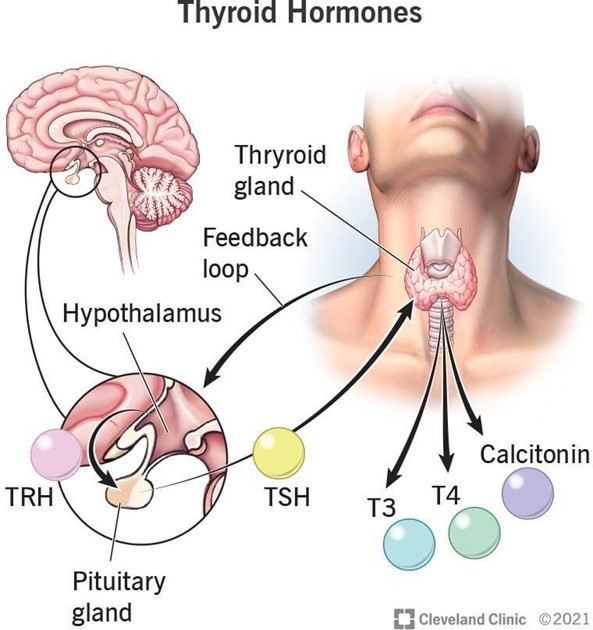
Levothyroxine is a synthetic form of the thyroid hormone thyroxine (T4). It is converted to triiodothyronine (T3), the active form of the thyroid hormone, in the body. Monitoring the levels of triiodothyronine (T3) can help assess the effectiveness of levothyroxine therapy and ensure that the client's thyroid hormone levels are within the desired therapeutic range.
C. Blood urea nitrogen
Should not be monitored because it is a test used to assess kidney function and is not directly related to monitoring levothyroxine therapy.
D. Prothrombin time
Should not be monitored because it is a test used to evaluate the clotting function of the blood and is not specifically related to monitoring levothyroxine therapy.
This question is an excerpt from Nurse Dive's nursing test bank - ATI PN Comprehensive Predictor 2023 - Proctored Exam 1. Take the full exam now
Full Explanation
Explanation B.Triiodothyronine
Levothyroxine is a synthetic form of the thyroid hormone thyroxine (T4). It is converted to triiodothyronine (T3), the active form of the thyroid hormone, in the body. Monitoring the levels of triiodothyronine (T3) can help assess the effectiveness of levothyroxine therapy and ensure that the client's thyroid hormone levels are within the desired therapeutic range.
Serum potassium levels in (option A) should not be monitored because they are not directly affected by levothyroxine. However, imbalances in electrolytes can occur in some individuals with thyroid disorders. Electrolyte levels may be monitored, but it is not the primary focus of monitoring for levothyroxine therapy.
Blood urea nitrogen (BUN) in (option C) should not be monitored because it is a test used to assess kidney function and is not directly related to monitoring levothyroxine therapy.
Prothrombin time (PT) in (option D) should not be monitored because it is a test used to evaluate the clotting function of the blood and is not specifically related to monitoring levothyroxine therapy.
Similar Questions
A nurse is assisting a client who has cancer to select high-protein foods.
Which of the following foods should the nurse recommend as the highest source of protein?
A. 8 oz chopped hard-boiled egg
Eggs are considered a complete protein source, meaning they contain all essential amino acids that the body needs. They are an excellent source of high-quality protein and provide essential nutrients. Chopped hard-boiled eggs, in particular, can be easily added to salads, sandwiches, or consumed on their own.
B. 8 oz brown rice
Brown rice is a healthy carbohydrate source, it is not a significant source of protein.
C. 8 oz fruit yogurt
Fruit yogurt may contain some protein, but the protein content is generally lower compared to other sources such as eggs.
D. 8 oz raw spinach
Spinach is a nutrient-rich vegetable, it is not a significant source of protein.
Full Explanation
Explanation
A.8 oz chopped hard-boiled egg
Eggs are considered a complete protein source, meaning they contain all essential amino acids that the body needs. They are an excellent source of high-quality protein and provide essential nutrients. Chopped hard-boiled eggs, in particular, can be easily added to salads, sandwiches, or consumed on their own.
8 oz brown rice in (option B) is incorrect because brown rice is a healthy carbohydrate source, it is not a significant source of protein.
8 oz fruit yogurt in (option C) is incorrect because fruit yogurt may contain some protein, but the protein content is generally lower compared to other sources such as eggs.
8 oz raw spinach in (option D) is incorrect because spinach is a nutrient-rich vegetable, it is not a significant source of protein.
A nurse is caring for a client who is 1 day postoperative following a total hip arthroplasty and is receiving heparin subcutaneously.
Which of the following adverse effects of the medication should the nurse report to the provider?
A. Weight gain
Is not a common adverse effect of heparin. Weight gain can be caused by various factors, but it is not directly related to heparin administration.
B. Bradycardia
Is not a common adverse effect of heparin. Bradycardia can be caused by other factors unrelated to heparin therapy and should be evaluated separately.
C. Epistaxis
Heparin is an anticoagulant medication used to prevent blood clot formation. One of the potential adverse effects of heparin therapy is bleeding. Epistaxis, or nosebleeds, can be a sign of abnormal bleeding and should be reported to the provider for further evaluation and adjustment of the treatment plan if necessary.
D. Anorexia
Is not typically associated with heparin therapy. Anorexia can have various causes, but it is not directly linked to heparin administration.
Full Explanation
Explanation
C. Epistaxis
Heparin is an anticoagulant medication used to prevent blood clot formation. One of the potential adverse effects of heparin therapy is bleeding. Epistaxis, or nosebleeds, can be a sign of abnormal bleeding and should be reported to the provider for further evaluation and adjustment of the treatment plan if necessary.
Weight gain in (option A) is not a common adverse effect of heparin. Weight gain can be caused by various factors, but it is not directly related to heparin administration.
Bradycardia (slow heart rate) in (option B) is not a common adverse effect of heparin. Bradycardia can be caused by other factors unrelated to heparin therapy and should be evaluated separately.
Anorexia (loss of appetite) in (option D) is not typically associated with heparin therapy. Anorexia can have various causes, but it is not directly linked to heparin administration.
Therefore, the nurse should report the occurrence of epistaxis (option C) to the healthcare provider as a potential adverse effect of heparin therapy in the client.
A nurse is reinforcing teaching with the parents of a toddler who has a new diagnosis of asthma and a prescription for montelukast.
Which of the following instructions should the nurse include in the teaching?
A. Administer the medication to the toddler each evening.
Montelukast is a long-term control medication used for the management of asthma in both children and adults. It is typically taken once daily in the evening to provide continuous asthma control. Consistency in taking the medication is important to maintain its effectiveness.
B. Provide an additional dose of the medication prior to physical activity.
Is not a standard recommendation for montelukast use. Montelukast is not a rescue medication and does not provide immediate relief for asthma symptoms triggered by physical activity. In such cases, a short-acting bronchodilator medication, such as albuterol, is commonly used prior to physical activity.
C. Mix the medication in juice prior to administration.
Is not recommended unless specifically instructed by the healthcare provider or indicated in the medication instructions. Montelukast is available in various formulations, including chewable tablets and granules, which can be taken directly or mixed with certain foods or liquids. However, the specific instructions should be followed as provided by the healthcare provider or medication label.
D. Administer the medication when the toddler has an acute asthma attack.
Has an acute asthma attack is not the intended use of montelukast. Montelukast is a long-term control medication aimed at preventing asthma symptoms and maintaining asthma control over time. For acute asthma attacks, a short-acting bronchodilator medication is typically used.
Full Explanation
Explanation
A. Administer the medication to the toddler each evening.
Montelukast is a long-term control medication used for the management of asthma in both children and adults. It is typically taken once daily in the evening to provide continuous asthma control. Consistency in taking the medication is important to maintain its effectiveness.
Providing an additional dose of the medication prior to physical activity in (option B) is not a standard recommendation for montelukast use. Montelukast is not a rescue medication and does not provide immediate relief for asthma symptoms triggered by physical activity. In such cases, a short-acting bronchodilator medication, such as albuterol, is commonly used prior to physical activity.
Mixing the medication in juice prior to administration in (option C) is not recommended unless specifically instructed by the healthcare provider or indicated in the medication instructions.
Montelukast is available in various formulations, including chewable tablets and granules, which can be taken directly or mixed with certain foods or liquids. However, the specific instructions should be followed as provided by the healthcare provider or medication label.
Administering the medication when the toddler in (option D) has an acute asthma attack is not the intended use of montelukast. Montelukast is a long-term control medication aimed at preventing asthma symptoms and maintaining asthma control over time. For acute asthma attacks, a short-acting bronchodilator medication is typically used.
Therefore, the nurse should instruct the parents to administer the medication to the toddler each evening (option A) as part of the routine, long-term management of asthma.