
Nursing practice questions with comprehensive rationales
NurseDive Free Nursing Practice Question
A nurse is caring for a client who has a tracheostomy.
Which of the following actions should the nurse take?
A. Secure the tracheostomy ties to allow one finger to fit snugly underneath.
This is important to ensure that the tracheostomy tube is secure and in place.
B. Cleanse the skin around the stoma with normal saline.
Choice B is wrong because normal saline is not typically used to cleanse the skin around the stoma.
C. Soak the outer cannula in warm, soapy tap water.
Choice C is wrong because soaking the outer cannula in warm, soapy tap water is not a recommended method of cleaning.
D. Use a cotton tip applicator to clean inside the inner cannula.
Choice D is wrong because a cotton tip applicator should not be used to clean inside the inner cannula.
This question is an excerpt from Nurse Dive's nursing test bank - ATI RN Fundamentals 2019 with NGN Proctored Exam. Take the full exam now
Full Explanation
Secure the tracheostomy ties to allow one finger to fit snugly underneath. This is important to ensure that the tracheostomy tube is secure and in place.
Choice B is wrong because normal saline is not typically used to cleanse the skin around the stoma.
Choice C is wrong because soaking the outer cannula in warm, soapy tap water is not a recommended method of cleaning.
Choice D is wrong because a cotton tip applicator should not be used to clean inside the inner cannula.
Similar Questions
A nurse is providing teaching for a client who is scheduled for an allogeneic stem cell transplant.
Which of the following information should the nurse include?
A. "Your visitors will need to wear protective gowns."
Visitors wearing protective gowns is important to prevent infection, but it is not the primary teaching point for the patient themselves.
B. "You will be placed in a semi-private room."
Patients undergoing allogeneic stem cell transplants are typically placed in private rooms to minimize the risk of infection, not semi-private rooms.
C. "You will need to wear a mask when outside of your room."
Wearing a mask when outside the room is crucial for the patient to protect themselves from infections due to their compromised immune system during the transplant process.
D. "You will be in a negative-airflow room to keep the air cleaner.".
Negative-airflow rooms are used to prevent the spread of airborne infections from the patient to others, not necessarily to keep the air cleaner for the patient
Full Explanation
The correct answer is choice c. “You will need to wear a mask when outside of your room.”
Choice A rationale:
Visitors wearing protective gowns is important to prevent infection, but it is not the primary teaching point for the patient themselves.
Choice B rationale:
Patients undergoing allogeneic stem cell transplants are typically placed in private rooms to minimize the risk of infection, not semi-private rooms.
Choice C rationale:
Wearing a mask when outside the room is crucial for the patient to protect themselves from infections due to their compromised immune system during the transplant process.
Choice D rationale:
Negative-airflow rooms are used to prevent the spread of airborne infections from the patient to others, not necessarily to keep the air cleaner for the patient.
A nurse is providing teaching to a client who is at risk for thrombus formation.
Which of the following statements made by the client indicates an understanding of the teaching?
A. "I will keep my legs crossed while sitting."
Choice A is wrong because crossing the legs while sitting can impede blood flow and increase the risk of thrombus formation.
B. "I will perform leg exercises once every 4 hours while I am awake."
Choice B is wrong because leg exercises should be performed more frequently than once every 4 hours while awake.
C. "I should limit the time that I spend sitting in a chair."
“I should limit the time that I spend sitting in a chair.” This is important because sitting for long periods of time can increase the risk of thrombus formation.
D. "I should massage my legs when they hurt.".
Choice D is wrong because massaging the legs when they hurt can dislodge a thrombus and cause it to travel to other parts of the body.
Full Explanation
“I should limit the time that I spend sitting in a chair.” This is important because sitting for long periods of time can increase the risk of thrombus formation.
Choice A is wrong because crossing the legs while sitting can impede blood flow and increase the risk of thrombus formation.
Choice B is wrong because leg exercises should be performed more frequently than once every 4 hours while awake.
Choice D is wrong because massaging the legs when they hurt can dislodge a thrombus and cause it to travel to other parts of the body.
A nurse is planning care for a client who is concerned about her tobacco smoking habits and is in the contemplation stage of health behavior change.
Which of the following actions should the nurse plan to take during this stage?
A. Develop a plan for the client to integrate the change into her lifestyle.
Choice A is wrong because developing a plan for the client to integrate the change into her lifestyle is more appropriate for the preparation stage.
B. Recommend small changes for the client to make to change her behavior over time.
Choice B is wrong because recommending small changes for the client to make to change her behavior over time is more appropriate for the action stage.
C. Assist the client in setting goals to make the change.
Choice C is wrong because assisting the client in setting goals to make the change is more appropriate for the preparation stage.
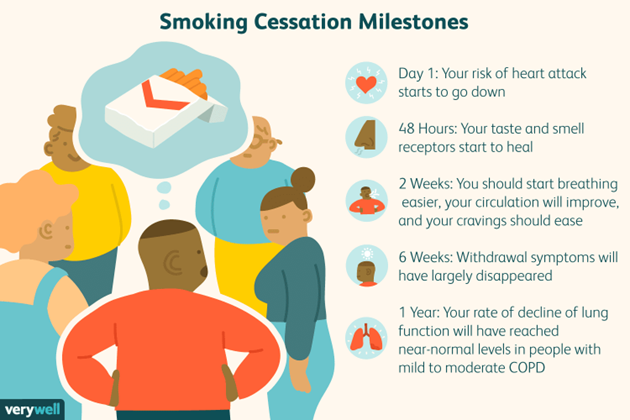
D. Present information about the benefits of quitting smoking.
During the contemplation stage of health behavior change, the client is thinking about change and becoming motivated to get started. The nurse should present information about the benefits of quitting smoking to help the client assess the benefits of change.
Full Explanation
During the contemplation stage of health behavior change, the client is thinking about change and becoming motivated to get started.
The nurse should present information about the benefits of quitting smoking to help the client assess the benefits of change.
Choice A is not correct because developing a plan for the client to integrate the change into her lifestyle is more appropriate for the preparation stage.
Choice B is not correct because recommending small changes for the client to make to change her behavior over time is more appropriate for the action stage.
Choice C is not correct because assisting the client in setting goals to make the change is more appropriate for the preparation stage.