Nursing practice questions with comprehensive rationales
NurseDive Free Nursing Practice Question
A nurse is caring for a client who has been placed on contact isolation precautions. Which of the following interventions should the nurse implement?
A. Inform visitors to remain at least 3 feet away from the client.
While maintaining a distance of 3 feet can be helpful in reducing the transmission of some infections, it is not the primary measure for contact isolation precautions. Contact precautions are specifically designed to prevent the spread of pathogens that are transmitted through direct or indirect contact with the patient or their environment. A distance of 3 feet might not be sufficient to prevent contact with contaminated surfaces or objects, especially in a healthcare setting where close contact is often necessary for providing care. Therefore, while informing visitors to maintain some distance is a good practice, it is not the most crucial intervention for contact isolation.
B. Apply sterile gloves when entering the client's room.
Sterile gloves are not routinely required for contact isolation precautions. They are primarily used for sterile procedures or when there is a risk of exposure to blood or body fluids. For contact isolation, standard clean gloves are usually sufficient to protect against transmission via direct contact.
C. Leave all equipment that is used routinely in the client's room
Leaving equipment that is used routinely in the client's room is a crucial part of contact isolation precautions. This practice prevents the spread of infection by minimizing the movement of potentially contaminated items outside of the isolation room. Equipment like stethoscopes, blood pressure cuffs, and thermometers should be dedicated to the client's use and not shared with other patients.
D. Place the client in a negative-pressure airflow room
Negative-pressure airflow rooms are used for airborne isolation precautions, which are designed to prevent the spread of pathogens that can be transmitted through the air. Contact isolation does not specifically require a negative-pressure room, as the primary mode of transmission is through direct or indirect contact, not airborne particles.
This question is an excerpt from Nurse Dive's nursing test bank - VATI PN Comprehensive Predictor 2020 Proctored Exam. Take the full exam now
Full Explanation
The correct answer is Choice C.
Choice A rationale:
- While maintaining a distance of 3 feet can reduce the risk of direct contact transmission, it is not the most effective measure for contact isolation precautions.
- Contact isolation aims to prevent the spread of pathogens that can be transmitted through direct or indirect contact with the infected person or contaminated objects.
- A distance of 3 feet may not be sufficient to prevent transmission via droplets or fomites (inanimate objects that can harbor infectious agents).
Choice B rationale:
- Sterile gloves are not routinely required for contact isolation precautions.
- They are primarily used for sterile procedures or when there is a risk of exposure to blood or body fluids.
- For contact isolation, standard clean gloves are usually sufficient to protect against transmission via direct contact.
Choice C rationale:
- Leaving equipment that is used routinely in the client's room is a crucial part of contact isolation precautions.
- This practice prevents the spread of infection by minimizing the movement of potentially contaminated items outside of the isolation room.
- Equipment like stethoscopes, blood pressure cuffs, and thermometers should be dedicated to the client's use and not shared with other patients.
Choice D rationale:
- Negative-pressure airflow rooms are used for airborne isolation precautions, which are designed to prevent the spread of pathogens that can be transmitted through the air.
- Contact isolation does not specifically require a negative-pressure room, as the primary mode of transmission is through direct or indirect contact, not airborne particles.
Similar Questions
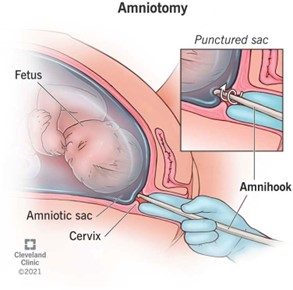
A nurse is assisting with the care of a client who is in active labor. Which of the following data is the priority
for the nurse to collect following an amniotomy?
A. Amniotic fluid color
Assessing the color of the amniotic fluid is important, but it is not the highest priority.
B. The client's temperature
Monitoring the client's temperature is important, but it is not the highest priority.
C. Frequency of contractions
Assessing the frequency of contractions is important, but it is not the highest priority.
D. Fetal heart rate
The priority data for the nurse to collect following an amniotomy is the fetal heart rate. This is an important nursing intervention to assess fetal well-being and identify any potential complications.
Full Explanation
The priority data for the nurse to collect following an amniotomy is the fetal heart rate. This is an important nursing intervention to assess fetal well-being and identify any potential complications.
a) Assessing the color of the amniotic fluid is important, but it is not the highest priority.
b) Monitoring the client's temperature is important, but it is not the highest priority.
c) Assessing the frequency of contractions is important, but it is not the highest priority.
A nurse is collecting data from a client who has a gastrostomy tube and is experiencing diarrhea. Which of the following factors should the nurse identify as a potential cause of the diarrhea?
A. The formula infusion rate of the feeding was too slow.
A slow formula infusion rate (option a) would not cause diarrhea.
B. The formula was given immediately following removal from the refrigerator.
Giving formula immediately following removal from the refrigerator (option b) may cause discomfort but not diarrhea.
C. The feeding tube was partially obstructed during the infusion.
A partially obstructed feeding tube (option c) would slow down the infusion rate and would not cause diarrhea.
D. The client is experiencing delayed gastric emptying.
Delayed gastric emptying can cause diarrhea in a client with a gastrostomy tube.
Full Explanation
Delayed gastric emptying can cause diarrhea in a client with a gastrostomy tube.
The other options are not likely causes of diarrhea.
a) A slow formula infusion rate (option would not cause diarrhea.
b) Giving formula immediately following removal from the refrigerator (option b) may cause discomfort but not diarrhea.
c) A partially obstructed feeding tube (option c) would slow down the infusion rate and would not cause diarrhea.
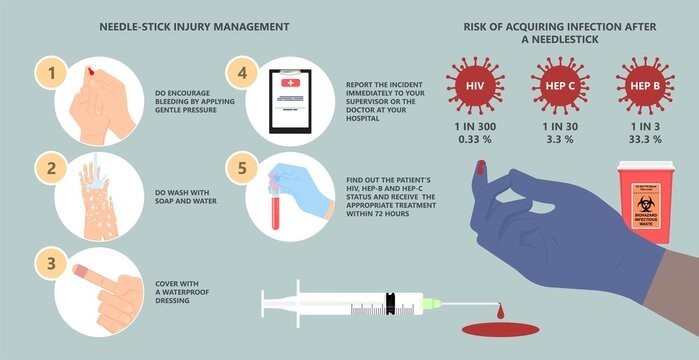
A nurse administered an IM injection to a client. Which of the following actions should the nurse take to reduce the risk of a needlestick injury?
A. Place a cap holder securely on the used needle before disposal
Place a cap holder securely on the used needle before disposal: Cap holders are not recommended for securing used needles before disposal. They may not provide adequate protection against needlestick injuries and can potentially increase the risk of accidental needlesticks when atempting to secure the cap holder.
B. Recap the needle for disposal later.
Recap the needle for disposal later: Recapping the needle increases the risk of a needlestick injury. It is generally not recommended to recap needles after use, as it poses a greater risk of accidental puncture.
C. Dispose of the used needle immediately in a sharps container.
The nurse should dispose of the used needle immediately in a sharps container to reduce the risk of a needlestick injury. Sharps containers are specifically designed for the safe disposal of needles and other sharp objects. By placing the used needle directly into a sharps container, the nurse eliminates the need for handling or manipulating the needle further, reducing the risk of accidental needlestick injuries.
D. Detach the used needle and dispose of it promptly.
. Detach the used needle and dispose of it promptly: Detaching the needle from the syringe before disposal is not recommended, as it increases the risk of a needlestick injury. It is safer to dispose of the needle and syringe as a unit in a sharps container to minimize the risk of accidental puncture.
Full Explanation
c. Dispose of the used needle immediately in a sharps container.
The nurse should dispose of the used needle immediately in a sharps container to reduce the risk of a needlestick injury. Sharps containers are specifically designed for the safe disposal of needles and other sharp objects. By placing the used needle directly into a sharps container, the nurse eliminates the need for handling or manipulating the needle further, reducing the risk of accidental needlestick injuries.
Explanation for the other options:
a. Place a cap holder securely on the used needle before disposal: Cap holders are not recommended for securing used needles before disposal. They may not provide adequate protection against needlestick injuries and can potentially increase the risk of accidental needlesticks when atempting to secure the cap holder.
b. Recap the needle for disposal later: Recapping the needle increases the risk of a needlestick injury. It is generally not recommended to recap needles after use, as it poses a greater risk of accidental puncture.
d. Detach the used needle and dispose of it promptly: Detaching the needle from the syringe before disposal is not recommended, as it increases the risk of a needlestick injury. It is safer to dispose of the needle and syringe as a unit in a sharps container to minimize the risk of accidental puncture.