
Nursing practice questions with comprehensive rationales
NurseDive Free Nursing Practice Question
A nurse is caring for a client who has dementia.
Which of the following actions should the nurse take to promote communication?
A. Face the client at eye level when communicating.
This is because eye contact helps to establish rapport and trust with the client who has dementia and shows respect and attention. Facing the client at eye level also reduces distractions and background noise that might interfere with communication.
B. Offer correction of incorrect client statements.
Choice B is wrong because offering correction of incorrect client statements can increase confusion, frustration, and agitation in the client who has dementia. Instead of correcting the client, the nurse should acknowledge their feelings and try to understand their perspective.
C. Reorient the client to date and time with each encounter.
Choice C is wrong because reorienting the client to date and time with each encounter can be stressful and ineffective for the client who has dementia. Reorientation may work in the early stages of dementia, but as the disease progresses, the client may lose their ability to retain new information and may become more disoriented. Instead of reorienting the client, the nurse should use orienting names or labels whenever possible, such as “Your son, Jack” .
D. Avoid using gestures when communicating with the client.
Choice D is wrong because avoiding using gestures when communicating with the client who has dementia can limit the nurse’s ability to convey meaning and emotion. Gestures can help to supplement verbal communication and provide cues for the client who has difficulty understanding words. However, the nurse should avoid using gestures that might be misinterpreted or threatening to the client, such as pointing or waving .
This question is an excerpt from Nurse Dive's nursing test bank - ATI PN Capstone Proctored Comprehensive Assessment 2020 B. Take the full exam now
Full Explanation
Face the client at eye level when communicating.

This is because eye contact helps to establish rapport and trust with the client who has dementia and shows respect and attention. Facing the client at eye level also reduces distractions and background noise that might interfere with communication.
Choice B is wrong because offering correction of incorrect client statements can increase confusion, frustration, and agitation in the client who has dementia. Instead of correcting the client, the nurse should acknowledge their feelings and try to understand their perspective.
Choice C is wrong because reorienting the client to date and time with each encounter can be stressful and ineffective for the client who has dementia. Reorientation may work in the early stages of dementia, but as the disease progresses, the client may lose their ability to retain new information and may become more disoriented. Instead of reorienting the client, the nurse should use orienting names or labels whenever possible, such as “Your son, Jack” .
Choice D is wrong because avoiding using gestures when communicating with the client who has dementia can limit the nurse’s ability to convey meaning and emotion. Gestures can help to supplement verbal communication and provide cues for the client who has difficulty understanding words. However, the nurse should avoid using gestures that might be misinterpreted or threatening to the client, such as pointing or waving .
Similar Questions
A nurse is contributing to the plan of care for a client who is postoperative following a below-the-knee amputation.
Which of the following strategies should the nurse include to help the client progress toward acceptance of this body image alteration?
A. Suggest that the client wear facility clothing until the prosthesis fitting.
Choice A is wrong because suggesting that the client wear facility clothing until the prosthesis fitting can delay the client’s acceptance of the body image alteration and increase the risk of infection.
B. Encourage the client to visit with someone who has had an amputation.
This strategy can help the client cope with the loss of a body part and learn from the experience of others who have gone through a similar situation.
C. Discourage the client from touching the residual limb for the first week.
Choice C is wrong because discouraging the client from touching the residual limb for the first week can interfere with the healing process and prevent the client from becoming familiar with the new body part.
D. Reassure the client that the rehabilitation program is optional.
Choice D is wrong because reassuring the client that the rehabilitation program is optional can discourage the client from participating in physical therapy and hinder the recovery and adaptation.
Full Explanation
Encourage the client to visit with someone who has had an amputation.

This strategy can help the client cope with the loss of a body part and learn from the experience of others who have gone through a similar situation.
Choice A is wrong because suggesting that the client wear facility clothing until the prosthesis fitting can delay the client’s acceptance of the body image alteration and increase the risk of infection.
Choice C is wrong because discouraging the client from touching the residual limb for the first week can interfere with the healing process and prevent the client from becoming familiar with the new body part.
Choice D is wrong because reassuring the client that the rehabilitation program is optional can discourage the client from participating in physical therapy and hinder the recovery and adaptation.
A nurse in a provider’s office is reinforcing teaching with a client about performing testicular self-examination.
Which of the following instructions should the nurse include?
A. “Perform the self-examination every 3 months.”
Choice A is wrong because you should perform the self-examination every month, not every 3 months. This will help you notice any changes over time.
B. “Examine your testicles after a warm shower.”
This is because a warm shower will relax the scrotum and the muscles holding the testicles, making an exam easier. You should gently roll the scrotum with your fingers to feel the surface of each testicle and check for any lumps, bumps, swelling, hardness or other changes.
C. “Palpate both testicles firmly with your fingertips.”
Choice C is wrong because you should not palpate both testicles firmly with your fingertips. You should use a gentle touch and avoid squeezing or pressing too hard.
D. “Apply a cool compress to the scrotum prior to examination.”
Choice D is wrong because you should not apply a cool compress to the scrotum prior to examination. This will make the scrotum contract and tighten, making an exam more difficult.
Full Explanation
Examine your testicles after a warm shower.
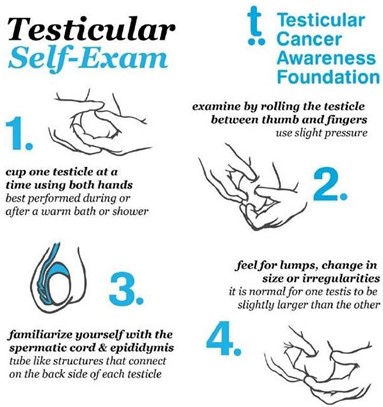
This is because a warm shower will relax the scrotum and the muscles holding the testicles, making an exam easier. You should gently roll the scrotum with your fingers to feel the surface of each testicle and check for any lumps, bumps, swelling, hardness or other changes.
Choice A is wrong because you should perform the self-examination every month, not every 3 months.
This will help you notice any changes over time.
Choice C is wrong because you should not palpate both testicles firmly with your fingertips. You should use a gentle touch and avoid squeezing or pressing too hard.
Choice D is wrong because you should not apply a cool compress to the scrotum prior to examination. This will make the scrotum contract and tighten, making an exam more difficult.
A nurse is caring for a client who is receiving oxygen via nasal cannula at 4 L/min. Which of the following actions should the nurse take?
A. Avoid the use of humidifiers.
Choice A is wrong because humidifiers can help moisten the dry oxygen and prevent nasal dryness and bleeding. Humidifiers should be used for oxygen flow rates higher than 4 L/min.
B. Position the cannula prongs curving upward in the nose.
Choice B is wrong because the cannula prongs should be positioned curving downward in the nose, not upward. This allows for better alignment with the natural direction of airflow and reduces the risk of dislodgement.
C. Clean the cannula prongs daily.
This is because the nasal cannula can become contaminated with bacteria and mucus, which can cause infection and irritation of the nasal mucosa. Cleaning the cannula prongs daily with soap and water can prevent these complications.
D. Keep the oxygen tubing off the floor.
Choice D is wrong because keeping the oxygen tubing off the floor is not a specific action for nasal cannula use. It is a general safety measure to prevent tripping and contamination of the tubing.
Full Explanation
Clean the cannula prongs daily.
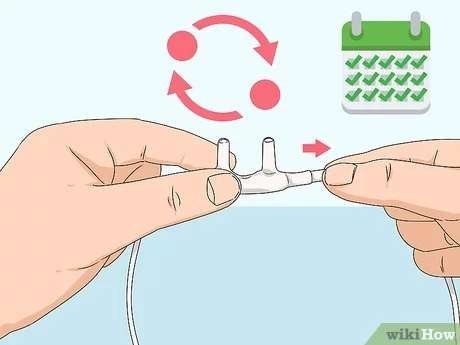
This is because the nasal cannula can become contaminated with bacteria and mucus, which can cause infection and irritation of the nasal mucosa. Cleaning the cannula prongs daily with soap and water can prevent these complications.
Choice A is wrong because humidifiers can help moisten the dry oxygen and prevent nasal dryness and bleeding. Humidifiers should be used for oxygen flow rates higher than 4 L/min.
Choice B is wrong because the cannula prongs should be positioned curving downward in the nose, not upward. This allows for better alignment with the natural direction of airflow and reduces the risk of dislodgement.
Choice D is wrong because keeping the oxygen tubing off the floor is not a specific action for nasal cannula use. It is a general safety measure to prevent tripping and contamination of the tubing.