
Nursing practice questions with comprehensive rationales
NurseDive Free Nursing Practice Question
A nurse is caring for a client who has diabetes mellitus and has been following a treatment plan for 3 months.
Which of the following laboratory results should the nurse monitor to determine long-term glycemic control?
A. Fasting blood glucose level.
Choice A is not the answer because fasting blood glucose level reflects only short-term glycemic control.
B. Glycosylated hemoglobin level.
The glycosylated hemoglobin level (also known as HbA1c or A1C) is a laboratory test that reflects average levels of blood glucose over the previous two to three months. It is the most widely used test to monitor chronic glycemic management.
C. Oral glucose tolerance test results.
Choice C is not the answer because oral glucose tolerance test results reflect only short-term glycemic control.
D. Postprandial blood glucose level.
Choice D is not the answer because postprandial blood glucose level reflects only short-term glycemic control.
This question is an excerpt from Nurse Dive's nursing test bank - ATI Adult Medical Surgical 2019 Proctored Exam. Take the full exam now
Full Explanation
The glycosylated hemoglobin level (also known as HbA1c or A1C) is a laboratory test that reflects average levels of blood glucose over the previous two to three months.
It is the most widely used test to monitor chronic glycemic management.
Choice A is not the answer because fasting blood glucose level reflects only short-term glycemic control.
Choice C is not the answer because oral glucose tolerance test results reflect only short-term glycemic control.
Choice D is not the answer because postprandial blood glucose level reflects only short-term glycemic control.
Similar Questions
A nurse is assessing a client who is preoperative and reports an allergy to bananas.
The nurse should recognize that the client is at risk for an allergic cross-reactivity to which of the following substances?
A. Latex.
A banana allergy is often connected to a latex allergy. This is because some of the proteins in the rubber trees that produce latex are known to cause allergies, and they are similar to the proteins found in some nuts and fruits, including bananas. This syndrome is known as latex-food syndrome or latex-fruit allergy.
B. Anesthetics.
Choice B is not the answer because there is no known cross-reactivity between bananas and anesthetics.
C. Povidone-iodine.
Choice C is not the answer because there is no known cross-reactivity between bananas and povidone-iodine.
D. Adhesive tape.
Choice D is not the answer because there is no known cross-reactivity between bananas and adhesive tape.
Full Explanation
A banana allergy is often connected to a latex allergy.
This is because some of the proteins in the rubber trees that produce latex are known to cause allergies, and they are similar to the proteins found in some nuts and fruits, including bananas.
This syndrome is known as latex-food syndrome or latex-fruit allergy.
Choice B is not the answer because there is no known cross-reactivity between bananas and anesthetics.
Choice C is not the answer because there is no known cross-reactivity between bananas and povidone-iodine.
Choice D is not the answer because there is no known cross-reactivity between bananas and adhesive tape.
A nurse is caring for a client who has hypotension, cool and clammy skin, tachycardia, and tachypnea.
In which of the following positions should the nurse place the client?
A. High-Fowler's.
Choice A is not the answer because the Reverse Trendelenburg position does not help improve blood flow to vital organs.
B. Side-lying.
Choice B is not the answer because the side-lying position does not help improve blood flow to vital organs.
C. Feet elevated.
The nurse should place the client in a position with their feet elevated. This position helps to increase blood flow to the vital organs and can help improve the client’s blood pressure.
D. Reverse Trendelenburg.
Choice D is not the answer because High-Fowler’s position does not help improve blood flow to vital organs.
Full Explanation
The nurse should place the client in a position with their feet elevated.
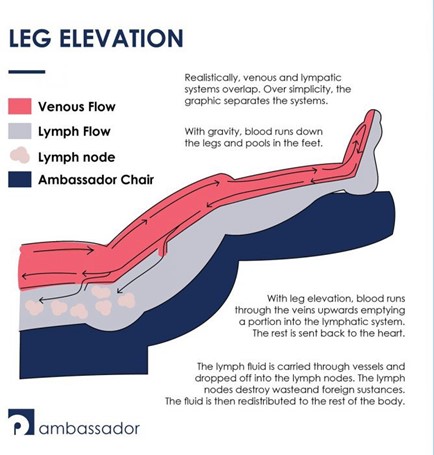
This position helps to increase blood flow to the vital organs and can help improve the client’s blood pressure.
Choice A is not the answer because the Reverse Trendelenburg position does not help improve blood flow to vital organs.
Choice B is not the answer because the side-lying position does not help improve blood flow to vital organs.
Choice D is not the answer because High-Fowler’s position does not help improve blood flow to vital organs.
A nurse is caring for a client who is scheduled for an abdominal paracentesis.
The nurse should plan to take which of the following actions?
A. Assist the client in the left lateral position during the procedure.
Choice A is incorrect because the client should be positioned sitting upright or lying in bed with the head of the bed elevated during the procedure.
B. Administer a stool softener following the procedure.
Choice B is incorrect because administering a stool softener is not necessary following an abdominal paracentesis.
C. Instruct the client to take deep breaths and hold them during the procedure.
Choice C is incorrect because the client should be instructed to exhale and hold their breath during needle insertion to help move the diaphragm upward and away from the area where the needle will be inserted.
D. Ask the client to empty his bladder prior to the procedure.
The nurse should ask the client to empty his bladder prior to the procedure. This is important because a full bladder can obstruct the area where the needle will be inserted and increase the risk of bladder injury during the procedure.
Full Explanation
The nurse should ask the client to empty his bladder prior to the procedure.
This is important because a full bladder can obstruct the area where the needle will be inserted and increase the risk of bladder injury during the procedure.
Choice A is incorrect because the client should be positioned sitting upright or lying in bed with the head of the bed elevated during the procedure.
Choice B is incorrect because administering a stool softener is not necessary following an abdominal paracentesis.
Choice C is incorrect because the client should be instructed to exhale and hold their breath during needle insertion to help move the diaphragm upward and away from the area where the needle will be inserted.