
Nursing practice questions with comprehensive rationales
NurseDive Free Nursing Practice Question
A nurse is caring for a client who has hypotension, cool and clammy skin, tachycardia, and tachypnea.
In which of the following positions should the nurse place the client?
A. High-Fowler's.
Choice A is not the answer because the Reverse Trendelenburg position does not help improve blood flow to vital organs.
B. Side-lying.
Choice B is not the answer because the side-lying position does not help improve blood flow to vital organs.
C. Feet elevated.
The nurse should place the client in a position with their feet elevated. This position helps to increase blood flow to the vital organs and can help improve the client’s blood pressure.
D. Reverse Trendelenburg.
Choice D is not the answer because High-Fowler’s position does not help improve blood flow to vital organs.
This question is an excerpt from Nurse Dive's nursing test bank - ATI Adult Medical Surgical 2019 Proctored Exam. Take the full exam now
Full Explanation
The nurse should place the client in a position with their feet elevated.
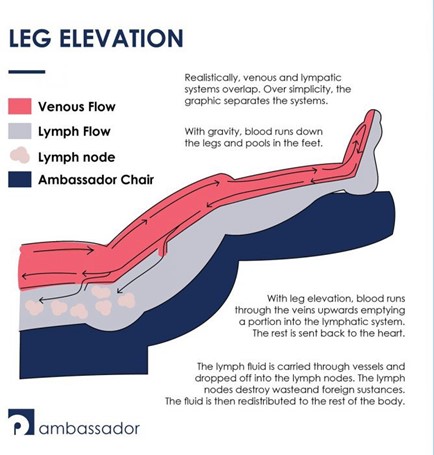
This position helps to increase blood flow to the vital organs and can help improve the client’s blood pressure.
Choice A is not the answer because the Reverse Trendelenburg position does not help improve blood flow to vital organs.
Choice B is not the answer because the side-lying position does not help improve blood flow to vital organs.
Choice D is not the answer because High-Fowler’s position does not help improve blood flow to vital organs.
Similar Questions
A nurse is caring for a client who is scheduled for an abdominal paracentesis.
The nurse should plan to take which of the following actions?
A. Assist the client in the left lateral position during the procedure.
Choice A is incorrect because the client should be positioned sitting upright or lying in bed with the head of the bed elevated during the procedure.
B. Administer a stool softener following the procedure.
Choice B is incorrect because administering a stool softener is not necessary following an abdominal paracentesis.
C. Instruct the client to take deep breaths and hold them during the procedure.
Choice C is incorrect because the client should be instructed to exhale and hold their breath during needle insertion to help move the diaphragm upward and away from the area where the needle will be inserted.
D. Ask the client to empty his bladder prior to the procedure.
The nurse should ask the client to empty his bladder prior to the procedure. This is important because a full bladder can obstruct the area where the needle will be inserted and increase the risk of bladder injury during the procedure.
Full Explanation
The nurse should ask the client to empty his bladder prior to the procedure.
This is important because a full bladder can obstruct the area where the needle will be inserted and increase the risk of bladder injury during the procedure.
Choice A is incorrect because the client should be positioned sitting upright or lying in bed with the head of the bed elevated during the procedure.
Choice B is incorrect because administering a stool softener is not necessary following an abdominal paracentesis.
Choice C is incorrect because the client should be instructed to exhale and hold their breath during needle insertion to help move the diaphragm upward and away from the area where the needle will be inserted.
A nurse is caring for an older adult client who has dementia.
Which of the following questions should the nurse ask to assess the client's abstract thinking?
A. "What is meant by the saying, 'Don't beat around the bush?".
Asking the client “What is meant by the saying, ‘Don’t beat around the bush?’” is a way to assess the client’s abstract thinking. Abstract thinking involves understanding concepts and ideas that are not concrete or tangible, such as interpreting figurative language or proverbs.
B. "Can you tell me the state where you were born?".
Choice B is incorrect because it assesses the client’s memory rather than their abstract thinking.
C. "Can you count backward from 100 in intervals of 7?".
Choice C is incorrect because it assesses the client’s attention and concentration rather than their abstract thinking.
D. "What do you understand about your condition?".
Choice D is incorrect because it assesses the client’s insight and understanding of their condition rather than their abstract thinking.
Full Explanation
Asking the client “What is meant by the saying, ‘Don’t beat around the bush?’” is a way to assess the client’s abstract thinking.
Abstract thinking involves understanding concepts and ideas that are not concrete or tangible, such as interpreting figurative language or proverbs.
Choice B is incorrect because it assesses the client’s memory rather than their abstract thinking.
Choice C is incorrect because it assesses the client’s attention and concentration rather than their abstract thinking.
Choice D is incorrect because it assesses the client’s insight and understanding of their condition rather than their abstract thinking.
A nurse is monitoring an older adult client who has an exacerbation of chronic lymphocytic leukemia.
The nurse notes petechiae on the client's skin.
Which of the following actions should the nurse take?
A. Implement airborne precautions.
Choice A is incorrect because airborne precautions are used to prevent the spread of infectious diseases that are transmitted through the air, and are not necessary in this situation.
B. Determine the client's blood type.
Choice B is incorrect because determining the client’s blood type is not necessary in this situation.
C. Institute bleeding precautions.
The nurse should institute bleeding precautions for the client. Petechiae are small red or purple spots on the skin caused by broken capillaries, which can be a sign of low platelet count (thrombocytopenia) and an increased risk of bleeding. Bleeding precautions include measures such as using a soft-bristled toothbrush, avoiding injections, and avoiding activities that could result in injury.
D. Avoid administering IV pain medication.
Choice D is incorrect because avoiding IV pain medication is not necessary in this situation; however, the nurse should monitor the client for signs of bleeding and bruising.
Full Explanation
The nurse should institute bleeding precautions for the client.
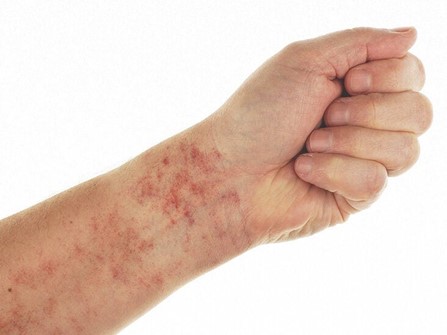
Petechiae are small red or purple spots on the skin caused by broken capillaries, which can be a sign of low platelet count (thrombocytopenia) and an increased risk of bleeding.
Bleeding precautions include measures such as using a soft-bristled toothbrush, avoiding injections, and avoiding activities that could result in injury.
Choice A is incorrect because airborne precautions are used to prevent the spread of infectious diseases that are transmitted through the air, and are not necessary in this situation.
Choice B is incorrect because determining the client’s blood type is not necessary in this situation.
Choice D is incorrect because avoiding IV pain medication is not necessary in this situation; however, the nurse should monitor the client for signs of bleeding and bruising.