Nursing practice questions with comprehensive rationales
NurseDive Free Nursing Practice Question
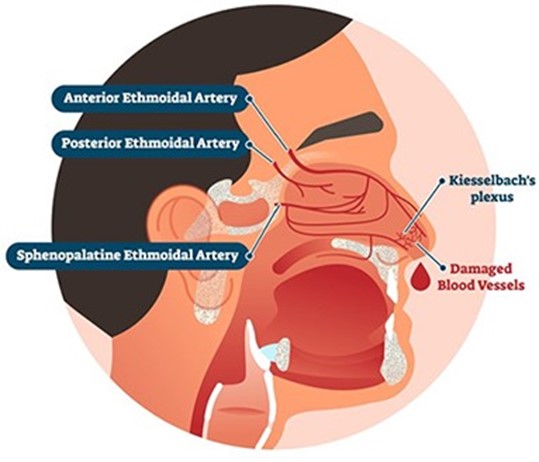
A nurse is caring for a client who has hypertension and develops epistaxis. Which of the following actions should the nurse take? (Select all that apply)
A. Tilt the client's head backward
Tilt the client's head backward. This is not recommended, as it can cause blood to drain into the throat and increase the risk of aspiration, nausea, or vomiting.
B. Move the client into high-Fowler's position
These actions help to control bleeding, reduce blood pressure, and promote clotting.
C. Apply pressure to the nares
These actions help to control bleeding, reduce blood pressure, and promote clotting.
D. Instruct the client to blow his nose
Instruct the client to blow his nose. This is not advisable, as it can dislodge any clots that have formed and worsen bleeding.
E. Place ice to the bridge of the client's nose
These actions help to control bleeding, reduce blood pressure, and promote clotting.
This question is an excerpt from Nurse Dive's nursing test bank - ATI Med Surg Proctored Exam 1. Take the full exam now
Full Explanation
These actions help to control bleeding, reduce blood pressure, and promote clotting.
a. Tilt the client's head backward. This is not recommended, as it can cause blood to drain into the throat and increase the risk of aspiration, nausea, or vomiting.
d. Instruct the client to blow his nose. This is not advisable, as it can dislodge any clots that have formed and worsen bleeding.
Similar Questions
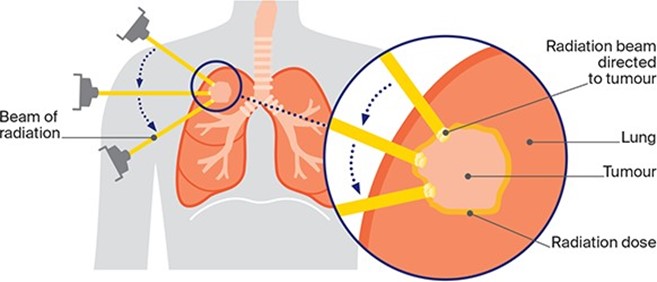
A nurse is caring for a client who is receiving radiation therapy to treat lung cancer. Which of the following actions should the nurse take?
A. Observe for signs of infection
Radiation therapy can cause immunosuppression, which increases the risk of infection. The nurse should monitor the client for signs of infection such as fever, chills, malaise, or purulent drainage.
B. Examine the skin for generalized urticaria
Examine the skin for generalized urticaria. This is not a common side effect of radiation therapy, as urticaria is an allergic reaction that causes hives or welts on the skin. Radiation therapy can cause localized skin irritation, erythema, or dryness, but not generalized urticaria.
C. Review laboratory test results for low hemoglobin
Review laboratory test results for low hemoglobin. This is not a direct effect of radiation therapy, as hemoglobin is a component of red blood cells that carries oxygen in the blood. Radiation therapy can cause anemia, which is a low number of red blood cells, but not necessarily low hemoglobin.
D. Monitor the mouth for signs of xerostomia
Monitor the mouth for signs of xerostomia. This is not relevant for a client who receives radiation therapy to treat lung cancer, as xerostomia is dry mouth caused by reduced salivary gland function. This can occur in clients who receive radiation therapy to treat head and neck cancer, but not lung cancer.
Full Explanation
Radiation therapy can cause immunosuppression, which increases the risk of infection. The nurse should monitor the client for signs of infection such as fever, chills, malaise, or purulent drainage.
- Examine the skin for generalized urticaria. This is not a common side effect of radiation therapy, as urticaria is an allergic reaction that causes hives or welts on the skin. Radiation therapy can cause localized skin irritation, erythema, or dryness, but not generalized urticaria.
- Review laboratory test results for low hemoglobin. This is not a direct effect of radiation therapy, as hemoglobin is a component of red blood cells that carries oxygen in the blood. Radiation therapy can cause anemia, which is a low number of red blood cells, but not necessarily low hemoglobin.
- Monitor the mouth for signs of xerostomia. This is not relevant for a client who receives radiation therapy to treat lung cancer, as xerostomia is dry mouth caused by reduced salivary gland function. This can occur in clients who receive radiation therapy to treat head and neck cancer, but not lung cancer.
A nurse is preparing to administer lithium 300 mg PO every 8 hr. Available is lithium carbonate 150 mg capsules. How many capsules should the nurse administer per dose?
(Round the answer to the nearest whole number. Use a leading zero if it applies. Do not use a trailing zero.)
Full Explanation
2 capsules
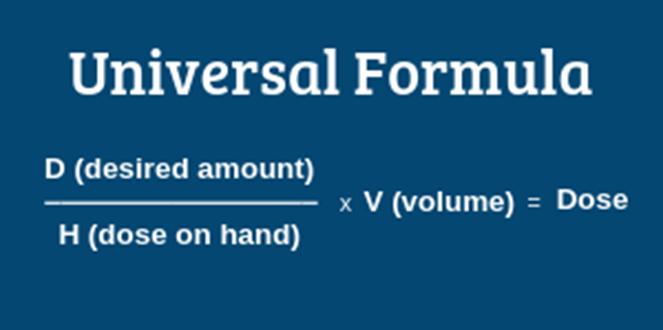
To calculate the number of capsules, use the formula:
capsules = (desired dose in mg / available dose in mg) x 1 capsule
Plug in the given values:
capsules = (300 mg / 150 mg) x 1 capsule
Simplify and solve:
capsules = 2 x 1 capsule
capsules = 2 capsules
Round to the nearest whole number and add a leading zero if needed:
capsules = 2 capsules
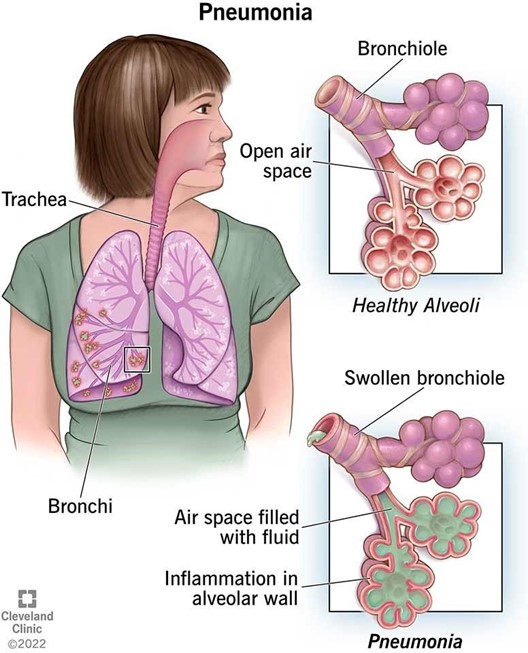
A nurse is caring for a client who has pneumonia. Which of the following actions should the nurse take to promote thinning of respiratory secretions?
A. Encourage coughing and deep breathing
Encourage coughing and deep breathing. This is beneficial for clearing the airways and preventing atelectasis, but it does not directly affect the viscosity of the secretions.
B. Encourage regular use of the incentive spirometer
Encourage regular use of the incentive spirometer. This is helpful for expanding the lungs and preventing complications such as pneumonia or pleural effusion, but it does not influence the consistency of the secretions.
C. Encourage the client to increase fluid intake
Increasing fluid intake helps to hydrate the mucous membranes and thin the respiratory secretions, which facilitates expectoration and improves gas exchange.
D. Encourage the client to ambulate frequently
Encourage the client to ambulate frequently. This is important for promoting circulation and mobility, but it does not have a significant effect on the thinning of the secretions.
Full Explanation
Increasing fluid intake helps to hydrate the mucous membranes and thin the respiratory secretions, which facilitates expectoration and improves gas exchange.
- Encourage coughing and deep breathing. This is beneficial for clearing the airways and preventing atelectasis, but it does not directly affect the viscosity of the secretions.
- Encourage regular use of the incentive spirometer. This is helpful for expanding the lungs and preventing complications such as pneumonia or pleural effusion, but it does not influence the consistency of the secretions.
- Encourage the client to ambulate frequently. This is important for promoting circulation and mobility, but it does not have a significant effect on the thinning of the secretions.