
Nursing practice questions with comprehensive rationales
NurseDive Free Nursing Practice Question
A nurse is caring for a client who has hypovolemic shock. Which of the following should the nurse recognize as an expected finding?
A. Hypertension
Reason: This is incorrect because hypertension is a condition of high blood pressure. A client who has hypovolemic shock is more likely to have hypotension, which is a condition of low blood pressure, due to fluid loss and reduced cardiac output.
B. Bradypnea
Reason: This is incorrect because bradypnea is a condition of slow breathing. A client who has hypovolemic shock is more likely to have tachypnea, which is a condition of fast breathing, due to hypoxia and increased respiratory demand.
C. Oliguria
Reason: This is correct because oliguria is a condition of low urine output. A client who has hypovolemic shock may have oliguria due to decreased renal perfusion and activation of the renin-angiotensin-aldosterone system, which causes sodium and water retention.
D. Flushing of the skin
Reason: This is incorrect because flushing of the skin is a condition of redness and warmth of the skin. A client who has hypovolemic shock may have pallor and coolness of the skin due to vasoconstriction and reduced blood flow.
This question is an excerpt from Nurse Dive's nursing test bank - ATI Med Surg Custom N235 Final Summer 2023 Proctored Exam. Take the full exam now
Full Explanation
Choice A Reason: This is incorrect because hypertension is a condition of high blood pressure. A client who has hypovolemic shock is more likely to have hypotension, which is a condition of low blood pressure, due to fluid loss and reduced cardiac output.
Choice B Reason: This is incorrect because bradypnea is a condition of slow breathing. A client who has hypovolemic shock is more likely to have tachypnea, which is a condition of fast breathing, due to hypoxia and increased respiratory demand.
Choice C Reason: This is correct because oliguria is a condition of low urine output. A client who has hypovolemic shock may have oliguria due to decreased renal perfusion and activation of the renin-angiotensin-aldosterone system, which causes sodium and water retention.
Choice D reason: This is incorrect because flushing of the skin is a condition of redness and warmth of the skin. A client who has hypovolemic shock may have pallor and coolness of the skin due to vasoconstriction and reduced blood flow.
Similar Questions
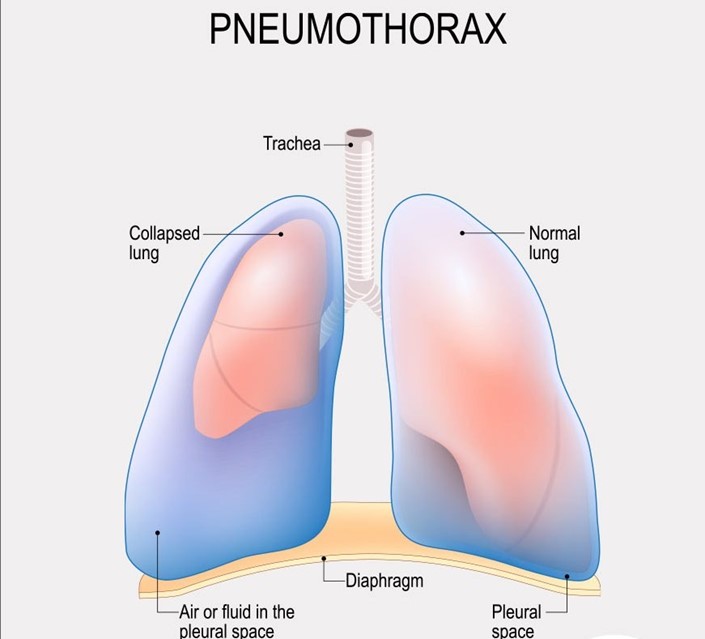
A nurse is assessing a client who has a pneumothorax with a chest tube in place. For which of the following findings should the nurse notify the provider?
A. Crepitus in the area above and surrounding the insertion site
Reason: This is incorrect because crepitus in the area above and surrounding the insertion site is not a serious finding that requires notification of the provider. Crepitus is a crackling sensation that occurs when air leaks into the subcutaneous tissue. It is usually harmless and resolves on its own.
B. Bubbling of the water in the water seal chamber with exhalation
Reason: This is incorrect because bubbling of the water in the water seal chamber with exhalation is a normal finding that indicates that air is being removed from the pleural space. Bubbling should stop when the pneumothorax is resolved.
C. Eyelets are not visible
Reason: This is incorrect because eyelets are not visible is not a serious finding that requires notification of the provider. Eyelets are small holes at the end of the chest tube that allow air and fluid to drain from the pleural space. They are usually covered by a dressing and may not be visible.
D. Movement of the trachea toward the unaffected side
Reason: This is correct because movement of the trachea toward the unaffected side is a serious finding that indicates a tension pneumothorax, which is a life-threatening condition that occurs when air accumulates in the pleural space and causes pressure on the mediastinum. The nurse should notify the provider immediately and prepare for needle decompression or chest tube insertion.
Full Explanation
Choice A Reason: This is incorrect because crepitus in the area above and surrounding the insertion site is not a serious finding that requires notification of the provider. Crepitus is a crackling sensation that occurs when air leaks into the subcutaneous tissue. It is usually harmless and resolves on its own.
Choice B reason: This is incorrect because bubbling of the water in the water seal chamber with exhalation is a normal finding that indicates that air is being removed from the pleural space. Bubbling should stop when the pneumothorax is resolved.
Choice C Reason: This is incorrect because eyelets are not visible is not a serious finding that requires notification of the provider. Eyelets are small holes at the end of the chest tube that allow air and fluid to drain from the pleural space. They are usually covered by a dressing and may not be visible.
Choice D Reason: This is correct because movement of the trachea toward the unaffected side is a serious finding that indicates a tension pneumothorax, which is a life-threatening condition that occurs when air accumulates in the pleural space and causes pressure on the mediastinum. The nurse should notify the provider immediately and prepare for needle decompression or chest tube insertion.
A nurse is evaluating the central venous pressure (CVP) of a client who has sustained multiple traumas. Which of the following interpretations of a low CVP should the nurse make?
A. Fluid overload
Reason: This is incorrect because fluid overload is a condition of excess fluid volume in the body. A client who has fluid overload is more likely to have a high CVP, which indicates increased pressure in the right atrium and vena cava.
B. Intracardiac shunt
Reason: This is incorrect because an intracardiac shunt is a condition of abnormal blood flow between the chambers of the heart. A client who has an intracardiac shunt may have a normal or high CVP, depending on the direction and magnitude of the shunt.
C. Hypovolemia
Reason: This is correct because hypovolemia is a condition of low fluid volume in the body. A client who has hypovolemia is more likely to have a low CVP, which indicates decreased pressure in the right atrium and vena cava.
D. Left ventricular failure
Reason: This is incorrect because left ventricular failure is a condition of impaired pumping function of the left ventricle. A client who has left ventricular failure may have a normal or high CVP, depending on the degree of backward failure and pulmonary congestion.
Full Explanation
Choice A Reason: This is incorrect because fluid overload is a condition of excess fluid volume in the body. A client who has fluid overload is more likely to have a high CVP, which indicates increased pressure in the right atrium and vena cava.
Choice B Reason: This is incorrect because an intracardiac shunt is a condition of abnormal blood flow between the chambers of the heart. A client who has an intracardiac shunt may have a normal or high CVP, depending on the direction and magnitude of the shunt.
Choice C Reason: This is correct because hypovolemia is a condition of low fluid volume in the body. A client who has hypovolemia is more likely to have a low CVP, which indicates decreased pressure in the right atrium and vena cava.
Choice D Reason: This is incorrect because left ventricular failure is a condition of impaired pumping function of the left ventricle. A client who has left ventricular failure may have a normal or high CVP, depending on the degree of backward failure and pulmonary congestion.
A nurse is monitoring an older adult female client who had a myocardial infarction (MI) for the development of an acute kidney injury (AKI). Which of the following findings should the nurse identify as indicating an increased risk of AKI?
A. Magnesium 2.5 mEq/L
Reason: This is incorrect because magnesium 2.5 mEq/L is a normal value and does not indicate an increased risk of AKI. Magnesium is an electrolyte that plays a role in muscle and nerve function, blood pressure regulation, and energy production. The normal range for magnesium is 1.5 to 2.5 mEq/L.
B. Serum osmolality 290 mOsm/kg H2O
Reason: This is incorrect because serum osmolality 290 mOsm/kg H2O is a normal value and does not indicate an increased risk of AKI. Serum osmolality is a measure of the concentration of solutes in the blood, such as sodium, glucose, and urea. The normal range for serum osmolality is 275 to 295 mOsm/kg H2O.
C. Blood urea nitrogen (BUN) 20 mg/dL
Reason: This is incorrect because blood urea nitrogen (BUN) 20 mg/dL is a normal value and does not indicate an increased risk of AKI. BUN is a measure of the amount of urea, a waste product of protein metabolism, in the blood. The normal range for BUN is 7 to 20 mg/dL.
D. Serum creatinine 1.8 mg/dL
Reason: This is correct because serum creatinine 1.8 mg/dL is an elevated value and indicates an increased risk of AKI. Creatinine is a waste product of muscle metabolism that is filtered by the kidneys. The normal range for serum creatinine is 0.6 to 1.2 mg/dL for women and 0.7 to 1.3 mg/dL for men. An increase in serum creatinine indicates a decrease in kidney function and glomerular filtration rate (GFR).
Full Explanation
Choice A Reason: This is incorrect because magnesium 2.5 mEq/L is a normal value and does not indicate an increased risk of AKI. Magnesium is an electrolyte that plays a role in muscle and nerve function, blood pressure regulation, and energy production. The normal range for magnesium is 1.5 to 2.5 mEq/L.
Choice B Reason: This is incorrect because serum osmolality 290 mOsm/kg H2O is a normal value and does not indicate an increased risk of AKI. Serum osmolality is a measure of the concentration of solutes in the blood, such as sodium, glucose, and urea. The normal range for serum osmolality is 275 to 295 mOsm/kg H2O.
Choice C Reason: This is incorrect because blood urea nitrogen (BUN) 20 mg/dL is a normal value and does not indicate an increased risk of AKI. BUN is a measure of the amount of urea, a waste product of protein metabolism, in the blood. The normal range for BUN is 7 to 20 mg/dL.
Choice D Reason: This is correct because serum creatinine 1.8 mg/dL is an elevated value and indicates an increased risk of AKI. Creatinine is a waste product of muscle metabolism that is filtered by the kidneys. The normal range for serum creatinine is 0.6 to 1.2 mg/dL for women and 0.7 to 1.3 mg/dL for men. An increase in serum creatinine indicates a decrease in kidney function and glomerular filtration rate (GFR).