
Nursing practice questions with comprehensive rationales
NurseDive Free Nursing Practice Question
A nurse is caring for a client who has left-sided heart failure. Which of the following manifestations should the nurse expect?
A. Pedal edema
Pedal edema is more commonly associated with right-sided heart failure.
B. Neck vein distention
Neck vein distention is typically associated with right-sided heart failure where increased pressure in the right side of the heart leads to jugular venous distention
C. Daytime oliguria
Oliguria can occur in severe cases of left-sided heart failure. When the heart's ability to pump blood forward is compromised, blood flow to the kidneys decreases, leading to decreased urine production.
D. Enlarged liver
Enlarged liver, or hepatomegaly, can occur in right-sided heart failure due to congestion and backup of blood in the hepatic circulation.
This question is an excerpt from Nurse Dive's nursing test bank - Ati Rn Adult Medical Surgical 2023 Proctored Exam. Take the full exam now
Full Explanation
C. Oliguria can occur in severe cases of left-sided heart failure. When the heart's ability to pump blood forward is compromised, blood flow to the kidneys decreases, leading to decreased urine production.
A. Pedal edema is more commonly associated with right-sided heart failure.
B. Neck vein distention is typically associated with right-sided heart failure where increased pressure in the right side of the heart leads to jugular venous distention
D. Enlarged liver, or hepatomegaly, can occur in right-sided heart failure due to congestion and backup of blood in the hepatic circulation.
Similar Questions
A nurse enters a client's room and observes the client having a tonic-clonic seizure. Which of the following actions should the nurse take first?
A. Turn the client on their side.
Turning the client on their side helps prevent aspiration (inhaling fluid or vomit into the lungs) and promotes drainage of oral secretions, reducing the risk of airway obstruction during the seizure.
B. Perform a neurologic check.
While assessing neurological status is important, it should be done after ensuring the client's safety during the seizure. This can be done after the seizure has stopped.
C. Obtain the client's vital signs.
While obtaining vital signs is important for assessing the client's overall condition, it is not the immediate priority during an active seizure. Vital signs can be assessed once the seizure has stopped and the client's safety has been ensured.
D. Notify the rapid response team.
Notifying the rapid response team may be necessary if the seizure persists beyond a certain duration (status epilepticus) or if there are complications. However, the first action should be to ensure the client's immediate safety by turning them onto their side to prevent aspiration.
Full Explanation
A. Turning the client on their side helps prevent aspiration (inhaling fluid or vomit into the lungs) and promotes drainage of oral secretions, reducing the risk of airway obstruction during the seizure.
B. While assessing neurological status is important, it should be done after ensuring the client's safety during the seizure. This can be done after the seizure has stopped.
C. While obtaining vital signs is important for assessing the client's overall condition, it is not the immediate priority during an active seizure. Vital signs can be assessed once the seizure has stopped and the client's safety has been ensured.
D. Notifying the rapid response team may be necessary if the seizure persists beyond a certain duration (status epilepticus) or if there are complications. However, the first action should be to ensure the client's immediate safety by turning them onto their side to prevent aspiration.
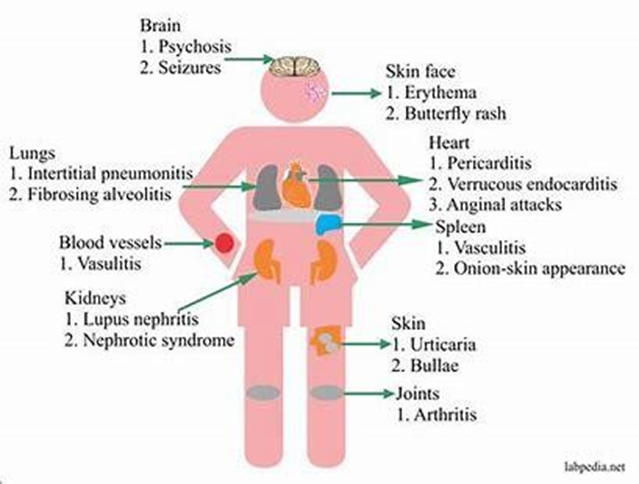
A nurse is caring for a client who has systemic lupus erythematosus. During assessment, which of the following should the nurse expect to find?
A. Joint inflammation
Joint inflammation(arthritis) is a common manifestation of systemic lupus erythematosus. SLE can cause inflammation in the joints, leading to symptoms such as pain, swelling, stiffness, and decreased range of motion. It often affects the small joints of the hands, wrists, and knees.
B. Tophi
Tophi are deposits of uric acid crystals that form under the skin in people with chronic gout.
C. Esophagitis
Esophagitis, or inflammation of the esophagus, can occur in systemic lupus erythematosus as part of gastrointestinal involvement. However, it is not one of the most common manifestations of SLE.
D. "Bull's eye" lesion
"Bull's eye" lesion, also known as erythema multiforme, is a skin manifestation seen in conditions such as Lyme disease and certain drug reactions. It is not typically associated with systemic lupus erythematosus.
Full Explanation
A. Joint inflammation(arthritis) is a common manifestation of systemic lupus erythematosus. SLE can cause inflammation in the joints, leading to symptoms such as pain, swelling, stiffness, and decreased range of motion. It often affects the small joints of the hands, wrists, and knees.
B. Tophi are deposits of uric acid crystals that form under the skin in people with chronic gout.
C. Esophagitis, or inflammation of the esophagus, can occur in systemic lupus erythematosus as part of gastrointestinal involvement. However, it is not one of the most common manifestations of SLE.
D. "Bull's eye" lesion, also known as erythema multiforme, is a skin manifestation seen in conditions such as Lyme disease and certain drug reactions. It is not typically associated with systemic lupus erythematosus.
A nurse is caring for a client who has a new onset of hyperglycemic hyperosmolar state (HHS). Which of the following interventions by the nurse is the highest priority?
A. Initiate IV fluid replacement.
Initiate IV fluid replacement is the highest priority intervention. HHS is characterized by severe dehydration due to osmotic diuresis resulting from hyperglycemia. IV fluid replacement is essential to correct dehydration and restore intravascular volume, which can help improve tissue perfusion and prevent further complications.
B. Measure the client's urinary output.
Monitoring urinary output is important in assessing renal function and response to fluid replacement therapy. However, it is not the highest priority intervention.
C. Administer insulin.
While insulin therapy is an essential part of managing hyperglycemia in HHS, it is not the highest priority intervention at the immediate onset of HHS.
D. Teach the client about manifestations of HHS
Patient education about the manifestations and management of HHS is important for long-term management and prevention of recurrence. However, it is not the highest priority when the client is experiencing an acute episode of HHS.
Full Explanation
A. Initiate IV fluid replacement is the highest priority intervention. HHS is characterized by severe dehydration due to osmotic diuresis resulting from hyperglycemia. IV fluid replacement is essential to correct dehydration and restore intravascular volume, which can help improve tissue perfusion and prevent further complications.
B. Monitoring urinary output is important in assessing renal function and response to fluid replacement therapy. However, it is not the highest priority intervention.
C. While insulin therapy is an essential part of managing hyperglycemia in HHS, it is not the highest priority intervention at the immediate onset of HHS.
D. Patient education about the manifestations and management of HHS is important for long-term management and prevention of recurrence. However, it is not the highest priority when the client is experiencing an acute episode of HHS.